

Why Hard Water Is Quietly Destroying Your Water Heater
How a water softener extends your water heater lifespan comes down to one simple fact: it stops mineral buildup before it starts. Here’s a quick breakdown:
- Prevents limescale — Soft water removes calcium and magnesium before they settle inside your tank
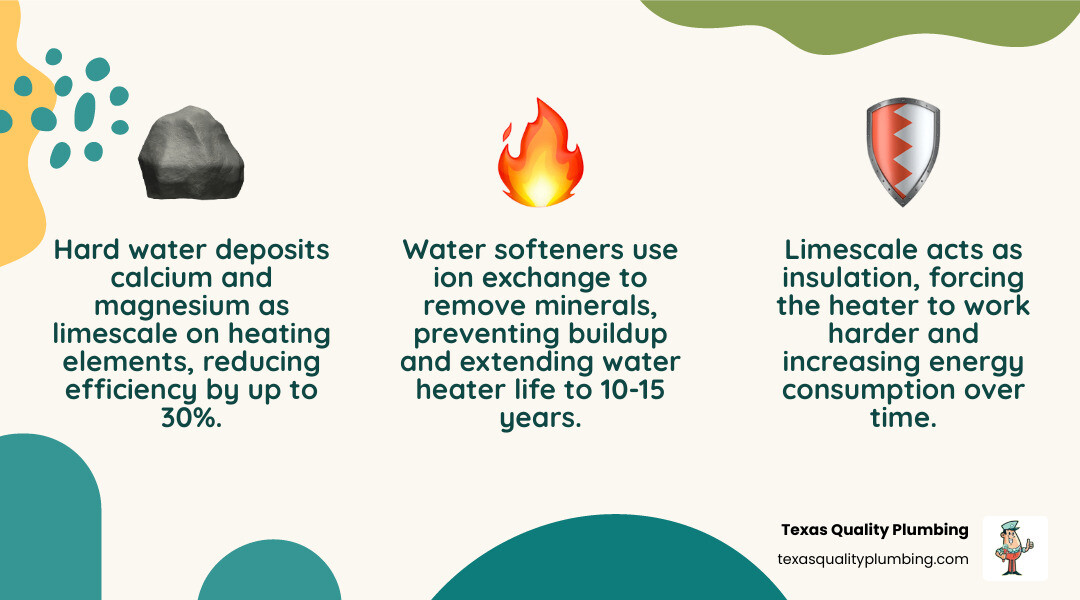
- Improves heat transfer — Without mineral buildup acting as insulation, your heater warms water up to 30% more efficiently
- Reduces wear and tear — Less strain on heating elements means fewer breakdowns and repairs
- Extends lifespan significantly — Water heaters in hard water areas can fail in as little as 5–7 years; with softened water, that jumps to 10–15 years or more
Most Houston homeowners don’t think about their water heater until something goes wrong. But by then, the damage is already done. Hard water minerals like calcium and magnesium build up silently inside your tank, coating heating elements with a chalky layer that forces your system to work harder every single day. Over time, that hidden buildup leads to higher energy bills, weaker hot water pressure, and a water heater that gives out years too soon. In a city like Houston — where local water is notoriously hard — this isn’t a rare problem. It’s the norm.
How a water softener extends your water heater lifespan
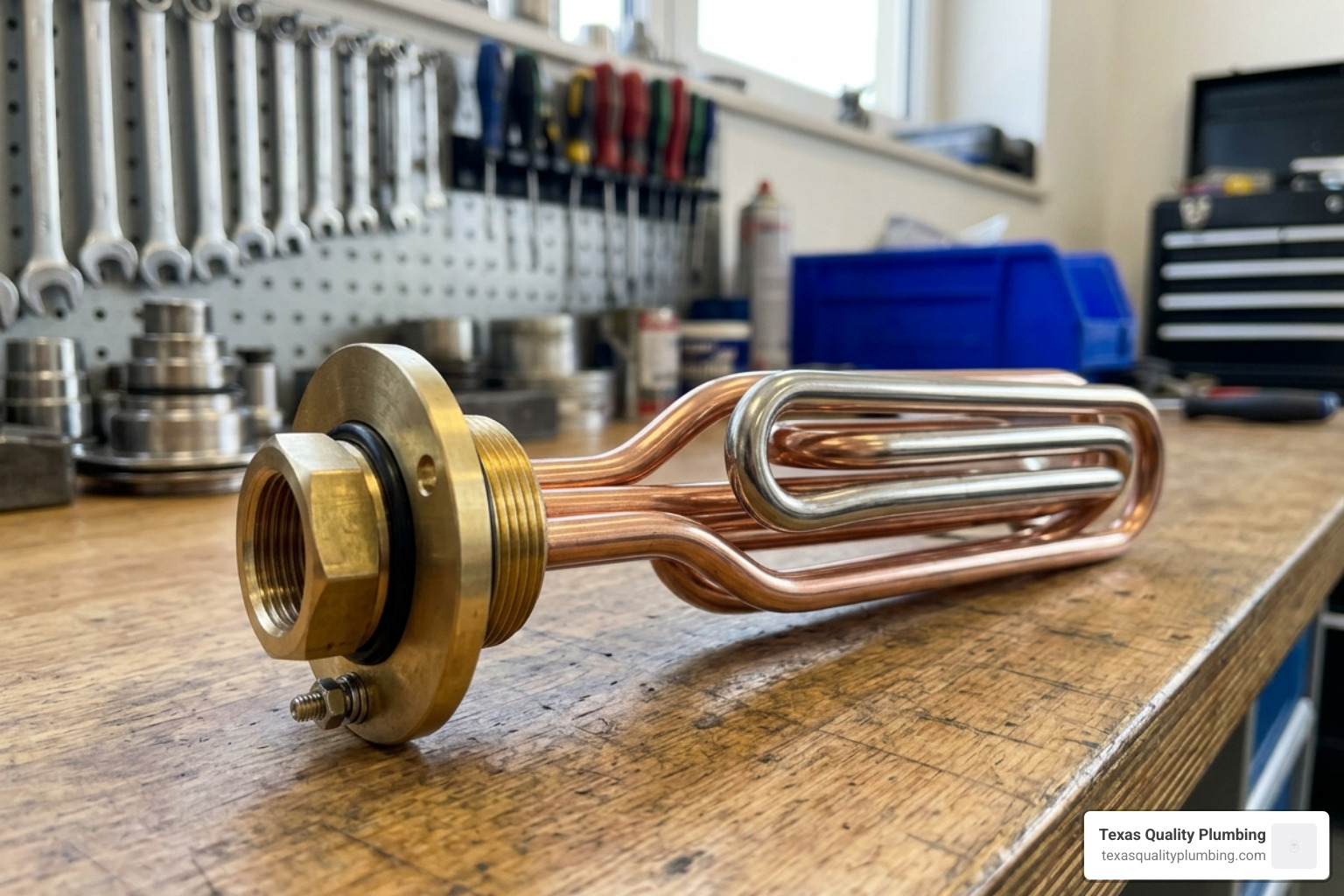
When we talk about the longevity of your plumbing, we often focus on the quality of the unit itself. However, as of May 2026, industry data continues to show that the single most important factor in appliance health is water quality. Understanding how a water softener extends your water heater lifespan requires looking at the chemistry happening inside your pipes.
In a typical Houston home, water carries dissolved calcium carbonate and magnesium. When this water is heated, these minerals physically separate and solidify. This creates a rock-hard crust known as limescale. By installing a water softener, you are essentially creating a shield for your plumbing. This proactive Hard Water Issues Solution ensures that the water entering your heater is free of these “sticky” minerals, preventing the sediment from ever reaching the tank.
Preventing Limescale: How a water softener extends your water heater lifespan
The secret to this protection lies in a process called ion exchange. Inside a water softener, there are millions of tiny, negatively charged resin beads. As hard water flows through the tank, the positively charged calcium and magnesium ions are attracted to the beads and “stick” to them. In exchange, the beads release a small amount of sodium ions.
By the time the water exits the softener and enters your heater, the mineral crystallization process has been neutralized. Without these minerals, limescale cannot form on the interior walls of your tank or around the heating elements. This is why Houston Water Softener Installation is considered the gold standard for protecting your home’s infrastructure.
Improving Efficiency: How a water softener extends your water heater lifespan
Beyond just making the unit last longer, softened water makes it run better. When scale builds up on a heating element, it acts as a literal layer of insulation. The element has to heat the rock layer before it can even begin to heat the water. This “thermal transfer” barrier is an energy killer.
Research shows that softened water can provide up to a 30% efficiency boost. When your Water Heaters don’t have to fight through a layer of stone to get the job done, they consume significantly less energy. For a family in the Greater Houston area, this translates to noticeable utility bill reduction and a much faster “recovery time”—which means less time waiting for the water to get hot again after someone takes a long shower.
Why is the water in Houston causing my water heater to fail?
If you live in Houston, Humble, or Sugar Land, you are likely dealing with some of the hardest water in the country. Much of our water travels through limestone and chalk deposits or comes from sources like the Brazos River, picking up high concentrations of minerals along the way.
The statistics are startling: in extreme hard water conditions, a water heater can suffer a catastrophic failure in as little as 19 months. Compare that to a potential 15-year lifespan when the same unit is protected by Houston Water Softener Systems. Without treatment, the sediment accumulates three times faster in our region than the national average. It isn’t just a matter of “if” the minerals will cause a problem; it’s a matter of when.
Protecting Tankless and Traditional Systems in Greater Houston
Whether you have a traditional storage tank or a modern tankless unit, hard water is an equal-opportunity destroyer. However, the way it attacks each system differs.
| Feature | Impact on Traditional Tank | Impact on Tankless System |
|---|---|---|
| Primary Failure Point | Sediment buildup at the bottom causing tank rust | Scale clogging narrow heat exchanger pathways |
| Efficiency Loss | Insulation layer requires more gas/electricity | Restricted flow reduces heating capacity |
| Maintenance Need | Annual flushing to remove “mud” | Frequent, expensive descaling flushes |
| Lifespan with Hard Water | 5–8 years | 1.5–5 years |
| Lifespan with Soft Water | 10–15 years | 15–20 years |
Tankless water heaters are especially vulnerable because they use compact pathways to flash-heat water. Even a small amount of scale can choke these pathways, leading to overheating and system shut-offs. Protecting these high-efficiency hybrids with a Water Softener Installation Complete Guide is often a requirement to keep the manufacturer’s warranty valid.
Addressing Anode Rod Corrosion in Softened Water Systems
There is one common concern we hear from savvy homeowners: “Doesn’t soft water eat the anode rod faster?” The answer is yes, but it is a problem with a very easy solution.
Inside every tank-style water heater is a sacrificial anode rod. Its job is to corrode so your tank doesn’t have to. Because softened water is more conductive, it can accelerate the depletion of standard magnesium or aluminum rods. To solve this, we recommend moving to a 2-year maintenance cycle for rod inspection.
Better yet, many of our customers in The Woodlands and Katy are upgrading to powered anodes, such as Corro-Protec. These titanium rods use a small electrical pulse to protect the tank without “sacrificing” any metal at all. When you know When to Repair or Replace Your Water Heater, you realize that managing the anode rod is a small price to pay for the massive benefits of scale prevention.
Signs of Hard Water Damage in Your Houston Home
How do you know if your water heater is already under attack? The signs are often right in front of you:
- Popping or Rumbling Noises: If your heater sounds like it’s making popcorn, that’s the sound of steam bubbles bursting through a thick layer of sediment at the bottom of the tank.
- Visible Residue: White, chalky buildup on your showerheads or faucets is a clear indicator that the same “rock” is forming inside your heater.
- Low Water Pressure: If your hot water pressure is significantly weaker than your cold water pressure, your pipes or heater may be “choked” by minerals.
- Cloudy Hot Water: This often indicates high mineral content or suspended sediment.
- Stiff Laundry and Soap Scum: If your clothes feel like sandpaper and your soap won’t lather, your water heater is likely struggling with the same mineral load.
In some cases, the buildup becomes so severe that it requires professional intervention. When Hard Water Requires Hydro Jetting, it means the minerals have moved past the heater and are beginning to solidify in your main drain lines.
Frequently Asked Questions about Water Softening
How much longer will my water heater last with a softener?
On average, a water softener can double the lifespan of your unit. In the Greater Houston area, we frequently see untreated heaters fail in 6 to 8 years. With a properly maintained softener, that same unit can easily reach 15 years of reliable service.
Does softened water cause the tank to corrode faster?
Softened water increases conductivity, which can lead to faster anode rod consumption. However, as long as you inspect and replace your anode rod every 2 to 3 years (or install a powered titanium anode), the tank itself remains perfectly protected from the much more dangerous threat of limescale and sediment.
Is a water softener necessary for a tankless water heater in Houston?
While not “mandatory” for the unit to turn on, it is highly recommended. Most tankless manufacturers specify water hardness limits in their warranty terms. Houston’s water often exceeds these limits, meaning a softener is essential to protect your investment and ensure the unit doesn’t fail prematurely.
Conclusion
At Texas Quality Plumbing, we have seen the “silent destruction” that Houston’s hard water causes. We believe that a water softener isn’t just a luxury—it is a frontline defender for your home’s most expensive appliances. Our team of licensed plumbers provides reliable workmanship throughout Greater Houston, from Conroe down to Friendswood and everywhere in between.
Whether you need a water quality test, a new softener installation, or help maintaining your current system, we are here to help. We offer quick, efficient service with guaranteed 24-hour appointments to keep your home running smoothly. Don’t wait for the popping noises to start; give your water heater the “fountain of youth” it deserves today.