
Why Hard Water Is Quietly Draining Your Water Heater’s Performance
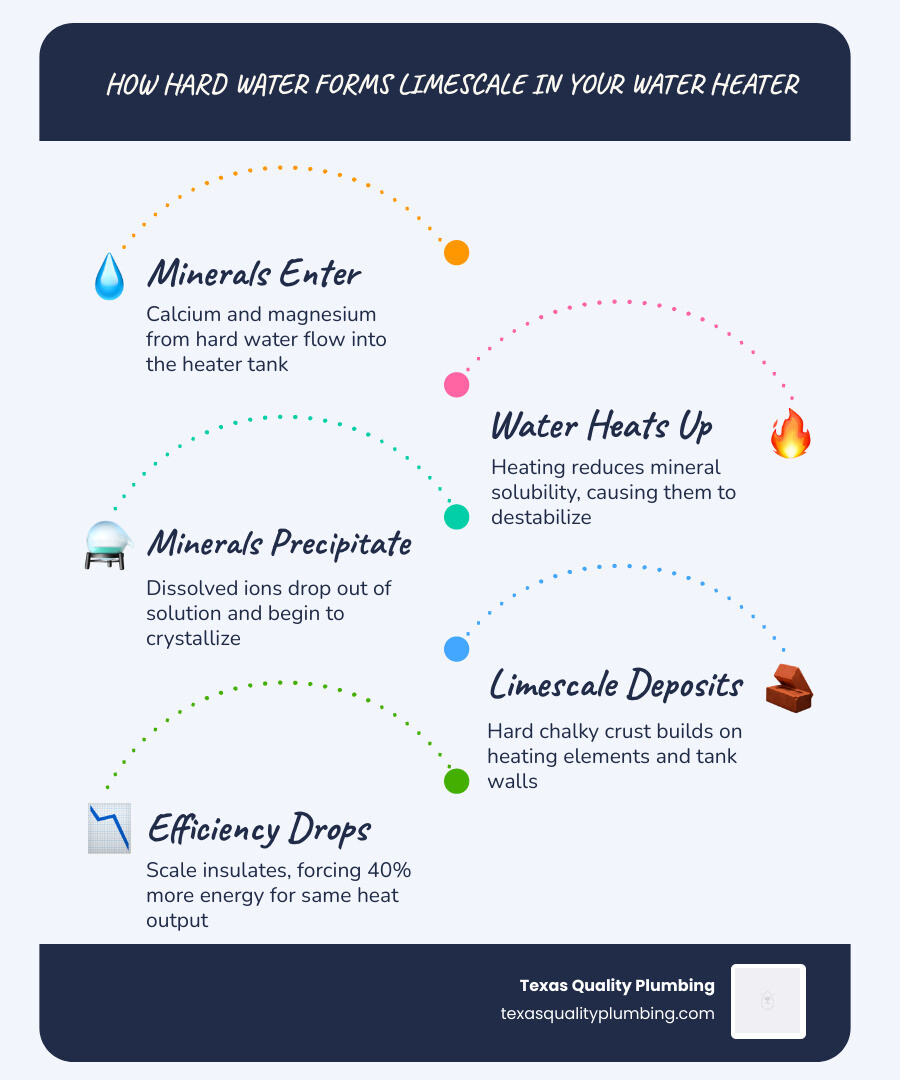
How hard water reduces your water heater efficiency comes down to one simple problem: minerals. When calcium and magnesium dissolve in your water supply, they travel straight into your water heater — and when that water gets hot, those minerals drop out of solution and coat the inside of your unit as a hard, chalky crust called limescale.
Here is a quick breakdown of what that means for your system:
- Scale acts as insulation — a barrier between the heat source and the water, forcing your heater to run longer to do the same job
- Even a thin layer causes real losses — just 1/4 inch of scale can cut heat transfer efficiency by up to 40%
- Energy bills rise — water heating already accounts for roughly 17% of your home’s total energy use, and scale makes that number climb
- Lifespan drops — hard water can shorten a standard water heater’s life by two years or more, and in severe cases, cut it nearly in half
If you are a Houston homeowner, this is not a distant concern. As of May 2026, Houston-area water consistently tests in the hard to very hard range — and more than 85% of U.S. households deal with the same issue. Your water heater is working overtime every single day, and most homeowners have no idea until they hear strange noises, run out of hot water faster than they used to, or open an unexpectedly high utility bill.
This guide explains exactly what is happening inside your unit, what to watch for, and what you can do about it.
The Thermodynamics of Limescale: How Hard Water Reduces Your Water Heater Efficiency
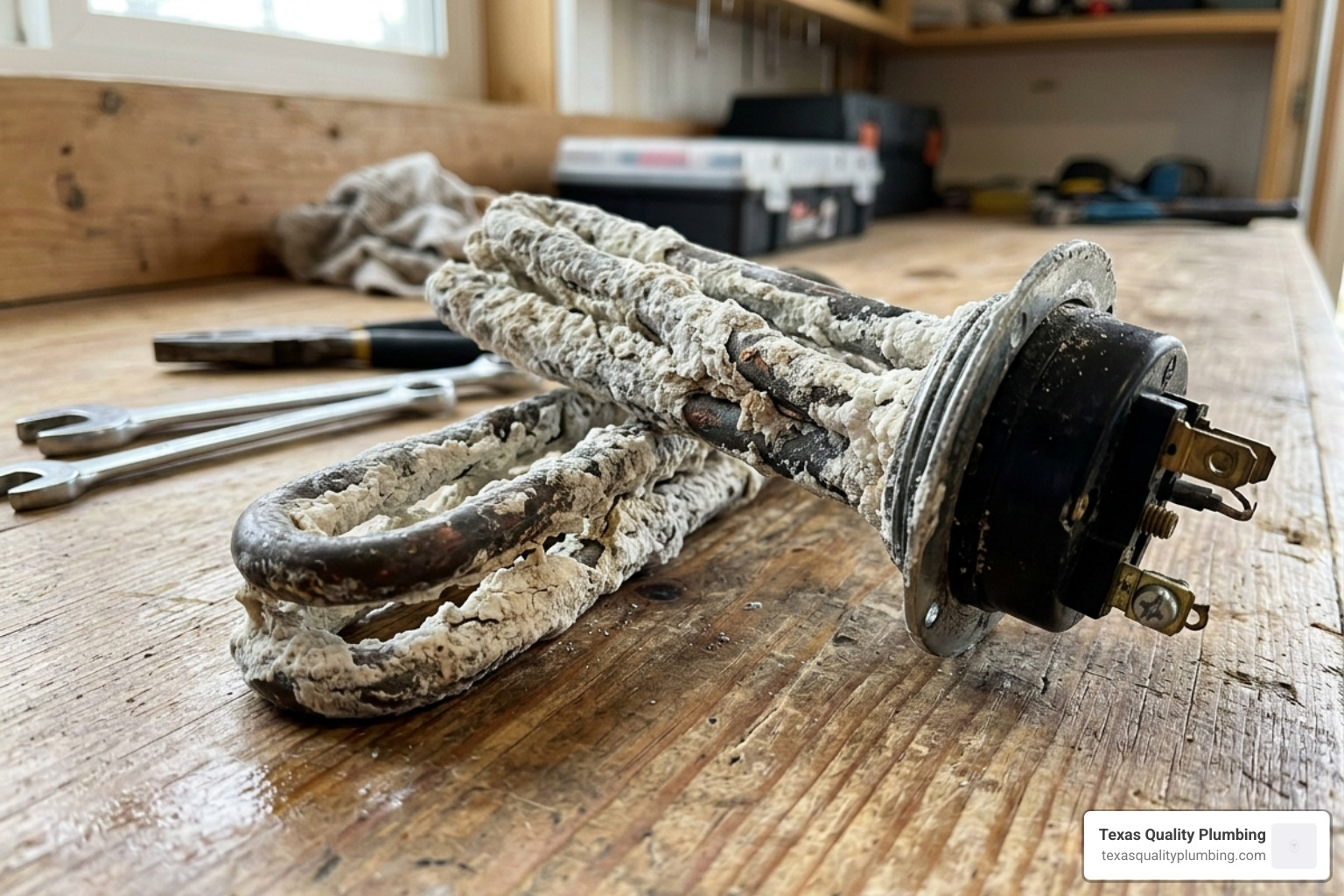
To understand how hard water reduces your water heater efficiency, we have to look at the physics of heat transfer. In a perfect world, the heat from your gas burner or electric element would pass directly into the water with minimal resistance. However, limescale is a powerful thermal insulator. In fact, it is chemically similar to the materials used in some types of industrial insulation.
When calcium carbonate (limescale) forms on the heating surfaces, it creates a physical barrier. The heat source has to first heat up the layer of rock-like scale before it can even begin to warm the water. This is why Updating Water Heater Efficiency Houston is such a common topic for our local customers; the harder the water, the thicker the barrier.
Research shows that even a 1/4-inch (6.35 mm) scale deposit can reduce heat transfer efficiency by up to 40 percent. This means that for every dollar you spend on heating water, 40 cents might be wasted just trying to push heat through a layer of “tank-rock.” This leads to significantly increased energy consumption and higher monthly bills. If you want to stop this cycle, exploring Water Filtration is the first step toward protecting your system from this invisible efficiency thief.
Warning Signs of Mineral Damage in Houston Plumbing
How do you know if your water heater is losing the battle against scale? In Houston and surrounding areas like Katy, Sugar Land, and Pearland, the signs are often visible if you know where to look.
The most common “early warning system” is a process called “kettling.” If you hear popping, rumbling, or banging sounds coming from your utility closet, that is the sound of water trapped underneath layers of hardened sediment. As that trapped water boils, it turns into steam bubbles that “pop” through the crust. It sounds like rocks tumbling in a dryer, and it is a definitive sign of efficiency loss.
Other warning signs include:
- Fluctuating water temperatures: Scale can coat the thermostat sensors, leading to inaccurate readings and showers that go from hot to cold without warning.
- Reduced hot water volume: In traditional tanks, sediment can take up so much space that a 50-gallon tank might only hold 40 gallons of actual water.
- White chalky residue: If you see “crust” on your showerheads or faucets, it is a guarantee that the same buildup is happening inside your heater.
Addressing these Hard Water Issues Solution early can prevent a total system breakdown. We often recommend a professional Ensure Efficiency Water Heater Flush Service Explained to clear out this debris before it hardens into a permanent layer of stone.
Comparing the Impact on Tank vs. Tankless Systems
The way how hard water reduces your water heater efficiency varies depending on the type of technology you use. While both systems suffer, the “failure points” are different.
| Feature | Storage Tank Heaters | Tankless (On-Demand) Systems |
|---|---|---|
| Primary Issue | Large sediment reservoir at the bottom. | Mineral scaling in narrow copper tubes. |
| Efficiency Loss | Gradual, due to thermal insulation. | Rapid, due to flow restriction. |
| Critical Component | Lower heating element or tank floor. | Copper heat exchanger. |
| Warning Sign | Popping/Rumbling noises. | Error codes or “cold water sandwich.” |
| Lifespan Impact | Reduced by 2–5 years. | Significant risk of heat exchanger failure. |
Regardless of the unit type, Water Filtration for Hard Water remains the most effective defense for Houston homeowners.
How Hard Water Reduces Your Water Heater Efficiency in Storage Tanks
In a traditional tank, gravity is the enemy. Minerals settle at the bottom, creating a “sludge” or sediment reservoir. For gas heaters, this layer sits directly above the burner, forcing the flame to heat through the sediment and the steel tank bottom, which can lead to overheating and eventually a tank leak.
For electric models, the lower heating element often becomes completely buried in sediment. This leads to “element burnout,” where the element gets so hot that it literally snaps. Furthermore, hard water accelerates the degradation of the sacrificial anode rod. This rod is designed to rust so your tank doesn’t have to; however, in hard water, it works double-time and can vanish in just a year or two, leaving your tank vulnerable to corrosion. Many find that a Water Softener Improves Household Water quality and saves these internal components from premature death.
How Hard Water Reduces Your Water Heater Efficiency in On-Demand Systems
Tankless systems are often marketed as high-efficiency, but they are incredibly sensitive to water quality. These units use a compact copper heat exchanger with very narrow passages. Even a 1/8-inch layer of scale inside these tubes can measurably reduce the flow rate and cause outlet temperature instability.
Because these units heat water so rapidly, the mineral precipitation happens almost instantly. This leads to Scaling Issues Tankless Water Heaters that can trigger system shut-offs. If the heat exchanger becomes too clogged, the unit may stop working entirely to prevent the copper from melting. Dealing with Tankless Water Heater Scaling Problems usually requires a specialized chemical descaling process to restore the unit to its rated efficiency.
Mitigation Strategies to Protect Your Plumbing Investment
You don’t have to accept how hard water reduces your water heater efficiency as an inevitability. There are several proven strategies to fight back:
- Install a Water Softener: This is the “gold standard.” By using ion exchange to swap calcium and magnesium for sodium ions, you stop scale before it ever enters the heater. We’ve seen Houston Water Softener Systems extend the life of a heater by several years.
- Lower the Temperature: Setting your heater to 120°F instead of 140°F significantly slows down the chemical reaction that causes minerals to fall out of the water.
- Regular Flushing: For tank units, flushing the system at least once a year (and more often in very hard water areas) removes the loose sediment before it hardens.
- Anti-Scale Devices: Technologies like Template Assisted Crystallization (TAC) can change the structure of minerals so they don’t “stick” to surfaces.
Using Water Softeners Improve Water Quality is often the most cost-effective long-term solution, as it protects not just your water heater, but also your dishwasher, washing machine, and pipes.
Frequently Asked Questions
How often should I flush my water heater in a hard water area?
In areas with high mineral content like Houston, the standard “once a year” advice isn’t enough. We recommend a quarterly flush (every 3–4 months) to ensure sediment doesn’t have the chance to solidify. If you aren’t comfortable doing this yourself, a Water Heater Service Technician can perform a deep flush and inspect your components at the same time.
Can a water softener actually extend my heater’s lifespan?
Absolutely. By removing the primary cause of scale, a water softener can easily add two or more years to the lifespan of a standard tank. It prevents the “hot spots” that lead to tank failure and protects your heating elements from burning out. However, soft water can be slightly more aggressive toward your anode rod, so you should have a Quality Water Softener Systems expert check your rod every two years.
Why is my water heater making a loud popping noise?
This is the “kettling” effect. It happens when steam bubbles get trapped under a thick layer of hardened sediment at the bottom of the tank. As the burner heats the sediment, the water underneath turns to steam and “explodes” through the crust. This is a major warning sign that your efficiency is tanking. In extreme cases, When Hard Water Requires Hydro-Jetting, a standard flush may not be enough to break up the “brick” of minerals at the bottom.
Conclusion
At Texas Quality Plumbing, we see the damage caused by Houston’s water every day. From Porter to Sugar Land and everywhere in between, the mineral content in our local water is a constant threat to your home’s efficiency. Understanding how hard water reduces your water heater efficiency is the first step toward lower utility bills and a more reliable home.
Whether you need a professional flush, an anode rod replacement, or a new water softening system, our team of licensed plumbers is here to help. We pride ourselves on quick, efficient service and guaranteed 24-hour appointments for our neighbors in the Greater Houston area. Don’t let limescale win the battle for your utility closet. Schedule your Houston water heater service today and let us help you restore your system’s peak performance.