
Is Hard Water Quietly Killing Your Water Heater in Houston?
Signs hard water is shortening your water heater life are more common in Houston than most homeowners realize — and catching them early can save you from a cold shower and a costly replacement.
Here are the key warning signs to watch for:
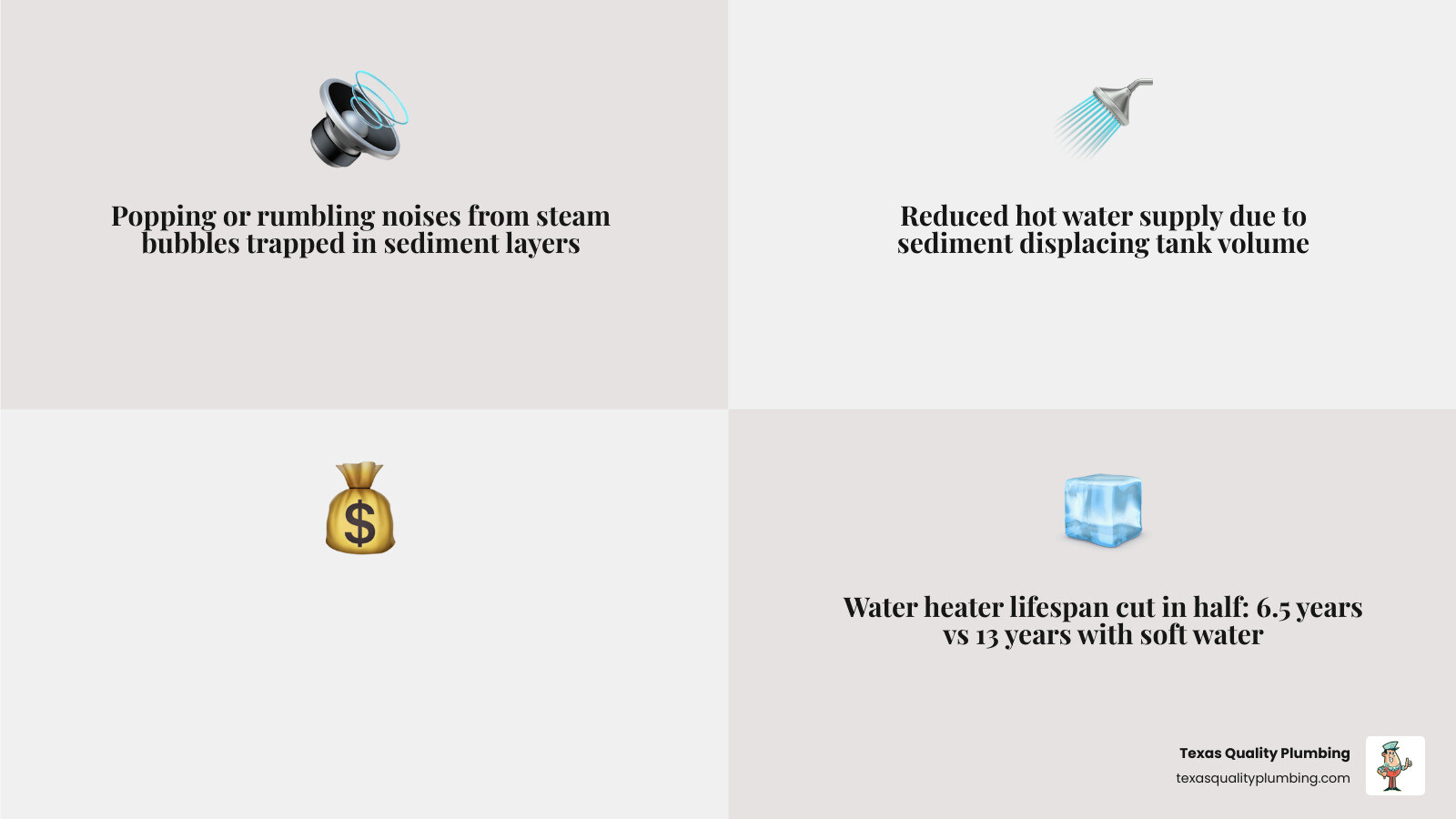
- Popping or rumbling noises during heating cycles (trapped water forcing through mineral sediment)
- Running out of hot water faster than you used to (sediment displacing usable tank volume)
- Rising energy bills without increased usage (scale acting as an insulating barrier on heating elements)
- Rusty or cloudy hot water from your taps (internal tank corrosion or calcium flakes breaking loose)
- Visible white or chalky buildup on faucets and showerheads (a reliable proxy for what’s happening inside your tank)
- Frequent heating element failures or a unit failing well before its expected 8–12 year lifespan
Roughly 85% of American homes deal with hard water, and Houston is no exception. The region’s water supply carries elevated levels of calcium and magnesium — minerals that don’t just leave spots on your glassware. They quietly accumulate inside your water heater year after year, forming a rock-hard layer of scale that forces your system to work harder, cost more to run, and fail years ahead of schedule.
According to industry data, electric water heaters in hard water areas last an average of just 6.5 years, compared to 13 years when using soft water. For gas water heaters, that gap is nearly as stark: 5.5 years versus 11. That’s not a small difference — that’s potentially half the life of a major home appliance gone because of untreated water.
The damage is slow, silent, and easy to miss until something breaks. But the signs are there if you know what to look for.
What is Hard Water and Why Does It Hate Your Plumbing?
To understand why your water heater is struggling, we first have to look at what’s coming out of your taps. Hard water isn’t “dirty” in the traditional sense, but it is heavy. As water travels through the earth in areas like Houston, Porter, or Cypress, it percolates through deposits of limestone and gypsum. Along the way, it picks up high concentrations of dissolved minerals, primarily calcium and magnesium.
The real trouble starts when that water hits your home’s heating system. When hard water is heated, a chemical reaction occurs. The dissolved minerals “precipitate” out of the liquid, turning into solid calcium carbonate—better known as limescale. This scale is incredibly stubborn; it’s essentially a layer of rock growing inside your pipes and appliances.
In our experience serving the Greater Houston area, we’ve seen how these Hard Water Issues Solution options become vital for homeowners. Water hardness is often measured in Grains Per Gallon (GPG). While anything over 7 GPG is considered hard, many parts of Texas see levels exceeding 10.5 GPG, which is classified as “very hard.”
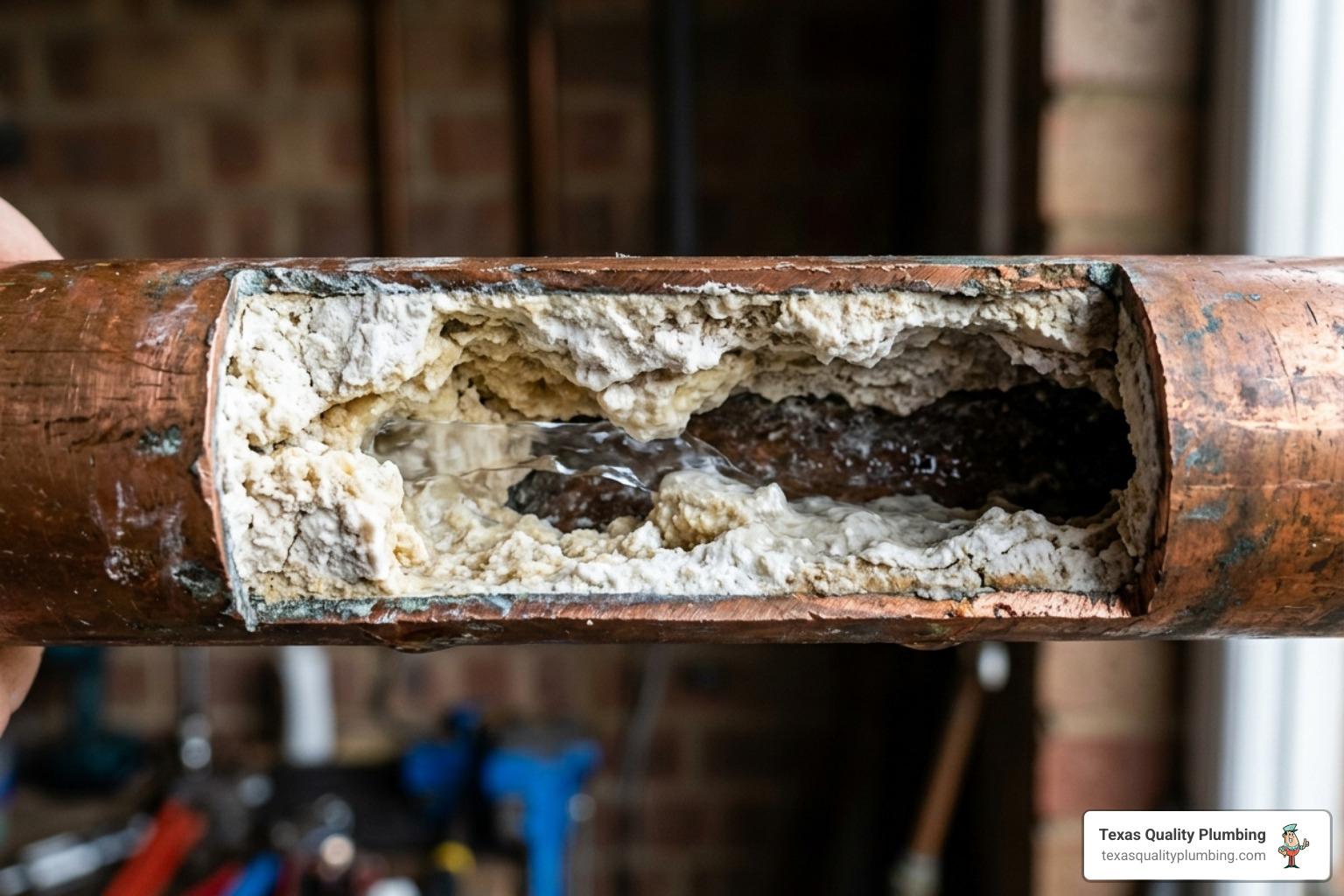
When this scale forms inside your water heater, it doesn’t just sit there. It coats the heating elements and the floor of the tank, creating a physical barrier between the heat source and the water it’s supposed to be warming. This is the beginning of a chain reaction that leads to premature equipment failure.
5 Critical Signs Hard Water is Shortening Your Water Heater Life
If you’re living in a high-mineral area like Sugar Land or Katy, your water heater is likely under attack right now. Because the damage happens inside the tank, you can’t see it—but you can definitely hear and feel it. Recognizing the signs hard water is shortening your water heater life is the first step in protecting your investment.
One of the most devastating effects of scale is the “thermal barrier” it creates. Limescale is an excellent insulator, which is the last thing you want on a heating element. To get the water to your desired temperature, the heater has to run much longer and hotter than it was designed to.
| Scale Thickness | Energy Efficiency Loss |
|---|---|
| 1/8 inch | 15% – 25% |
| 1/4 inch | 25% – 40% |
| 1/2 inch | Over 50% |
This efficiency loss isn’t just a statistic; it’s a direct hit to your wallet. When you notice Signs You Need Water Heater Repair, it’s often because the system is struggling to overcome this mineral crust.
Audible Warning Signs: Popping and Rumbling Noises
Have you ever heard your water heater making a sound like popcorn popping or a low rumbling like distant thunder? In the plumbing world, we call this “kettling.”
This happens when a thick layer of sediment settles on the bottom of a gas water heater. Water gets trapped underneath this crust of minerals. As the burner heats the bottom of the tank, that trapped water boils and turns into steam bubbles. These bubbles then “pop” as they escape through the sediment layer. This is one of the most urgent Signs Water Heater Needs Immediate Repair because the constant localized overheating can actually weaken the steel tank, leading to a catastrophic leak.
A Noticeable Reduction in Hot Water Supply
If your morning shower is turning cold faster than it did last year, it might not be your imagination. As minerals precipitate out of the water, they accumulate at the bottom of the tank as a sandy, rocky slush.
This sediment takes up physical space. In a 50-gallon tank, you might eventually have 5 or 10 gallons of space occupied by nothing but mineral buildup. This volume displacement means you have less actual hot water available for your family. If you’re constantly running out of steam, it’s time to learn When to Call for Water Heater Repair to see if a professional flush can restore your capacity.
Rising Monthly Energy Bills and Efficiency Loss
Because scale acts as an insulator, your water heater has to work overtime. If you have a 1/4-inch layer of scale, your heater is working 40% harder just to provide the same amount of heat. This puts immense strain on the burners in gas models and causes heating elements in electric models to burn out prematurely.
Investing in Quality Water Softener Systems is often the most effective way to stop this “energy bleed” and bring your utility costs back down to earth.
How Mineral Scale Attacks Different Heating Systems
Not all water heaters react to hard water the same way. Whether you have a traditional tank or a modern tankless unit, the minerals will find a way to cause trouble.
In Houston, we see a mix of both systems. While tankless units are praised for their efficiency, they are actually more sensitive to hard water than traditional tanks. This is because they rely on narrow heat exchanger passages that can clog very quickly. You can read more about Tankless Water Heater Scaling Problems to understand why these high-tech systems require special care.
Traditional Tank Heaters and the Signs Hard Water is Shortening Your Water Heater Life
In a standard tank, the biggest victim of hard water—besides the tank floor—is the anode rod. This is a sacrificial metal rod designed to attract corrosive elements so they eat the rod instead of the tank. However, hard water accelerates the depletion of this rod. Once the anode rod is gone, the minerals and “aggressive” water start attacking the glass lining and steel of the tank itself.
Knowing When to Repair or Replace Your Water Heater often comes down to how much corrosion has occurred once the anode rod fails.
Tankless Systems and the Signs Hard Water is Shortening Your Water Heater Life
Tankless systems don’t have a large tank to store sediment, so the minerals bake directly onto the heat exchanger. This leads to Scaling Issues Tankless Water Heaters like flow restriction and sensor errors. If the passages become too narrow, the unit may overheat locally and shut down as a safety precaution, leaving you with no hot water at all.
Proactive Maintenance to Combat Houston’s Hard Water
The good news is that you don’t have to just sit back and let minerals destroy your plumbing. Proactive maintenance can add years to your system’s life.
For traditional tanks, we recommend an annual flush. This involves draining the tank to wash out the loose sediment before it has a chance to harden into a solid “brick” at the bottom. In severe cases where the buildup has already hardened, we sometimes find that When Hard Water Requires Hydro Jetting is the only way to clear the lines.
Beyond maintenance, the best defense is a good offense. Installing Water Filtration for Hard Water or a whole-house softener can stop the minerals before they ever reach your heater. We’ve seen how Water Softeners Improve Water Quality across Houston, protecting not just water heaters but also dishwashers, washing machines, and even your skin and hair.
Frequently Asked Questions about Hard Water Damage
How much does hard water shorten a water heater’s lifespan?
On average, hard water can cut a water heater’s life in half. While a well-maintained unit in a soft-water home can last 12 to 15 years, a unit in a hard-water area like Houston might fail in as little as 6 to 8 years without treatment. For gas units, the failure can happen even sooner—sometimes in just 5.5 years—due to the intense heat at the bottom of the tank causing rapid mineral solidification.
Can I reverse scale buildup by flushing my tank?
Flushing is great for removing “loose” sediment—the stuff that looks like wet sand. However, once scale has chemically bonded to the heating elements or the tank walls (becoming a hard, rock-like crust), a simple flush won’t remove it. In those cases, a professional chemical descaling or component replacement might be necessary to restore efficiency.
Why is my hot water cloudy or full of white flakes?
Those white flakes are almost certainly calcium carbonate. When the scale inside your tank gets thick enough, pieces can break off and travel through your hot water lines. You’ll often find them clogging your faucet aerators or showerheads. If you see this, it’s a clear sign that your tank is heavily scaled. This is a perfect time to look into Houston Water Softener Systems to prevent further damage to your fixtures.
Conclusion
Living in the Greater Houston area means dealing with the reality of hard water. From Humble to Pearland, the minerals in our water are constantly working against our home’s plumbing systems. By staying vigilant and watching for the signs hard water is shortening your water heater life, you can take action before a small sediment problem turns into a flooded garage or a cold morning surprise.
At Texas Quality Plumbing, we are dedicated to helping our neighbors in communities like Kingwood, The Woodlands, and Missouri City keep their homes running smoothly. Whether you need a professional tank flush, a tankless descaling, or a whole-house water treatment solution, our team of licensed experts is here to provide quick, efficient service.
Don’t let Houston’s hard water win the battle against your appliances. Protect your home with professional water heater services and enjoy the peace of mind that comes with a reliable, efficient hot water supply. Reach out to us today to schedule your 24-hour guaranteed appointment and let us help you extend the life of your water heater.