

Why Hard Water in Houston Is Slowly Destroying Your Water Heater
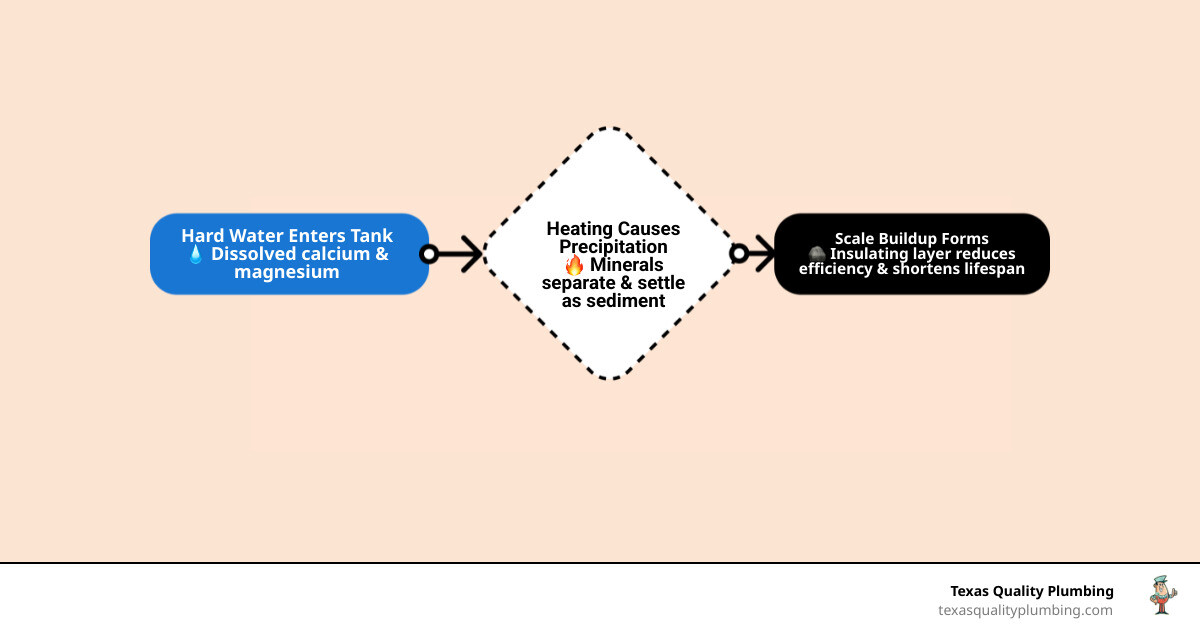
How regular flushing protects your water heater from hard water comes down to one simple idea: minerals that enter your tank don’t leave on their own. According to the U.S. Geological Survey, roughly 85% of U.S. homes deal with hard water — and Houston is firmly in that group. The water flowing through your pipes carries dissolved calcium and magnesium. When that water gets heated inside your tank, those minerals separate and sink. Over time, they form a thick layer of sediment at the bottom of the tank that acts like an insulating blanket between the burner and the water. The result? Your heater works harder, uses more energy, and wears out faster.
Here is a quick summary of how flushing helps:
- Removes settled minerals before they harden into scale
- Restores heat transfer efficiency by clearing the insulating sediment layer
- Reduces energy waste — sediment can force your heater to work 10% to 30% harder
- Prevents overheating of the tank base and heating elements
- Extends lifespan from as few as 6 years (neglected, hard water) to 15 years or more with regular care
- Protects internal components like the anode rod and tank walls from accelerated corrosion
In hard water areas like Houston, this isn’t optional maintenance — it’s the difference between a water heater that lasts and one that fails years ahead of schedule.
Understanding How Regular Flushing Protects Your Water Heater from Hard Water
To understand why we emphasize maintenance so much, you have to look at the “thermal physics” happening inside your tank. When hard water is heated, calcium carbonate and magnesium precipitate out of the liquid. These minerals don’t just stay as loose sand; they can bond together to create a rock-hard “scale” on the heating elements and the tank floor.
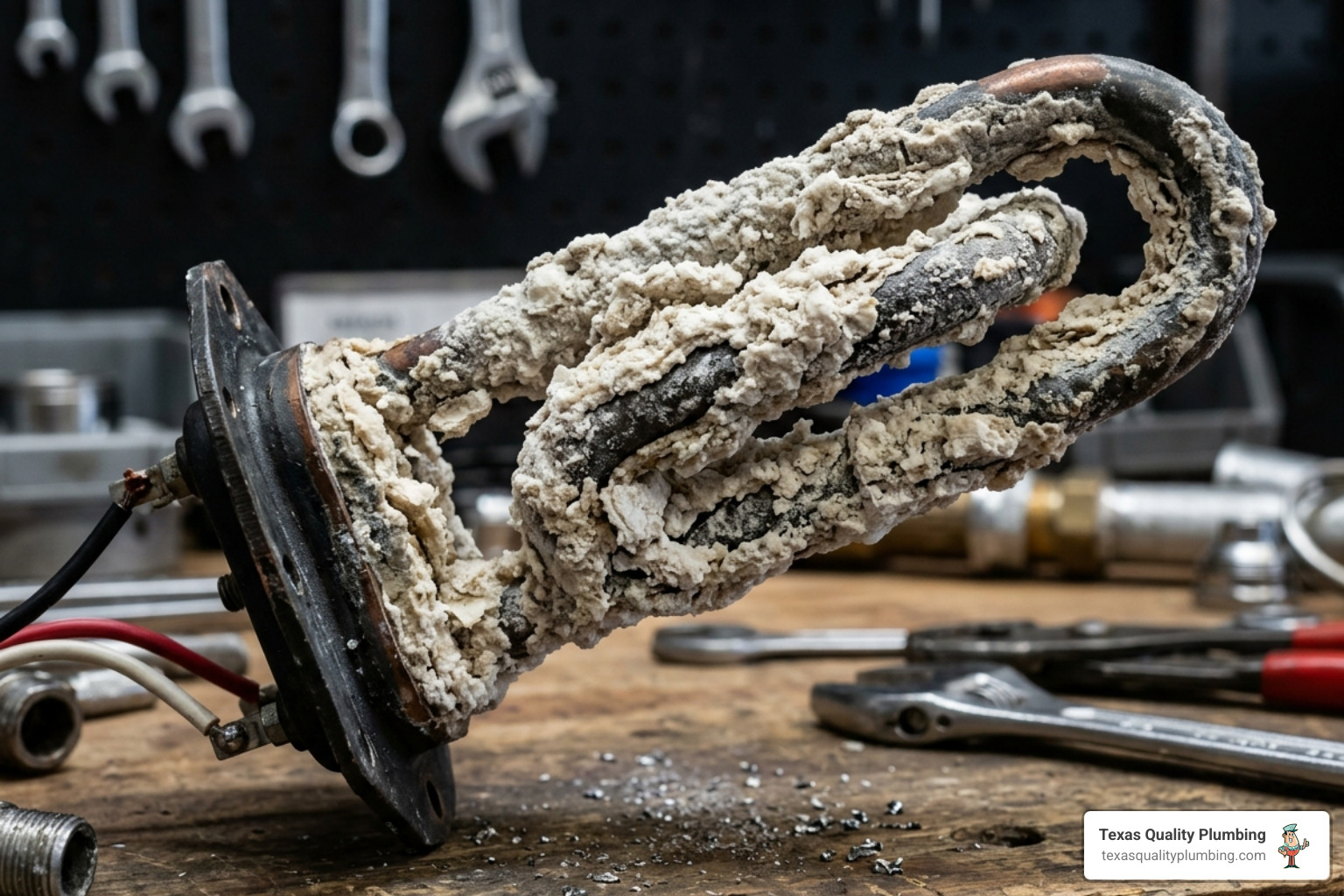
This scale acts as a powerful thermal insulator. In a gas water heater, the burner is located at the bottom. If there is a two-inch layer of “rock” between the flame and the water, the burner has to stay on much longer to get the water to the right temperature. This leads to massive energy waste. In fact, just 1/4 inch of scale buildup can reduce your water heater’s efficiency by up to 40%. This is why Understanding Water Quality Issues is the first step toward lower utility bills.
Furthermore, this mineral crust creates a “hot spot” on the metal of the tank. Because the water can’t cool the metal effectively through the sediment, the steel can overheat, weaken, and eventually crack or corrode. By investing in Water Filtration for Hard Water, you reduce the “fuel” for this fire, but regular flushing is what removes the debris that has already made it inside. Finding a Hard Water Issues Solution through maintenance is the most cost-effective way to protect your investment.
Recognizing the Warning Signs of Sediment Buildup in Houston Homes
How do you know if your water heater is currently losing the battle against Houston’s minerals? You don’t have to wait for a leak to find out. Your water heater will usually start “complaining” long before it fails.
One of the most common signs is a change in the water itself. If you notice cloudy or “rusty” looking water when you first turn on the hot tap, that is often loose sediment being stirred up. You might also notice that you are running out of hot water faster than you used to. This happens because sediment can physically occupy the bottom 10% to 20% of your tank, leaving less room for actual hot water.
Other warning signs include:
- Rising Utility Bills: If your energy costs are creeping up despite no change in usage, your heater is likely struggling against scale.
- Reduced Water Pressure: Hard water minerals can migrate into the pipes, leading to situations when hard water requires hydro jetting to clear the lines.
- Visible Crust: Check your faucets and showerheads for white, chalky buildup. If it’s on your fixtures, it’s definitely inside your heater.
For a deeper dive into these symptoms, our Ensure Efficiency Water Heater Flush Service Explained guide offers a checklist for homeowners.
Why how regular flushing protects your water heater from hard water noise issues
Have you ever heard your water heater making a sound like popcorn popping or a low rumbling like distant thunder? This is often called “kettling.”
This happens because water gets trapped underneath the hardened layers of sediment at the bottom of the tank. As the burner heats that trapped water, it turns into steam. The steam bubbles then burst through the sediment layer to reach the rest of the tank, creating those distinctive popping sounds. This isn’t just a noise nuisance; it’s a sign of localized overheating that stresses the tank’s structure. One of the benefits of water filtration systems is the reduction of these minerals, but once the noise starts, a professional flush is usually required to clear the “rocks” out.
Step-by-Step Guide: How to Flush Your Water Heater Safely
While we always recommend professional service to ensure your safety and the integrity of your valves, some homeowners choose to perform a DIY flush. If you decide to take this on, safety is paramount.
- Turn Off the Heat Source: For electric heaters, turn off the breaker. For gas heaters, turn the dial to “Pilot.” Never flush a heater while it is actively heating, as you can burn out the elements or crack the tank.
- Shut Off the Water: Close the cold water inlet valve (usually at the top of the unit).
- Connect a Hose: Attach a heavy-duty garden hose to the drain valve at the bottom. Run the other end to a floor drain or outside.
- Open a Hot Water Tap: Open a faucet somewhere in the house (like a bathtub) to allow air into the system. This prevents a “vacuum lock” and allows the water to flow out freely.
- Open the Drain Valve: Carefully open the valve. Warning: The water will be extremely hot!
- Flush with Fresh Water: Once the tank is empty, briefly turn the cold water supply back on. This “blasts” the bottom of the tank to help dislodge stubborn sediment.
- Refill Completely: This is the most important step! Close the drain valve and turn the cold water supply back on. Wait until water flows steadily from the open bathtub faucet before turning the power or gas back on. If you turn on an electric heater with an empty tank, you will “dry fire” and destroy the upper heating element instantly.
| Maintenance Task | Tank Water Heater | Tankless Water Heater |
|---|---|---|
| Flushing Frequency | Every 6–12 months | Every 12 months (Descaling) |
| Primary Goal | Remove loose sediment | Remove scale from heat exchanger |
| Main Component to Check | Anode Rod | In-line Filter |
| Risk of Neglect | Tank corrosion/bursting | System shutdown/Error codes |
If you are considering a new system, you should Install Water Filtration Systems simultaneously to prevent this maintenance from becoming a monthly chore.
Maximizing efficiency: how regular flushing protects your water heater from hard water damage
The goal of a flush is to see “clear water” at the end of the hose. When you remove that layer of muck, you are directly protecting your heating elements. In electric units, sediment can actually bury the lower element, causing it to overheat and snap. In gas units, a clean floor means the burner doesn’t have to run for 20 minutes just to heat a few gallons of water.
By maintaining a clean tank, you can extend the life of your unit from the Houston average of 8 years to 15 or even 20 years. This simple task offers one of the highest returns on investment in home maintenance. You can learn more about the top 10 benefits home water filter systems Houston homeowners enjoy when they combine filtration with regular flushing.
Long-Term Protection Strategies for Greater Houston Plumbing Systems
While flushing is a “reactive” maintenance step, you can take “proactive” steps to stop the sediment before it starts. The most effective method is a whole-home water softener.
By installing Houston Water Softener Systems, you replace the “hard” minerals (calcium/magnesium) with “soft” ions (sodium) that do not precipitate out or form scale. This keeps your water heater’s interior as clean as the day it was installed. We provide a Water Softener Installation Complete Guide to help you choose the right system for your family’s needs.
In addition to softeners, you must monitor your sacrificial anode rod. This is a metal rod (usually magnesium or aluminum) that hangs inside your tank. Its only job is to corrode so that your tank doesn’t. Hard water eats these rods quickly. If you live in an area with particularly aggressive water, check out Quality Water Softener Systems and ensure your anode rod is replaced every 3 years.
Whether you choose Water Softener Installation Houston or another filtration method, the goal is the same: better water quality. We’ve seen how Water Softener Improves Household Water not just for the heater, but for your skin, hair, and clothing as well. Water Softeners Improve Water Quality across your entire plumbing system, reducing the need for emergency repairs.
Frequently Asked Questions about Water Heater Maintenance
How often should I flush my water heater in the Houston area?
In most parts of the country, once a year is fine. However, in Greater Houston—specifically in areas like Sugar Land, Tomball, Spring, and Kingwood—the mineral content is significantly higher. In these neighborhoods, we recommend flushing every 6 months. If you have a large family and use a lot of hot water, sediment accumulates even faster. For more localized info, see our Overview Houston Water Filtration Systems page.
Can flushing an older, neglected water heater cause leaks?
This is a common concern. If a water heater has been neglected for 10+ years, the sediment might actually be “plugging” small corrosion holes in the bottom of the tank. When you flush that sediment away, a leak might appear. Additionally, old plastic drain valves can become brittle and may not close properly after being opened for the first time in a decade. This is why it’s vital to have Houston Water Filtration Experts Near Me inspect an older unit before performing an aggressive flush.
Does a water softener eliminate the need for manual flushing?
A softener greatly reduces the speed of buildup, but it doesn’t eliminate it entirely. Some sediment still enters the tank from the municipal lines, and some minerals may still settle over time. While you won’t need to flush as aggressively, a “mini-flush” once a year is still recommended to maintain your manufacturer’s warranty and clear out any residual debris. A softener is your best Hard Water Issues Solution, but maintenance is still part of the package.
Conclusion
Your water heater is one of the hardest-working appliances in your home, especially during the humid Houston summers and the occasional winter freeze. Don’t let hard water minerals cut its life short. By understanding how regular flushing protects your water heater from hard water, you can take control of your home’s efficiency and avoid the “cold shower surprise” of a sudden equipment failure.
At Texas Quality Plumbing, we are proud to serve our neighbors in The Woodlands, Cypress, Friendswood, Katy, Pearland, and throughout the Greater Houston area. Whether you need a professional maintenance tune-up, a new anode rod, or a whole-home water softener installation, our licensed plumbers are ready to help. We offer 24-hour appointment guarantees and a VIP plan that ensures your home’s plumbing is always in top shape.
Don’t wait for your water heater to start “popping” or leaking. Schedule your professional water heater flush service today and keep your hot water flowing for years to come!