

Summer Heat Is Harder on Your Water Heater Than You Think
How hot water demand in summer stresses your water heater comes down to a simple but punishing combination: more people using more hot water, more often, inside a home where the surrounding air is already scorching hot. In Houston, where summer temperatures regularly push past 95°F and garages can feel like ovens, your water heater is quietly fighting a battle on two fronts — crushing household demand and a brutal ambient environment.
Here is a quick breakdown of how summer demand stresses your water heater:
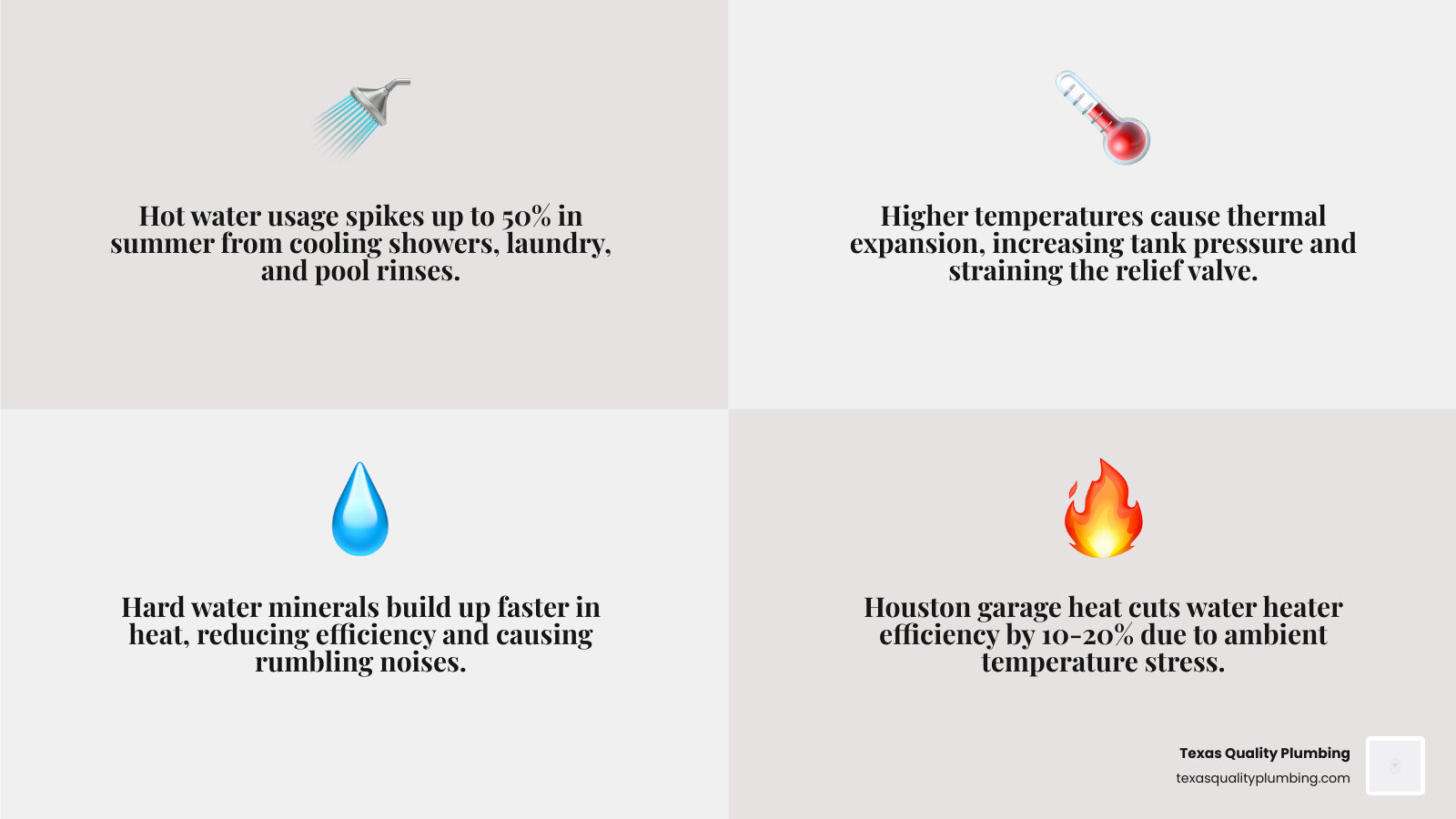
- More usage — Kids home from school, house guests, post-pool showers, and extra laundry all add up fast. Water usage can spike by as much as 50% in summer.
- Faster sediment buildup — Higher temperatures accelerate mineral deposits inside the tank, reducing heating efficiency and forcing the unit to run longer.
- Thermal expansion — Heat causes water inside the tank to expand, raising internal pressure and straining the pressure relief valve.
- Ambient heat stress — A water heater in a hot Houston garage or attic loses efficiency by 10–20% because the surrounding air makes it harder for the unit to regulate temperature.
- Thermostat accuracy issues — Extreme ambient heat can throw off the thermostat’s calibration, causing inconsistent water temperatures.
- Pilot light and electrical strain — Gas units in poorly ventilated attics can lose their pilot light; electrical connections can expand under heat, risking shorts.
Most homeowners assume their water heater gets a break in summer since the water coming in is warmer. In reality, the opposite is often true — especially in Houston, where the combination of hard water, intense heat, and high household activity puts more stress on water heaters in July and August than at any other time of year.
Why Hot Water Demand in Summer Stresses Your Water Heater
As we move through May 2026, many of our neighbors in Pearland, Sugar Land, and Katy are already feeling the humidity rise. While we all love a good backyard BBQ, these summer lifestyle shifts are exactly why your plumbing system starts to groan.
When the kids are home for summer break, the “hot water math” changes instantly. Instead of a predictable morning routine, you have a house full of people taking multiple “cooling showers” throughout the day to wash off the Houston humidity. Then there are the pool activities. Whether you’re rinsing off chlorine or washing a mountain of beach towels from a trip to Galveston, your water heater is constantly cycling to keep up.
This increased usage doesn’t just mean a higher bill; it means the internal components are moving and heating far more than they were designed to do during “peak” months. If you notice that your water is suddenly lukewarm or taking forever to get hot, you might be seeing Signs You Need Water Heater Repair.
Guest visits also play a huge role. Hosting family for the Fourth of July or a summer wedding in The Woodlands puts a “river” of demand on a system that might already be aging. When a 40-gallon tank is asked to provide for eight people instead of four, it never gets a chance to rest. This constant state of “recovery” is a primary reason why systems fail right when you need them most.
How high hot water demand in summer stresses your water heater components
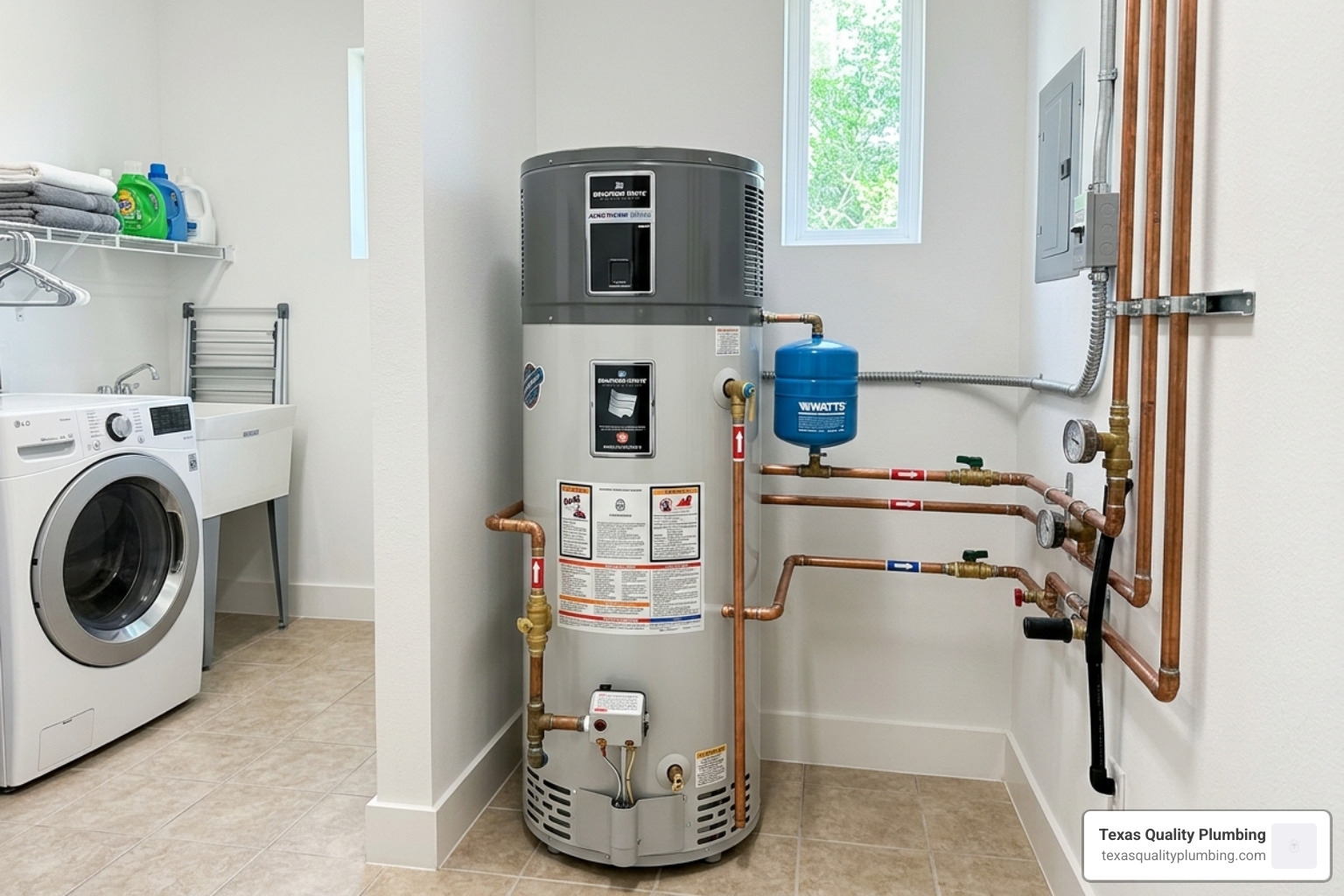
Inside that metal tank, a lot is happening. When how hot water demand in summer stresses your water heater becomes a reality, the physical laws of thermal expansion take over. As water heats up, it expands. In the winter, the cold pipes might absorb some of that pressure, but in a Houston summer, everything is already warm. This puts immense strain on the tank’s inner lining and the Temperature and Pressure (T&P) relief valve.
If that valve is old or crusty with mineral buildup, it might not be able to “breathe” properly, leading to dangerous pressure levels. We often see Signs Water Heater Needs Immediate Repair such as small leaks around the top or bottom of the tank, which are often the result of this internal pressure seeking an exit.
Furthermore, electrical components in electric heaters are sensitive to heat. High demand means the heating elements stay on for longer durations. In a hot environment, these elements can overheat and burn out faster. For gas units, the constant cycling can wear out the gas valve or the thermocouple, leaving you with a tank full of cold water just as you’re jumping in the shower.
The impact of increased household guests on recovery rates
“Recovery rate” is the amount of hot water a heater can provide in one hour after being completely drained. During a typical Houston summer, recovery rates become the bottleneck of the household. If you have guests staying over in Kingwood or Cypress, back-to-back showers are inevitable.
When the demand exceeds the recovery rate, the heater is constantly pulling in “warm” (but not hot) ground water. While ground water in May 2026 is warmer than in January, it’s still not the 120°F you want for a comfortable shower. This leads to “standby heat loss,” where the unit works double-time to heat the new water while trying to maintain the temperature of the remaining water. Undersized tanks are the biggest victims here; a tank that worked fine for a couple in February will fail miserably when the grandkids visit in July. This is a common reason why homeowners realize it’s time to investigate Why Choose Us for Water Heater Repair to see if a larger unit or a different technology is needed.
Environmental Factors: The “Garage Sauna” Effect in Houston
In many of the homes we service in Missouri City and Jersey Village, the water heater isn’t tucked away in a climate-controlled closet. Instead, it lives in the garage or the attic. By mid-afternoon in July, a Houston garage can easily reach 110°F to 120°F.
This creates what we call the “Garage Sauna” effect. Normally, insulation is supposed to keep the heat inside the tank. However, when the air outside the tank is nearly as hot as the water inside, the unit’s ability to regulate itself goes out the window. The unit can drop 10-20% in efficiency just because it’s struggling to operate in an “oven.” If you’re concerned about how your specific neighborhood’s climate is affecting your unit, checking out Houston TX Water Heaters can give you localized insights.
Managing humidity and condensation on tank surfaces
Houston is famous for its “wet” heat. High humidity acts like a heavy blanket on your plumbing. When cold water enters your water heater to replenish the tank, the temperature difference between the cold pipe and the humid garage air causes condensation—much like a glass of iced tea “sweats” on a porch.
This moisture is a silent killer. It drips down the side of the tank, leading to rust and corrosion on the outer shell and, more importantly, the sensitive controls at the bottom. We see many Houston Plumbing Concerns Left Hands Pros that stem from ignored moisture issues.
Additionally, for gas water heaters, humidity can make the air “thick,” which interferes with proper combustion. If your pilot light keeps going out during a summer thunderstorm or a particularly humid week in Humble, it’s likely a ventilation and humidity issue rather than a broken part.
How external heat affects thermostat accuracy
Your water heater relies on a thermostat to tell it when to turn on and off. However, these thermostats aren’t always perfect, especially when the ambient air is scorching. If the garage is 115°F, the thermostat might “think” the water is warmer than it actually is, leading to lukewarm showers. Conversely, it might over-calibrate and heat the water to scalding temperatures, which is both a safety hazard and a waste of energy.
This lack of calibration leads to frequent “short-cycling,” where the heater turns on and off rapidly. This is incredibly hard on the equipment and is a major red flag for When to Call for Water Heater Repair.
Managing Sediment and Hard Water During Peak Season
If you live in Sugar Land or Richmond, you likely know all about hard water. The mineral content in our local water supply—specifically calcium and magnesium—is significantly higher than in other parts of the country.
When you heat hard water, these minerals solidify and settle at the bottom of the tank. This creates a layer of “scale” that acts like a stone barrier between the heating element (or burner) and the water. Imagine trying to boil a pot of water with a brick sitting at the bottom of the pan; it’s going to take a lot more energy and time. This is exactly how hot water demand in summer stresses your water heater—it forces the unit to work through a mineral “crust” just to give you a warm shower.
| Feature | Tank With Sediment | Tank Without Sediment |
|---|---|---|
| Energy Efficiency | 15-25% Lower | Optimal (100%) |
| Recovery Time | Slower (45+ mins) | Fast (20-30 mins) |
| Noise Level | Popping/Rumbling | Silent |
| Lifespan | 8-10 Years | 12-15 Years |
| Water Temperature | Inconsistent | Stable |
To understand the full scope of this process, we recommend reading our guide: Ensure Efficiency Water Heater Flush Service Explained.
Reducing how hot water demand in summer stresses your water heater through maintenance
The best way to fight back against the Houston summer is through proactive maintenance. We recommend a “Summer Ready” check for all our neighbors in Spring and Conroe. This includes:
- Annual Flushing: This removes the “brick” of sediment at the bottom of the tank, restoring your efficiency and quiet operation.
- Anode Rod Inspection: The anode rod is a “sacrificial” piece of metal that attracts corrosion so your tank doesn’t have to. In high-demand summer months, these rods dissolve faster.
- Thermostat Calibration: Ensuring your unit is actually heating to the 120°F setting and not wasting energy.
Keeping up with these tasks is the difference between a unit that lasts 8 years and one that lasts 15. You can find more about our general services at Water Heaters.
Why hard water is more aggressive in May 2026 heat
As of May 2026, we are seeing higher-than-average mineral concentrations in the local water table. When it’s hot outside, water in municipal lines can move slower or be subject to more evaporation before it reaches your home, which concentrates the minerals.
Heat also acts as a catalyst for chemical reactions. The hotter the water, the faster the calcium and magnesium will “drop out” of the liquid and attach to your tank walls. If you’ve noticed a white, crusty buildup on your showerhead or faucets, imagine what the inside of your water heater looks like! This aggressive scale buildup is a primary reason for When Should You Replace Your Water Heater.
Proactive Steps to Protect Your System
You don’t have to be a victim of the Houston heat. There are several simple steps you can take today to give your water heater a break:
- Adjust the Temperature: Most manufacturers set heaters to 140°F. In the summer, you don’t need it that hot. Turning it down to 120°F saves about 5% in energy costs for every 10 degrees you drop, and it significantly reduces the stress on the tank.
- Stagger Your Usage: Don’t run the dishwasher, the washing machine, and take two showers at the same time. Spreading these tasks out over the day allows the tank to recover without “panic heating.”
- Insulate Your Pipes: Even in summer, insulating the first six feet of hot and cold water pipes connected to the heater can reduce heat loss and prevent that “sweating” condensation we talked about earlier.
If you find yourself constantly running out of hot water despite these steps, it might be time to evaluate When to Repair or Replace Your Water Heater.
Upgrading to tankless systems for endless summer demand
For many families in The Woodlands and Memorial, the solution to summer stress isn’t a better tank—it’s no tank at all. Tankless water heaters, also known as “on-demand” heaters, only heat water when you turn on the faucet.
This technology is perfect for Houston summers because:
- No Standby Loss: You aren’t paying to keep 50 gallons of water hot in a 110°F garage all day.
- Endless Hot Water: Even with ten guests, you’ll never run out of hot water.
- Space Saving: They mount on the wall, freeing up space in your garage for more important things (like that extra fridge for cold drinks).
We specialize in Tankless Water Heaters and can help you decide if an upgrade is right for your home. Just keep in mind that even these systems need maintenance; if they aren’t flushed, you might find that Tankless Water Heaters Stop Producing Hot Water due to scale buildup in the heat exchanger.
Frequently Asked Questions about Summer Water Heater Stress
Should I adjust my water heater temperature in the summer?
Yes! We recommend setting your thermostat to 120°F. This is the “sweet spot” that is hot enough to kill bacteria like Legionella but cool enough to save you money and prevent your system from overworking in the Houston heat.
Why is my water heater making popping noises in July?
That “popcorn” sound is actually the sound of steam bubbles fighting their way through a layer of sediment at the bottom of your tank. It’s a clear sign that your unit is struggling and needs a professional flush to remove mineral buildup.
Can high humidity cause my water heater to leak?
Indirectly, yes. Humidity causes condensation on the tank and pipes. Over time, this moisture leads to rust. If the rust eats through the outer shell or the connections, you’ll end up with a leak. If you see “sweat” on your tank, it’s time for a check-up to ensure your Signs You Need Water Heater Repair aren’t turning into a flood.
Conclusion
At Texas Quality Plumbing, we’ve seen it all—from “garage saunas” in Sugar Land to sediment-clogged tanks in Pasadena. We know that a reliable hot water supply is essential for your family’s comfort, especially when the Houston summer is at its peak. Whether you need a quick flush, a complex repair, or a brand-new tankless installation, our team is ready to provide the quick, efficient service we’re known for.
Don’t wait for a mid-summer breakdown to leave you in the cold. If you’re noticing any of the signs we’ve discussed, reach out for Urgent Water Heater Repair Replacement today. We serve the entire Greater Houston area, including Katy, Pearland, Cypress, and beyond.
For more information on all our residential services, visit our main Plumbing Services page. Let’s keep your home running smoothly all summer long!