

Why Understanding How Camera Inspections Guide Professional Drain Cleaning Can Save You From Costly Surprises
How camera inspections guide professional drain cleaning comes down to one simple idea: a plumber who can see inside your pipes makes far better decisions than one who has to guess.
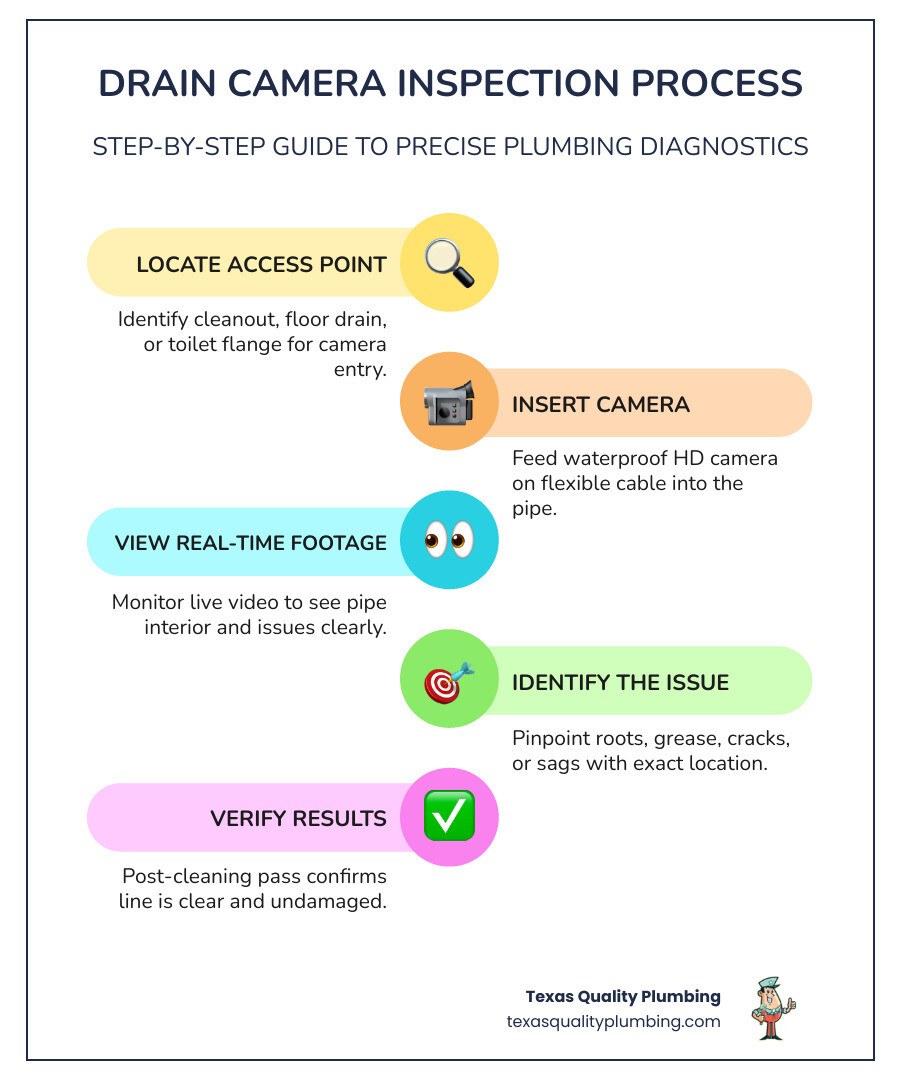
Here’s a quick breakdown of how the process works:
- Locate the access point – The technician finds a cleanout, floor drain, or toilet flange to insert the camera.
- Insert the camera – A waterproof, high-definition camera on a flexible cable is fed into the pipe.
- View real-time footage – Live video shows the exact location, type, and severity of any problem.
- Identify the issue – Root intrusion, grease buildup, cracked pipes, or sagging sections are pinpointed precisely.
- Choose the right cleaning method – The footage tells the plumber whether to use hydro-jetting, a mechanical snake, or another approach entirely.
- Verify the result – A second pass after cleaning confirms the line is fully clear and undamaged.
Without this step, drain cleaning can be hit-or-miss. The wrong tool or pressure applied to a fragile pipe can make things worse, not better. Worse still, a problem that looks like a simple clog could actually be a structural failure that needs repair, not cleaning at all.
For Houston homeowners dealing with slow drains, gurgling pipes, or that stubborn backup that keeps coming back, a camera inspection is often the fastest path to a real, lasting fix.
What is a Drain Camera Inspection and How Does It Work?
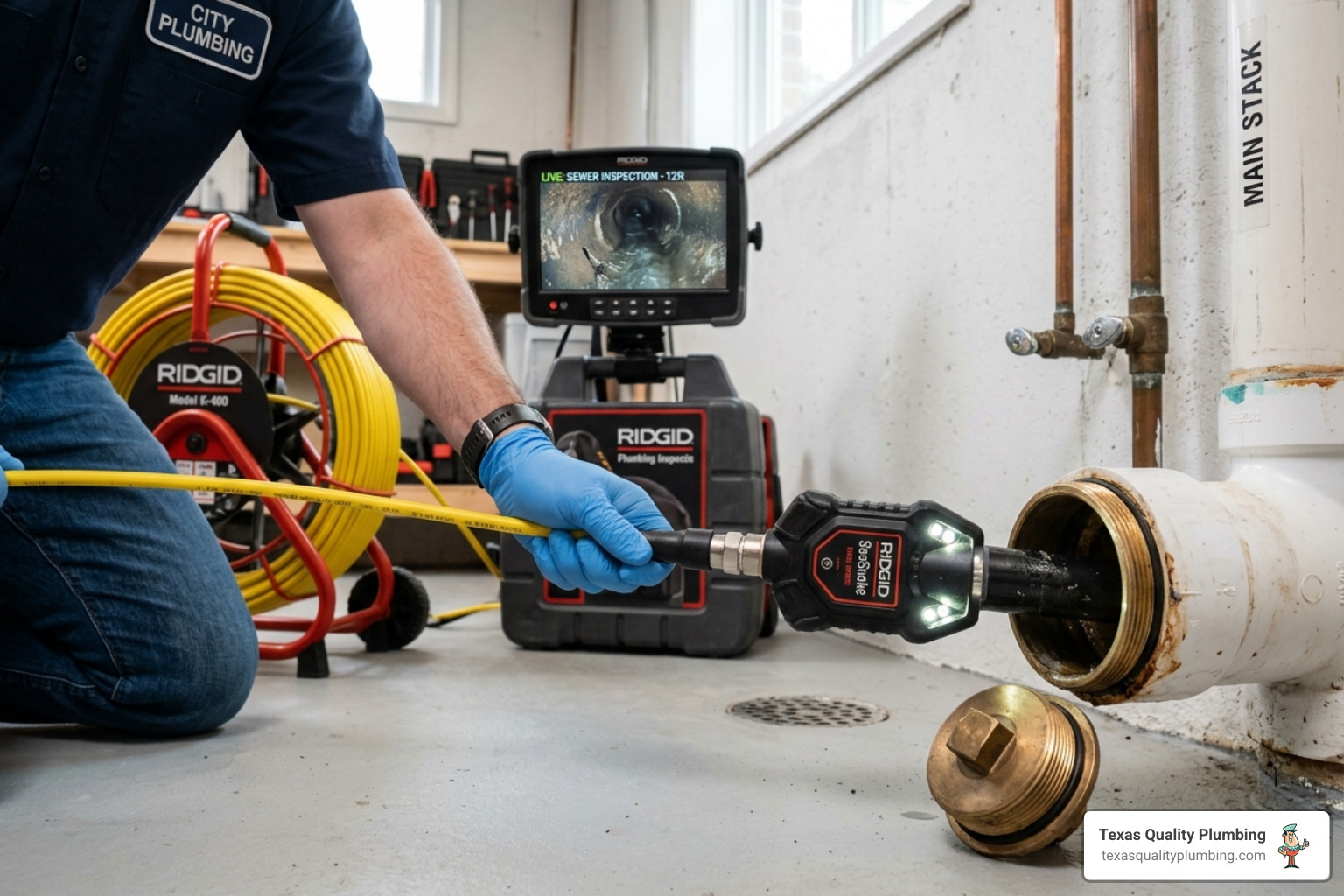
At its core, a drain camera inspection is a diagnostic procedure that uses high-tech equipment to provide a “fish-eye” view of your plumbing’s interior. We use specialized, waterproof cameras attached to flexible, high-strength push-rods. These rods are designed to navigate the tight 90-degree bends common in Houston residential plumbing without getting stuck or causing damage.
As the camera travels through the line, powerful LED lights on the camera head illuminate the dark, murky environment of the sewer pipe. This footage is transmitted in real-time to a high-resolution monitor where we can see every hairline crack, offset joint, and buildup of grease.
One of the most impressive features is the “sonde” locator. This is a small radio transmitter inside the camera head. If we find a major problem—like a collapsed section of pipe—we can use a handheld receiver above ground to pinpoint exactly where the camera is. This means we don’t have to guess where to dig; we can mark the exact spot on your lawn or floor with sub-millimeter precision. For a deeper look at why this is vital, check out our guide on Sewer Camera Inspection for Healthy Plumbing and our Sewer Camera Inspection Houston Guide.
The Step-by-Step Inspection Process
When we arrive at your home in Cypress, Katy, or Pearland, we follow a systematic approach to ensure nothing is missed. First, we identify the best access point, usually an outdoor cleanout or a roof vent. Once the camera is calibrated, we begin the traversal.
We track the distance the camera travels using a digital counter. This allows us to tell you, “The blockage is exactly 42 feet from the cleanout.” This level of detail is essential for planning effective repairs. For residents in the suburbs, our Sewer Camera Inspection Cypress Guide offers localized insights into common soil-related pipe shifts.
Key Components of Modern Inspection Systems
Modern technology has made these inspections incredibly accurate. We utilize self-leveling camera heads, which ensure the image on the monitor stays upright even if the camera is twisting through the pipe. This prevents the “dizzying” effect of older cameras and makes it much easier to identify the top, bottom, and sides of the pipe.
Furthermore, we can record the entire session digitally. This provides a historical record of your plumbing health, which is invaluable for insurance claims or when selling your home. You can learn more about how we use this tech in our article on how a Sewer Camera Detect Plumbing Issues.
How Camera Inspections Guide Professional Drain Cleaning for Better Results
The primary reason we insist on an inspection before we start any Sewer Line Cleaning Services is safety and efficiency. Cleaning a drain “blindly” is like a surgeon operating without an X-ray. You might clear the immediate blockage, but you could miss the underlying cause—or worse, damage a pipe that was already fragile.
How camera inspections guide professional drain cleaning is by turning a guessing game into a targeted strike. When we see the exact nature of the debris, we can consult our Complete Drain Clearing Guide to select the perfect tool for the job.
How camera inspections guide professional drain cleaning by identifying pipe material
The material of your pipes dictates how aggressively we can clean them.
- PVC Pipes: Common in newer Houston homes, these are durable but can be damaged by certain chemical cleaners or improperly used mechanical snakes.
- Cast Iron: Found in many older homes in areas like River Oaks or the Heights. These pipes are prone to internal “scaling” (rust buildup) which requires specific descaling tools.
- Vitrified Clay: These are brittle. If we see clay pipes with the camera, we know to be extremely gentle to avoid cracking the joints.
- Orangeburg Pipe: This is a bituminized fiber pipe used in some pre-1970 builds. It is very fragile and can easily collapse if subjected to high-pressure hydro-jetting without caution.
Understanding these materials via a Sewer Line Inspection is the only way to ensure the cleaning process doesn’t turn into a replacement project.
How camera inspections guide professional drain cleaning in older Houston homes
In historic neighborhoods or older properties in Pasadena and Deer Park, pipes have often reached the end of their lifespan. A camera inspection is a mandatory part of Sewer Line Inspections for Properties during a home purchase. It can reveal hidden issues like “bellies” or structural decay that a standard home inspection might miss. By choosing to Sewer Camera Identify Hidden Issues early, you can avoid inheriting a $20,000 sewer repair.
Integrating Technology with Hydro-Jetting and Snaking
Once the inspection is complete, we integrate the findings with our cleaning methods. If the camera shows heavy grease or sludge, we typically recommend a Hydro Jetting Solution for Clogged Drains. Hydro-jetting uses water at pressures up to 4,000 psi to scrub the pipe walls clean.
If the camera reveals a solid object—like a child’s toy or a thick mass of hair—we might use a mechanical auger (snake) to hook and retrieve the object. The “after” photo is just as important as the “before.” We perform a post-cleaning inspection to verify that the Hydro Jetting for Drain Clogs was 100% successful.
Common Pipe Problems Detected by High-Definition Video
| Problem Detected | Visual Evidence | Recommended Cleaning/Repair |
|---|---|---|
| Tree Roots | Fine “hair” or thick “wood” at joints | Hydro-jetting with root cutter or pipe lining |
| Grease Buildup | White, waxy “cauliflower” appearance | High-pressure hydro-jetting |
| Pipe Belly | Camera goes underwater in a dry line | Excavation and regrading of the pipe |
| Corrosion | Rough, jagged “scales” on pipe walls | Descaling or pipe replacement |
| Foreign Objects | Toys, wipes, or hygiene products | Mechanical retrieval or snaking |
If you notice any of these Signs You Need Sewer Camera Inspection, it’s time to call in the professionals.
Identifying Tree Root Intrusions
In mature Houston neighborhoods with large oak or pecan trees, root intrusion is the #1 cause of sewer failure. Roots seek moisture and can enter through tiny cracks or gaps in pipe joints. Once inside, they grow rapidly, acting as a “net” that catches grease and toilet paper.
We specialize in Identifying Tree Root Intrusions and looking for the Root Intrusion Signs in Sewer Lines. Once we see the extent of the invasion, we can provide Root Invasion Problems Solved through targeted cutting and cleaning.
Detecting Pipe Bellies and Sags
Houston’s expansive clay soil is notorious for shifting. When the ground moves, a section of your sewer line can sink, creating a “belly” or sag. Gravity-fed sewer lines need a consistent slope to work. In a belly, water and waste pool, leading to frequent clogs. A camera is the only way to see these Signs of Hidden Sewer Line Problems because the pipe may look perfectly clear from the outside. Our team is expert at diagnosing these Sewer Camera Inspection Plumbing Issues before they cause a total backup.
Locating Corrosion and Misaligned Joints
Older cast iron pipes eventually corrode from the inside out. This creates a rough surface that snags debris. Similarly, ground movement can cause pipe joints to “offset” or misalign. This creates a lip that traps waste. If you’re wondering, “Do You Need Sewer Camera Inspection?”, the answer is almost always “yes” if your home is more than 20 years old.
Frequently Asked Questions about Drain Inspections
Properly Maintaining Home with Sewer Camera Inspections is one of the smartest things a Houston homeowner can do to prevent emergencies.
Can a camera inspection damage my plumbing system?
No. The camera inspection is entirely non-invasive. The flexible cables and rounded camera heads are designed to glide through your pipes without putting pressure on the walls. It is safe for all pipe materials, from modern PVC to fragile antique clay. For a professional Plumbing Houston TX Sewer Camera Inspection, we ensure the equipment is handled with the utmost care.
How often should I schedule a professional sewer scope?
For most homes, we recommend a camera inspection every 2 to 5 years as preventative maintenance. However, if you live in an older home (30+ years) or have large trees near your sewer line, annual Plumbing Regular Sewer Camera Inspections are a wise investment to catch root intrusions before they cause a flood.
When should I choose an inspection over immediate cleaning?
If you have a one-time clog in a single sink, immediate cleaning is usually fine. However, if you have recurring clogs, multiple slow drains, or foul “sewer gas” odors, you should always start with an inspection. These symptoms often point to a main line issue that a simple snake won’t fix. Dealing with Clogged Drains is a Professional Job, and the camera is our most important tool.
Conclusion
At Texas Quality Plumbing, we believe in doing the job right the first time. By understanding how camera inspections guide professional drain cleaning, you can rest easy knowing your home’s infrastructure is in good hands. We serve the entire Greater Houston area, including Humble, Kingwood, Tomball, and Spring, providing quick, efficient service with a focus on professionalism.
Whether you are in the middle of a plumbing emergency or just want the peace of mind that comes with a clear sewer line, our licensed professionals are ready to help. We offer guaranteed 24-hour appointments and a VIP plan to keep your home running smoothly. For the best Drain Cleaning Services Houston has to offer, trust the team that looks deeper. Contact us today to schedule your inspection!