

Flush with Success: What Seabrook, TX Homeowners Need to Know About Toilet Installation
Toilet installation in Seabrook TX is one of the most common plumbing jobs homeowners face — and one of the most misunderstood. Whether your current toilet is cracking, constantly clogging, or simply wasting water, knowing what the replacement process looks like helps you make smarter decisions fast.
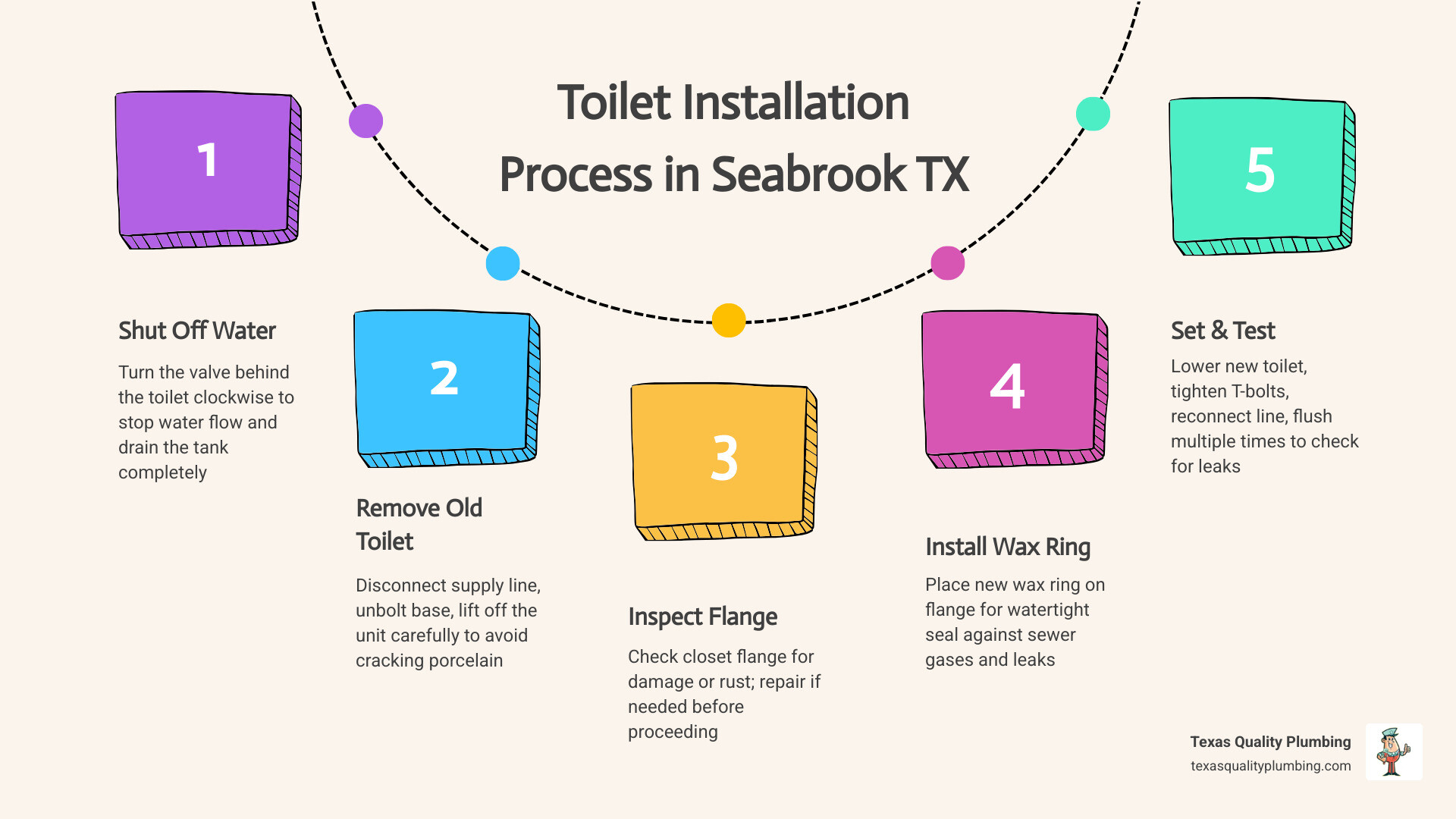
Here’s a quick overview of the toilet installation process for Seabrook homeowners:
- Identify the problem – Cracks, leaks, clogs, or an outdated unit
- Choose the right toilet – Consider water efficiency, bowl style, and local conditions
- Shut off the water supply – Turn the valve behind the toilet clockwise
- Remove the old unit – Drain the tank and bowl, disconnect the supply line, unbolt the base
- Inspect the flange – Check for damage before setting the new toilet
- Install a new wax ring – Creates a watertight seal between toilet and drain
- Set and secure the new toilet – Press onto wax ring, fasten T-bolts, connect supply line
- Test for leaks – Turn water back on and flush several times
Plumbing problems don’t wait for a convenient moment. In Seabrook’s coastal environment — where humidity, salt air, and expansive clay soil put extra stress on your plumbing system — a failing toilet can go from a minor nuisance to a serious headache quickly. According to local plumbing service data, toilet clogs are among the most reported household plumbing issues in the area. Getting ahead of the problem with the right information (and the right team) makes all the difference.
This guide walks you through everything — from spotting the signs you need a new toilet to understanding what a professional installation actually involves.
I’m looking to upgrade my bathroom. When is it time for a new toilet installation in Seabrook TX?
Deciding when to pull the trigger on a new toilet installation in Seabrook TX isn’t always about a catastrophic overflow. Often, the signs are subtle, whispering (or gurgling) that the end is near for your current fixture.
One of the most immediate red flags is a frequency of clogs that defies logic. If you find yourself reaching for the plunger more than once a week, you likely have more than just a simple blockage. Our Clogged Toilet Houston Ultimate Guide highlights that frequent backups can indicate internal trapway issues or aging flushing components that no longer have the “oomph” to clear the bowl.
Beyond clogs, keep a sharp eye out for:
- Hairline Cracks: Porcelain is durable, but it isn’t invincible. Small cracks in the tank or bowl can turn into a flood in an instant. If you see “spiders” in the finish, it’s time to browse new toilets.
- High Water Bills: Is your toilet “running” even when no one has used it? A phantom flush or a constant trickle into the overflow tube wastes thousands of gallons of water.
- Wobbling Base: A toilet should feel like a rock. If it shifts when you sit down, you likely have leaks that have rotted the subfloor or a flange that has finally given up the ghost.
- Outdated Technology: If your toilet was installed before the mid-90s, you’re likely using 3.5 to 7 gallons per flush. Modern high-efficiency models use a fraction of that, paying for themselves in utility savings over time.
How do coastal conditions affect my toilet installation in Seabrook TX?
Living near Galveston Bay is a dream, but the maritime environment is notoriously tough on indoor plumbing. Seabrook’s high humidity and salt air can accelerate the corrosion of the metal components inside your toilet tank. We often see handle levers, bolts, and supply lines pitted and rusted long before their time.
Furthermore, “tank sweat” or condensation is a major issue in our climate. When cool water fills the tank in a humid bathroom, moisture beads on the outside of the porcelain. If left unaddressed, this dripping can rot your bathroom floor.
Perhaps the biggest local challenge is our expansive clay soil. Harris County soil expands when wet and contracts during our hot Texas droughts. This constant shifting can cause the foundation of your home to move slightly, which puts immense pressure on your plumbing stacks. It’s not uncommon for these shifts to cause pipe joint separation or to break the wax seal under your toilet, leading to hidden leaks.
Why do older homes present unique challenges for a toilet installation in Seabrook TX?
Seabrook is home to many beautiful properties built before the 1980s. While these homes have character, their plumbing often consists of original cast iron or clay sewer lines. These materials are highly susceptible to corrosion and “scaling,” where the interior of the pipe becomes rough, catching debris and causing chronic clogs.
In older neighborhoods, mature oak trees are another factor. These trees have aggressive root systems that seek out the moisture inside sewer lines. Once a root finds a tiny crack in a clay pipe, it grows inside, creating a literal “root ball” that stops everything in its tracks. When we perform a toilet installation in Seabrook TX in an older home, we often recommend a video inspection to ensure the underlying Houston plumbing is healthy enough to support a new high-pressure fixture.
What should I look for when choosing a new fixture for my coastal home?
Choosing a toilet isn’t just about the color anymore. You want a fixture that complements your sinks and faucets while standing up to heavy use.
When shopping, look for the EPA WaterSense label. This ensures the toilet uses no more than 1.28 gallons per flush while still providing top-tier performance. You should also consider:
- Comfort Height: These toilets sit about 2 to 3 inches higher than standard models, making them much easier on the knees and back—a popular choice for “forever homes.”
- Elongated Bowls: While they take up a bit more space, elongated bowls are generally considered more comfortable and hygienic than round ones.
- Flushing System: Gravity-fed systems are the quiet standard, but pressure-assisted models (the ones that “whoosh” loudly) are excellent for families who struggle with frequent clogs. They use compressed air to force water into the bowl, ensuring a clean flush every time.
Which water-efficient models are best for a toilet installation in Seabrook TX?
In Seabrook, water conservation isn’t just a suggestion; it’s a way to keep our coastal community sustainable. Dual-flush technology is a fantastic option for our area. These units feature two buttons: one for a partial flush (liquids) and one for a full flush (solids).
When we perform a toilet installation in Houston or Seabrook, we focus on models that offer “low-flow” performance without sacrificing “bulk removal” power. Many modern brands have redesigned their trapways to be glazed and extra-wide, which significantly reduces the risk of clogs even with less water. For a full look at the options available, check out all our services.
I want to do it myself. What is the process for replacing a commode?
If you’re handy with a wrench, you might consider a DIY approach. However, be warned: toilets are heavy, awkward, and a single mistake with the wax ring can lead to a slow leak that ruins your subfloor.
The general process for a fast, reliable toilet repair and installation involves several critical steps:
- Preparation: Turn off the water shut-off valve behind the toilet. Flush until the tank is empty, and use a sponge to soak up the remaining water in the bowl.
- Removal: Disconnect the supply line. Unscrew the floor bolts (T-bolts) and carefully lift the toilet. It helps to have a second person here to avoid straining your back.
- Flange Inspection: Scrape away the old wax. Inspect the flange (the plastic or metal ring in the floor). If it’s cracked or rusted, it must be replaced before the new toilet goes in.
- Setting the Seal: Place a new wax ring on the flange or the bottom of the new toilet.
- Installation: Lower the new toilet onto the T-bolts. Press down firmly to seat the wax ring. Tighten the bolts—but be careful! Over-tightening can crack the porcelain.
- Connections: Reconnect the supply line and turn the water back on.
- Testing: Flush the toilet 5 to 10 times while watching the base for any signs of moisture.
While you’re working in the bathroom, it’s a great time to check other fixtures like your garbage disposals in the kitchen or the showers and tubs in the guest bath to ensure your whole home’s plumbing is in top shape.
What maintenance is recommended for toilets in a humid environment?
To keep your new investment running smoothly in Seabrook’s humid climate, we recommend:
- Annual Flapper Checks: The rubber flapper in the tank can degrade quickly due to local water minerals and humidity. Replace it every 1–3 years.
- Fill Valve Adjustments: Ensure the water level is about an inch below the overflow tube to prevent constant running.
- Condensation Management: If your tank “sweats,” consider installing an insulation kit or ensuring your bathroom has proper ventilation to pull moisture out of the air.
- Regular Inspections: Every few months, check the floor around the base of the toilet for soft spots or discoloration. Catching a leak early can save you thousands in flooring repairs.
- Professional Sewer Cleaning: Especially in older Seabrook homes, a professional sewer cleaning once a year can prevent the “downstream” clogs that make your toilet back up.
Frequently Asked Questions about Seabrook Plumbing
Do I need a permit for a new toilet in Seabrook?
In most cases, a simple “like-for-like” toilet replacement does not require a specific building permit in Seabrook. However, if you are moving the location of the toilet or modifying the sewer lines, you will need to adhere to Harris County building codes and local regulations. Professional plumbers handle these standards to ensure your home remains compliant and safe.
How long does a professional replacement typically take?
When we arrive for a toilet installation in Seabrook TX, the process usually takes between 1 and 2 hours. This includes removing the old unit, prepping the site, installing the new fixture, and performing rigorous leak testing. We also take care of the heavy lifting and disposal of your old toilet, leaving your bathroom cleaner than we found it.
What are the signs of a failing wax ring?
The wax ring is the only thing keeping raw sewage from seeping under your floor. Signs of failure include a persistent “sewer gas” odor (like rotten eggs), water pooling around the base of the toilet, or visible water damage on the ceiling of the room directly below the bathroom. If you notice these, call a Seabrook TX plumber immediately.
Conclusion
A new toilet is more than just a porcelain throne; it’s an investment in your home’s efficiency and your daily comfort. From navigating the challenges of Seabrook’s clay soil to choosing a WaterSense model that slashes your utility bills, the right installation makes all the difference.
At Texas Quality Plumbing, we pride ourselves on providing the Seabrook community with quick, efficient, and professional expertise. Whether you need an emergency repair or a full bathroom upgrade, our team offers guaranteed 24-hour appointments and a VIP maintenance plan to keep your home running smoothly. I need a reliable Seabrook TX plumber for my home upgrades — and we are here to help you achieve “flush success.”