
Why Texas Extreme Heat Is a Serious Threat to Your Home’s Plumbing
How Texas extreme heat affects your plumbing is something every Houston homeowner needs to understand before summer hits full force. When temperatures climb past 100°F — which happens regularly across the state — your pipes, underground lines, outdoor fixtures, and water heater all take a beating.
Here’s a quick look at the main ways extreme heat damages home plumbing:
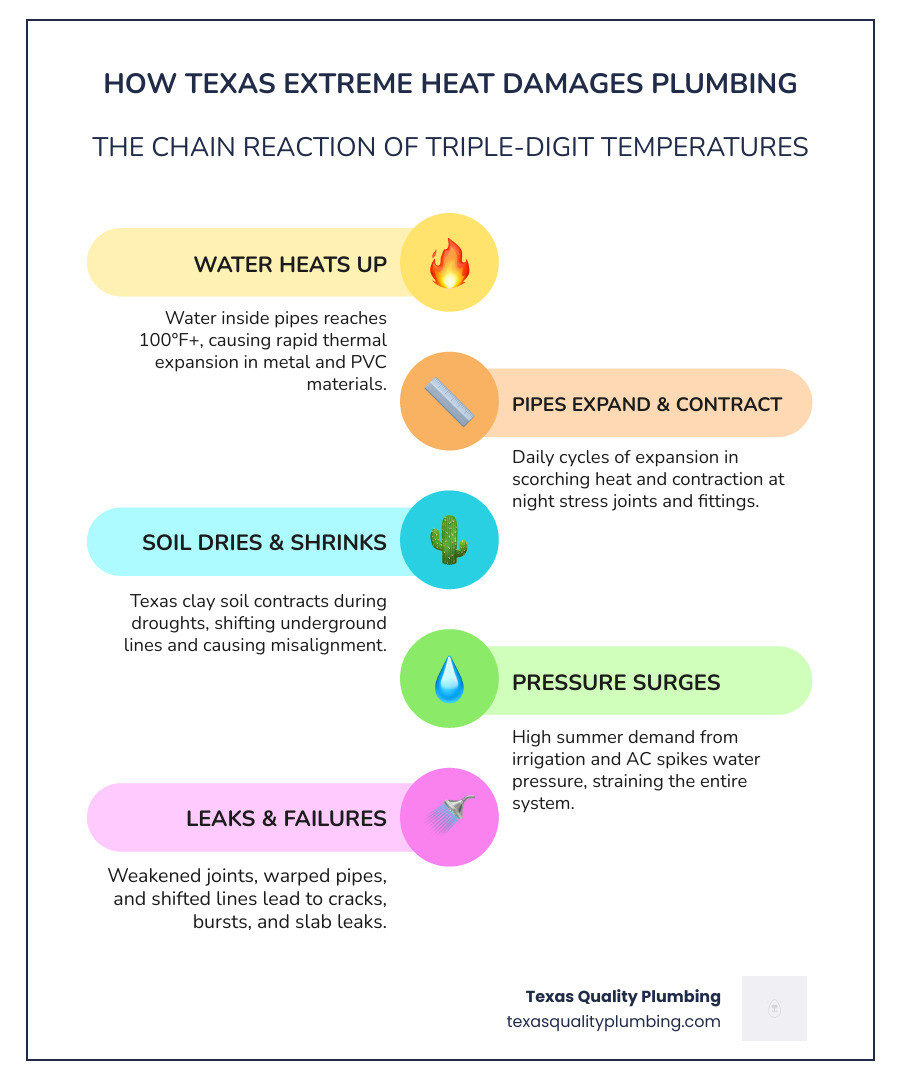
- Pipe expansion and cracking — Metal and PVC pipes expand in the heat and contract at night, stressing joints and causing leaks over time
- Soil shifting — Texas clay soil dries out and shrinks during droughts, pulling underground pipes out of alignment and triggering slab leaks
- Water pressure swings — High summer demand from irrigation, pools, and cooling puts strain on both municipal systems and your home’s lines
- Outdoor fixture wear — UV radiation and heat degrade rubber seals, hose bibbs, and sprinkler components faster than any other season
- Tree root intrusion — Thirsty roots push into sewer lines searching for moisture when the ground dries out
- Water heater stress — High ambient temperatures force water heaters to work harder, accelerating sediment buildup and wear
- AC condensate clogs — Air conditioners running around the clock produce more condensation, which can back up into secondary drain lines
The numbers back this up. During peak heat in Houston, calls for water leaks jumped to 500 per week. In San Antonio, water main breaks more than doubled from 470 per month early in the year to over 1,000 in August alone during a record summer. These aren’t just municipal problems — the same forces are acting on the pipes inside and under your home right now.
This guide walks you through what’s happening to your plumbing this summer, what warning signs to watch for, and what you can do to prevent a small issue from becoming a costly emergency.
How Texas Extreme Heat Affects Your Plumbing Systems
While we often worry about pipes freezing in the winter, the reality is that Texas summers can be just as brutal on your plumbing infrastructure. The physical properties of the materials used in your home—whether it’s copper, galvanized steel, or PVC—react significantly to the intense thermal stress of a May 2026 heatwave.
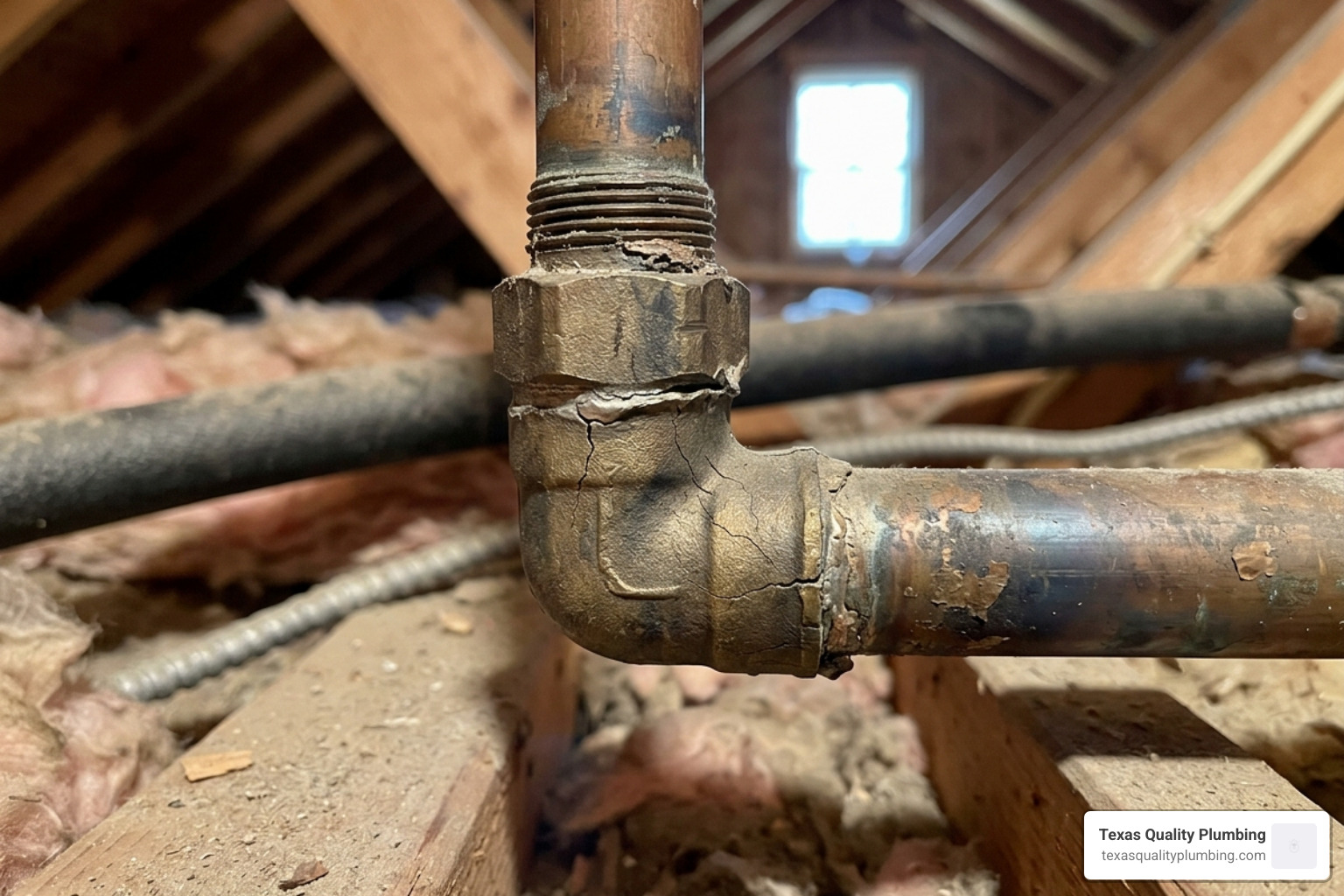
When temperatures soar, the water inside your pipes warms up, causing the pipes themselves to expand. This is known as thermal expansion. As the sun sets and temperatures dip slightly, those same pipes contract. This constant “breathing” cycle puts immense stress on the joints and fittings that hold your system together. Over time, this leads to pipe warping and joint weakening, which are the primary precursors to a major leak. Understanding preventing burst pipes in Houston is just as vital in July as it is in January.
Thermal Expansion and Material Fatigue
The type of material your pipes are made of determines how they handle the heat. Metal pipes, common in older Houston homes, are excellent conductors of heat. If these pipes are located in unconditioned spaces like attics or garages—where temperatures can easily exceed 140°F—the expansion is even more pronounced.
PVC and PEX pipes aren’t immune, either. While they don’t conduct heat like metal, extreme temperatures can make PVC brittle over time, especially if exposed to UV light. PEX piping can actually soften under extreme heat, which may compromise its ability to maintain high pressure. If your home is older, the signs of aging pipes become much more obvious during a heatwave, as the structural integrity of the material is pushed to its absolute limit.
Increased Water Demand and Pressure Fluctuations
Summer in Texas means the sprinklers are running, the pool is being topped off, and the kids are taking extra showers to cool down. This surge in water usage doesn’t just happen at your house; it’s happening across your entire neighborhood.
This massive demand causes fluctuating pressure in municipal water lines. When the city’s main lines struggle to keep up, you might experience “water hammer” or sudden surges when the pressure stabilizes. These surges can be the final straw for a pipe joint already weakened by thermal expansion. We recommend ensuring your home has a functioning pressure regulator to keep your internal plumbing within the safe 40-60 psi range, protecting your appliances and fixtures from sudden spikes.
The Impact of Soil Shifting and Drought on Underground Lines
One of the most destructive ways how texas extreme heat affects your plumbing is through the ground itself. Much of the Greater Houston area, from Katy to Baytown, sits on clay-rich soil. This soil acts like a sponge; it swells when wet and shrinks significantly when it dries out.
During a prolonged Texas drought, the soil pulls away from your home’s foundation and the pipes buried beneath it. This “shrink-swell” cycle creates structural voids. Without the surrounding soil to support the weight of the pipes, they can sag, misalign, or snap. This is a leading cause of slab leak repair needs, as the pipes under your concrete floor are physically pulled apart by the shifting earth.
Root Intrusion During Dry Spells
As the surface soil dries out, trees and large shrubs become desperate for water. Their roots are biologically programmed to find moisture, and your sewer lines—filled with nutrient-rich water—are the perfect target.
Tree roots can detect even the tiniest hairline crack or a slightly loose joint in a sewer pipe. Once they find it, they push through, growing rapidly inside the pipe and creating massive blockages. Solving root invasion problems is a common summer task for our team, as the dry weather makes these “thirsty” roots more aggressive than ever.
How Texas Extreme Heat Affects Your Plumbing and Sewer Integrity
It’s not just the supply lines that suffer; your waste system is at risk too. When clay soil contracts, it can cause “bellies” or low spots in your sewer line where waste can collect and clog. Furthermore, during extreme heat, many homeowners naturally try to conserve water. While great for the environment, lower water flow through your sewer lines means there is less volume to “flush” solids out to the city main, increasing the risk of backups. This is exactly why your sewer line needs inspection before the peak of summer, ensuring your drainage is clear and the pipes are structurally sound.
Protecting Outdoor Fixtures and Appliances
Your outdoor plumbing bears the brunt of the Texas sun. UV radiation is a silent killer for many plumbing components. Most outdoor faucets (hose bibbs) and sprinkler systems rely on rubber seals, washers, and gaskets to remain watertight. The intense heat dries these components out, making them crack and fail.
Water Heater Maintenance in High Temperatures
It might seem counterintuitive, but your water heater can struggle in the summer. If your unit is located in a hot garage or attic, the ambient temperature makes the tank’s exterior very hot. Additionally, heat can accelerate the rate at which minerals in our “hard” Texas water settle at the bottom of the tank. This sediment acts as an insulator, forcing the burner or element to work harder to heat the water, which reduces energy efficiency and shortens the unit’s lifespan.
We recommend lowering your water heater thermostat to 120°F during the summer. This reduces the internal pressure and strain on the tank while saving you money on your energy bill.
How Texas Extreme Heat Affects Your Plumbing and Outdoor Fixtures
If you notice a steady drip from your garden hose even when it’s turned off, you’re likely seeing the results of heat-damaged seals. To protect these fixtures:
- Use UV-resistant covers for any exposed piping.
- Wrap outdoor pipes in foam insulation to buffer them from direct sunlight.
- Regularly inspect sprinkler heads for cracks or warping.
If you find a leak that won’t stop, our leak repair services can swap out those degraded components before they lead to a massive water bill.
Identifying Signs of Heat-Related Plumbing Damage
Early detection is the key to avoiding a “plumbing disaster” headline in your own home. Because many heat-related issues happen underground or behind walls, you have to be a bit of a detective.
How Texas Extreme Heat Affects Your Plumbing and Water Bills
The first sign of a hidden leak is often financial. If your water bill spikes unexpectedly in July or August, don’t just blame the sprinklers. Compare your usage to the same month last year. A spinning water meter when no faucets are running is a dead giveaway that you have a leak. In Houston, where water utilities lose billions of gallons to leaks annually, a small residential leak can quickly escalate into a major expense.
Visual Cues and Yard Anomalies
Take a walk around your property once a week. In a sun-baked Texas yard, the grass should be uniformly brown or golden if you aren’t watering heavily. If you see an unusually lush, green patch of grass, or a sunken, damp spot in the middle of a dry lawn, you likely have an underground pipe break.
Other warning signs include:
- Low water pressure — Could indicate a major leak in the main supply line.
- Whistling or banging pipes — Often caused by air entering the system through a heat-induced crack.
- Foundation cracks — New cracks in your walls or flooring can indicate a slab leak is washing away the soil under your home.
If you spot these signs, seeking emergency plumbing for a safe home is the best way to mitigate damage to your foundation and property.
Frequently Asked Questions about Summer Plumbing
Why do pipes leak more during Texas heatwaves?
It’s a combination of physical and geological factors. The pipes expand and contract due to thermal stress, which weakens joints. Simultaneously, the drying soil shifts and removes support from underground lines. When you add the mechanical stress of increased water demand, pipes that were “on the edge” finally give way.
Should I water my foundation to protect my pipes?
Yes! Maintaining consistent moisture levels in the soil around your foundation is one of the best things you can do for your plumbing. Use soaker hoses placed about 6 to 18 inches from the foundation. Run them for 15-20 minutes a few times a week. This prevents the soil from shrinking and pulling your pipes out of alignment.
How does the AC system impact my plumbing in summer?
Your air conditioner produces a significant amount of condensation as it removes humidity from your home. This water drains through a condensate line, which often ties into your home’s secondary plumbing (like a bathroom sink drain). If these lines are clogged with algae or dust, the water can back up, causing localized flooding or triggering your AC to shut off.
Conclusion
The Texas heat is relentless, but your plumbing doesn’t have to be a victim of the season. By understanding how texas extreme heat affects your plumbing, you can take proactive steps—like insulating pipes, monitoring your water pressure, and keeping your foundation moist—to avoid expensive repairs.
At Texas Quality Plumbing, we’ve seen the damage a Houston summer can do to homes in The Woodlands, Cypress, and Pearland. Don’t wait for a wet spot in the yard or a sky-high water bill to take action. Our plumbing maintenance plan is designed to catch these heat-related stresses before they turn into emergencies.
Protect your home and your peace of mind this summer. Schedule your summer plumbing service in Houston today and let our licensed professionals ensure your system is ready to beat the heat.