
Why More Homeowners Are Ditching the Tank
Tankless water heater benefits are changing how Texas families think about hot water. Imagine no more cold showers, no more waiting for a tank to reheat, and no more wasted energy keeping 40-60 gallons of water hot 24/7.
Key tankless water heater benefits include:
- Endless hot water supply – heat water on-demand as you use it
- Energy savings up to 34% compared to traditional tank heaters
- Longer lifespan – 20+ years vs. 8-12 years for tank models
- Space savings – 80% smaller footprint than bulky tank units
- Lower utility bills – average family saves $95+ annually on gas bills
- Reduced maintenance – fewer repairs and longer warranties
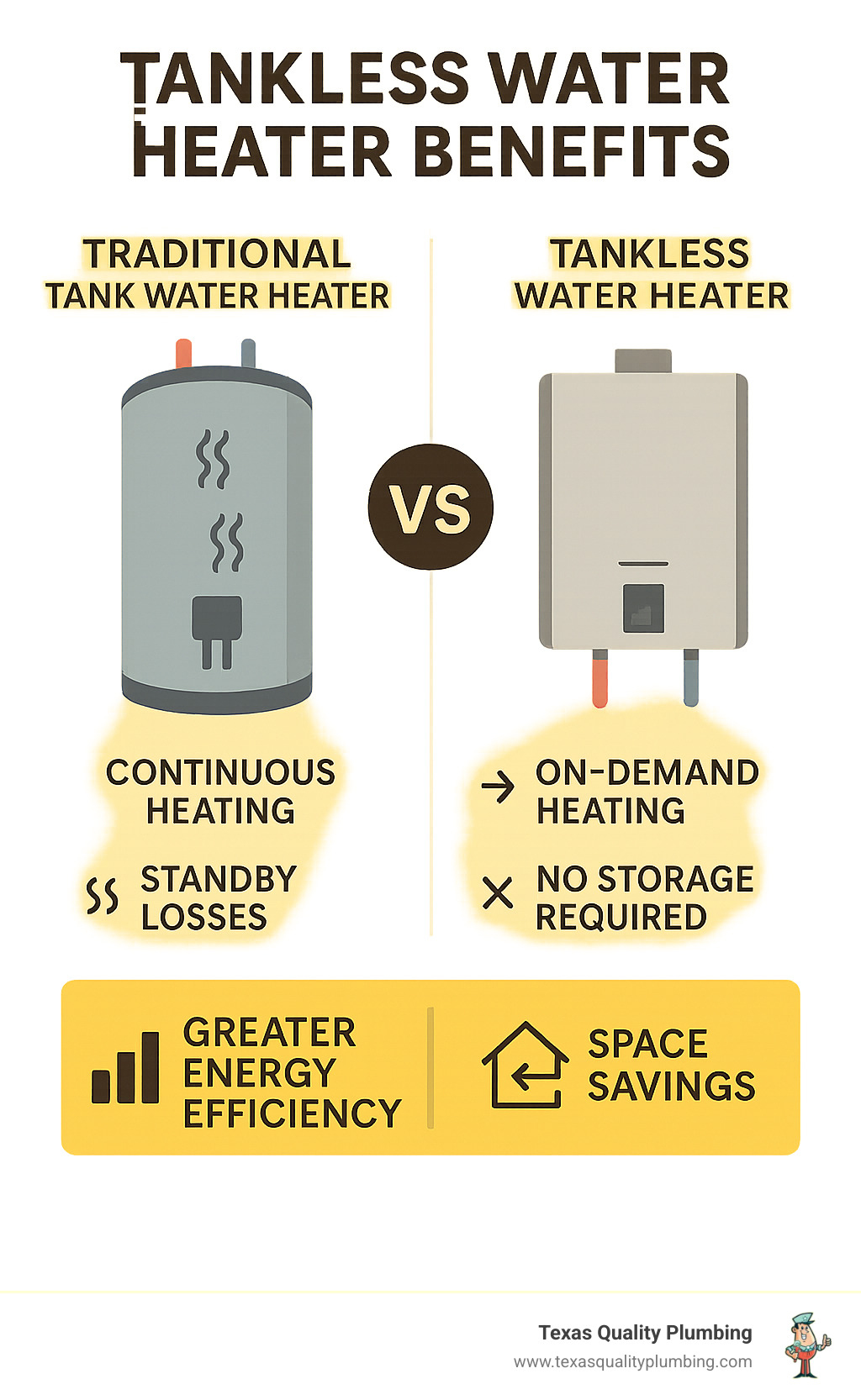
Traditional tank water heaters continuously heat and reheat stored water, creating standby heat loss even when you’re not using hot water. They also take up valuable space and typically need replacement every 8-12 years.
In contrast, tankless units heat water instantly as it flows through the system. This on-demand approach eliminates waste and provides continuous hot water for as long as you need it.
The Core Tankless Water Heater Benefits for Your Home
Imagine stepping into a perfectly warm shower that stays consistent, even if you’re the last one on a busy morning. That’s the reality of tankless water heaters. Here’s how they compare to traditional tanks:
| Feature | Traditional Tank Water Heater | Tankless Water Heater |
|---|---|---|
| Lifespan | 8-12 years on average | 20+ years with proper maintenance |
| Energy Use | Constantly heating stored water, major standby losses | Only heats when you need it, minimal waste |
| Upfront Cost | Lower initial investment | Higher upfront, but pays for itself over time |
| Footprint | Takes up serious floor space (think mini-fridge size) | Wall-mounted, about the size of a small suitcase |
| Hot Water Supply | Runs out when the tank empties | Keeps going as long as you need it |
On-Demand, Endless Hot Water Supply
Running out of hot water mid-shower becomes a distant memory with a tankless system. One of the biggest tankless water heater benefits is the endless supply of hot water. When you turn on a hot water tap, cold water enters the unit, triggering a gas burner or electric element. Within seconds, you have hot water that flows until you turn off the tap.
This means you can run multiple hot water appliances simultaneously—like a shower and the dishwasher—without scheduling or waiting for a tank to reheat. A properly sized tankless system easily handles multiple simultaneous uses in most homes, and we make sure you get the right size for your family’s needs.
Want to learn more about getting the most from your system? Check out our guide on Maximizing Hot Water with Tankless Systems.
Significant Energy Efficiency and Lower Utility Bills
A traditional tank heater constantly heats water whether you’re using it or not, which wastes money. Tankless water heater benefits shine with energy efficiency because these systems only fire up when you need hot water, eliminating standby heat loss.
Tankless units use 24% to 34% less energy for homes using 41 gallons or less daily. Even homes using around 86 gallons per day see 8% to 14% better efficiency. An ENERGY STAR certified tankless water heater saves the average family about $95 per year on gas bills, which adds up to around $1,800 in savings over the unit’s lifetime.
The best units convert 96% of their fuel directly into hot water, a significant improvement over older tank systems. Less energy use also means fewer emissions. If every home switched to ENERGY STAR tankless units, we’d prevent nearly 1.8 billion pounds of greenhouse gases annually.
Curious about the savings? Read more about Energy Savings Tankless Heaters or explore how to Save More with ENERGY STAR.
Impressive Longevity and Durability
A key tankless water heater benefit is that these units are built to last. While a traditional tank might give you 8-12 years of service, a quality tankless system can deliver hot water for 20+ years. They last longer because water doesn’t sit inside causing rust or sediment buildup, and there are no tank walls to corrode and leak.
When something needs attention, many parts are replaceable, saving you from buying a whole new unit. You’ll also have peace of mind knowing there’s no 40-60 gallon tank that could burst and flood your home. With annual maintenance, these systems work reliably year after year, offering better long-term value.
For tips on keeping your system running smoothly, check out Common Issues Tankless Water Heaters.
Compact, Space-Saving Design
One of the most noticeable tankless water heater benefits is the ability to reclaim space. Traditional water heaters are bulky appliances, but tankless units are about the size of a large briefcase and mount right on the wall. This means they use about 80% less space.
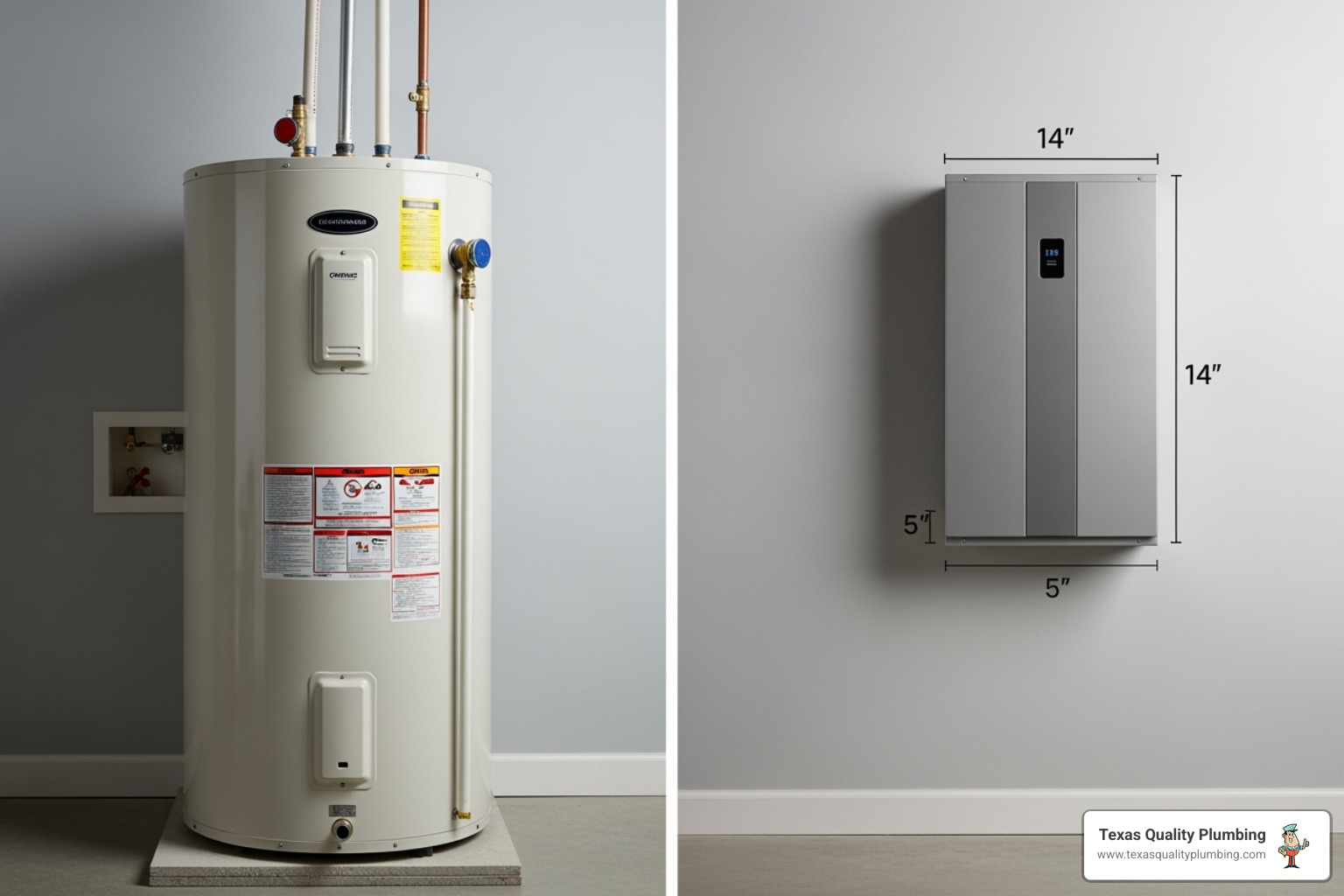
This frees up your utility closet for storage or simply to feel less cluttered. We can mount them on interior walls, in crawl spaces, or even outside with the right models. This space-saving advantage is especially valuable in smaller homes where every square foot matters.
How Tankless Heaters Work and What to Choose
Understanding how tankless water heaters work helps you appreciate their efficiency. The principle is straightforward.
The On-Demand Heating Process and Safety Features
Here’s how a tankless water heater works:
- Flow Detection: When you open a hot water faucet, a flow sensor detects the water movement.
- Ignition: The sensor signals the unit to activate a gas burner or an electric heating element. Modern gas units use an intermittent ignition device (IID) instead of a pilot light to save energy.
- Heat Exchange: Cold water travels through a heat exchanger, rapidly absorbing heat.
- Temperature Control: Built-in controls monitor water temperature and flow, adjusting heat output to deliver a constant supply at your desired temperature.
- Standby: When you close the faucet, the unit shuts down and returns to standby mode.
Safety is paramount. Tankless heaters have multiple safety features, including controls for temperature and pressure, automatic shut-offs for overheating, and vent installation detectors on some models. They are certified by agencies like CSA for safe operation and often meet low NOX and low lead standards.
Gas units require proper venting for exhaust gases. Many condensing models have lower exhaust temperatures, allowing for simpler and less expensive PVC pipe venting.
For more details on proper venting: Tankless Water Heater Venting in Pasadena
Choosing the Right Size and Fuel Type for Your Needs
Sizing is critical to enjoying the full tankless water heater benefits. It involves matching the unit’s capacity to your household’s hot water demands. Unlike tank heaters (sized by gallons), tankless units are rated by Gallons Per Minute (GPM) and temperature rise. GPM is the hot water output, while temperature rise is the difference between incoming cold water and your set temperature. Colder incoming water can reduce a unit’s effective GPM.
To determine the right size, we consider:
- Simultaneous Demand: How many hot water fixtures (showers, faucets, etc.) will be used at the same time? A shower might use 2.5 GPM, while a dishwasher uses 1.3 GPM. Two simultaneous showers require a unit that can handle at least 5 GPM.
- Household Size and Habits: Larger families naturally have higher hot water needs.
- Incoming Water Temperature: Colder water in winter requires the unit to work harder, impacting its GPM output.
For fuel type, you’ll choose between gas (natural gas or propane) and electric models. Gas units usually have higher flow rates, ideal for whole-home use. Electric units work well for smaller homes, point-of-use applications, or where gas isn’t available. We can help you choose based on your utility connections.
Consulting an experienced plumber for precise sizing is highly recommended to prevent future frustration.
Find out more about sizing considerations: Tankless Water Heater Size Problems. You can also Learn more about demand-type water heaters.
What to Expect During Installation
Installing a tankless heater is more complex than a tank replacement, but it’s a worthwhile investment. We strongly recommend professional installation for safety, efficiency, and code compliance.
Here’s what our plumbers consider:
- Gas Line Upgrades (for gas models): Tankless gas heaters often need a larger gas line to meet their higher BTU demands.
- Electrical Requirements: Gas units need electricity for their controls, and electric models may require dedicated circuits.
- Venting Installation: Gas units require proper venting to expel combustion byproducts, often with new PVC or stainless steel pipes.
- Water Lines: We ensure existing water lines are correctly connected with proper shut-off valves.
- Permits and Codes: We handle all necessary permits and ensure the installation meets all regulations.
Retrofitting a tankless unit can involve challenges like rerouting plumbing or upgrading utilities. Our experienced team steers these complexities for a smooth installation, respecting your time and getting the job done right.
For more on plumbing components related to installation: Houston Plumbing Types of Pipes
Important Considerations Before You Buy
While the tankless water heater benefits are impressive, it’s important to understand the full picture before you invest.
Unpacking the Financial Tankless Water Heater Benefits vs. Costs
The upfront investment for a tankless water heater is higher than a traditional tank, as it can include the unit plus specialized installation like gas line upgrades, electrical work, or new venting systems. However, the higher upfront cost is offset by long-term savings on monthly utility bills.
An ENERGY STAR certified tankless unit can save a typical family around $95 annually on gas bills. Over the unit’s 20+ year lifespan, that’s nearly $2,000 in savings. When you add the longer lifespan (you’d likely replace a tank heater twice in that time), the math works in your favor.
The financial tankless water heater benefits are even more attractive with available incentives like federal tax credits and local utility rebates. We can help you find programs in the Houston area to maximize your savings.
It’s important to consider the total cost of ownership. Factoring in energy savings, lower maintenance, and fewer replacements, tankless units are often more economical long-term.
For more on the financial aspects: Houston Tankless Water Heaters Sense
Maintenance Needs for Peak Performance
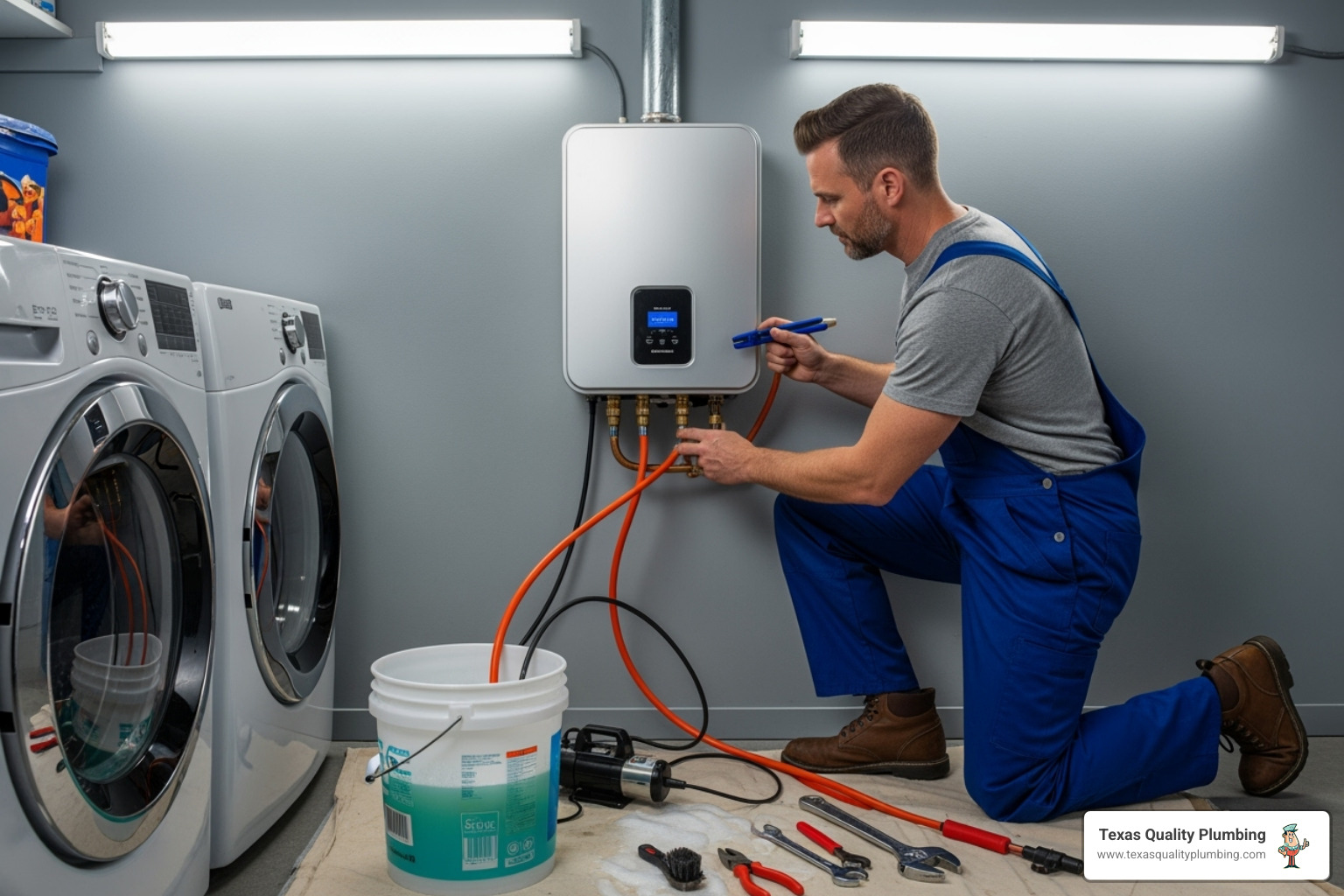
Good news: tankless heaters require less maintenance than tank models. There’s no tank to rust or collect sediment. However, they do require one key task: annual descaling. This involves flushing the unit with a vinegar solution to remove mineral buildup from the heat exchanger, which is especially important in Texas due to hard water.
If this step is skipped, mineral deposits can reduce efficiency and flow rate, potentially leading to costly repairs. For homes with very hard water, a water softener system is a smart addition. It prevents mineral buildup, simplifying maintenance and extending the unit’s life.
This small amount of upkeep ensures you enjoy all the tankless water heater benefits for decades.
Learn more about scaling issues: Scaling Issues Tankless Water Heaters
Long-Term Reliability: Another Key Tankless Water Heater Benefit
The reliability of modern tankless heaters is a major tankless water heater benefit. They are built to last 20+ years with proper care, providing consistent hot water without the issues of traditional tanks.
However, it’s important to understand their limitations. Flow rate capacity is the most important consideration. A unit has a maximum gallons-per-minute output, so running too many appliances at once might cause a temperature drop. This is why proper sizing is crucial. We calculate your peak demand to ensure the unit can handle your family’s usage. For high-demand homes, two units or a commercial-grade model might be best.
You might also experience the “cold water sandwich” effect—a brief flow of cold water when a hot tap is turned off and on again quickly. Newer units have features to minimize this.
Winter performance is another factor. Colder incoming water means the unit works harder, which can slightly reduce the maximum flow rate, but proper sizing accounts for this.
With proper installation, sizing, and maintenance, tankless heaters offer exceptional long-term reliability and are a solid investment.
For a deeper dive into the cold water sandwich effect: Tankless Water Heater Cold Water Sandwich. You can also learn more about Tankless Water Heaters Winter Performance.
Frequently Asked Questions about Tankless Water Heaters
We talk with homeowners across the Houston area—from Cypress to Sugar Land—about switching to tankless technology. The questions are often the same, so let’s tackle the top three.
Can a tankless water heater handle a large family’s needs?
Yes, absolutely! The key to enjoying the tankless water heater benefits is getting the sizing right from the start. A properly sized unit is designed for continuous use and can handle simultaneous demand—like a shower and a dishwasher running at the same time—without running out of hot water.
We calculate your family’s peak demand to ensure the unit can keep up. For very large homes or families with high demand, we sometimes recommend installing two units to work together, ensuring everyone gets the hot water they need.
What happens if my tankless water heater stops working?
While tankless units are very reliable, like any appliance, they can occasionally need attention. Most issues are straightforward, such as mineral buildup that needs flushing out or a sensor that requires adjustment.
The real advantage is that these units have replaceable parts. Instead of replacing an entire tank, we can often fix the problem by swapping out a single component. Our team prides itself on quick, accurate diagnosis to get your hot water running again, as we know it’s a necessity, not a luxury.
Find out why tankless water heaters might stop working suddenly: Tankless Water Heaters Stop Working Suddenly
How much can I really save on my energy bills?
The financial tankless water heater benefits are significant. The savings are genuine, not just marketing hype. A traditional tank heater wastes energy by constantly reheating water, even when you’re not using it.
ENERGY STAR data shows that tankless models use 27% to 50% less energy than traditional tank heaters. For the average family, this translates to about $95 per year in gas bill savings.
Since these units last 20+ years, those annual savings add up. Factoring in lower maintenance costs and fewer replacements makes the financial benefits even more compelling over the life of the unit.
Choosing a Tankless Water Heater for Your Texas Home: Key Benefits
We’ve explored the many tankless water heater benefits that make them a game-changer for homeowners. It’s clear why many Texas families are ditching their bulky tanks for this smarter solution.
The advantages are compelling: the luxury of endless hot water, significant energy savings on utility bills, impressive longevity, and a compact, space-saving design. Tankless heaters improve your home’s efficiency, comfort, and value.
While the initial investment is higher than a traditional tank, the long-term tankless water heater benefits—reduced energy consumption and a lifespan that can double that of a conventional unit—provide a remarkable return on your investment. It’s a decision that pays dividends in both comfort and savings.
At Texas Quality Plumbing, we believe in empowering you with the best solutions for your home. Our passion is helping you make informed decisions, and then delivering timely, quality repairs and installations with a focus on your needs. We cover Houston, Cypress, Spring, Katy, Sugar Land, Richmond, Pasadena, Humble, Tomball, Friendswood, Jersey Village, and Bellaire, and we’re always ready to help you find if a tankless water heater is the perfect fit for your lifestyle.
If you’re ready to say goodbye to cold showers and hello to a future of endless hot water and lower energy bills, give us a call. Let’s discuss how we can bring this amazing technology to your Texas home.
Explore your tankless water heater options in Richmond, TX, and beyond: Explore your tankless water heater options in Richmond, TX