
Why Houston Homeowners Need to Understand How Heat Affects Your Water Pressure and Pipe Expansion
How heat affects your water pressure and pipe expansion is something every Houston homeowner should know before summer peaks. Here is a quick breakdown:
- Pipes expand when temperatures rise, putting stress on joints, seals, and fittings
- Water pressure fluctuates during heatwaves due to neighborhood-wide demand spikes and water table drops
- Closed plumbing systems trap expanding water, causing dangerous internal pressure buildup
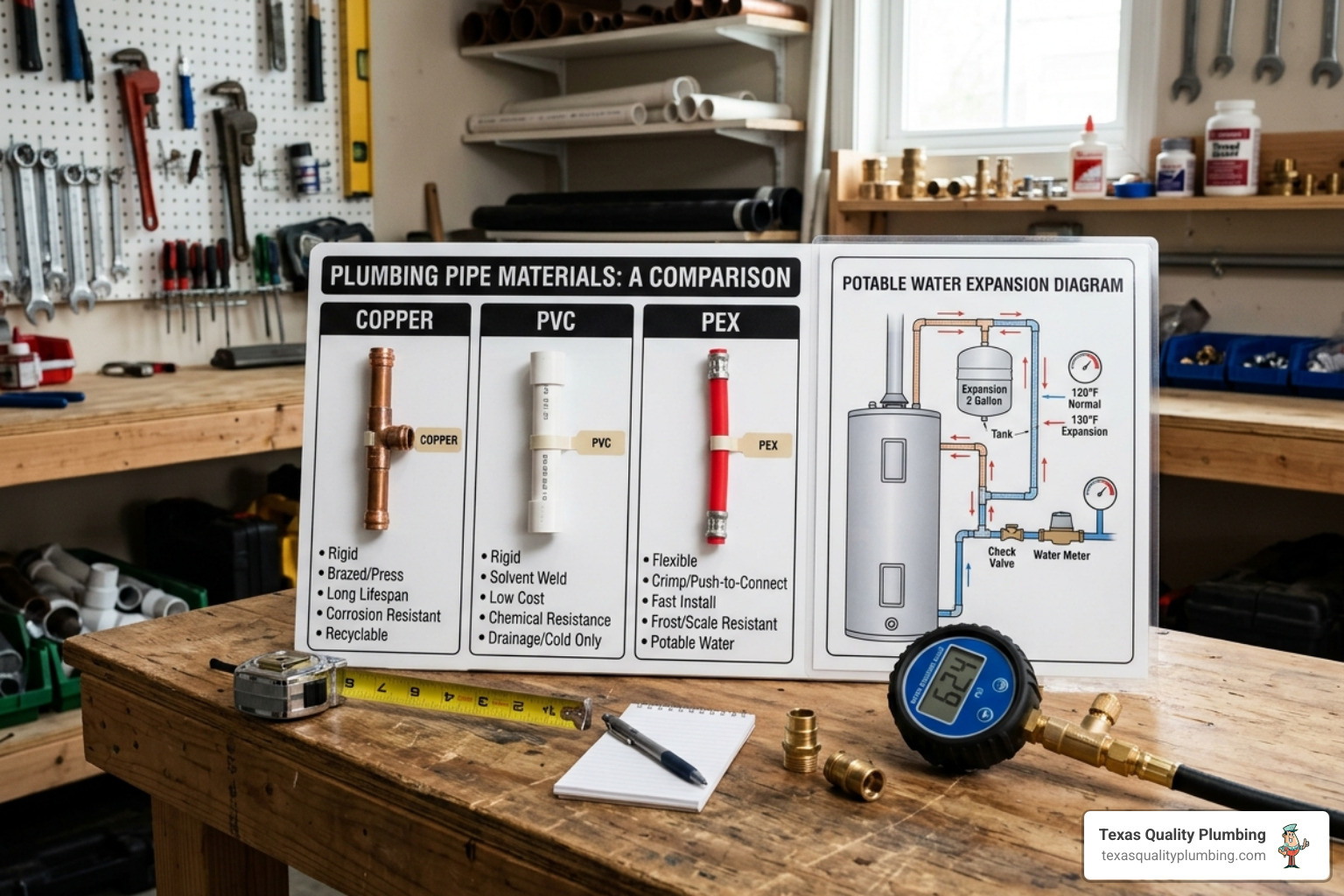
- Different materials react differently — PVC can warp, copper expands measurably, and PEX handles heat with more flexibility
- Soil shrinkage from drought shifts underground pipes, leading to cracks and hidden leaks
Houston summers are no joke. Temperatures regularly push past 100°F, and while most homeowners worry about burst pipes in winter, the summer heat creates its own set of serious plumbing risks. When a 40-gallon water heater heats water from 90°F to 140°F, the water inside expands by nearly half a gallon. In a closed plumbing system — which most modern Houston homes have — that extra volume has nowhere to go. Pressure builds. Joints weaken. And what starts as a minor stress on your pipes can turn into an expensive repair fast.
How Heat Affects Your Water Pressure and Pipe Expansion
When we talk about how heat affects your water pressure and pipe expansion, we are essentially talking about the laws of physics. As we move through May 2026, the intense Texas sun isn’t just heating up your attic; it’s physically altering the state of your plumbing system. Materials expand when they get hot. It’s a universal rule, but for a homeowner in Houston or Cypress, it translates to real-world mechanical stress.
One of the most dangerous aspects of heat is the increase in vapor pressure. If water inside a pipe reaches extreme temperatures—especially in exposed outdoor lines or attic runs—it can begin to transition toward a gaseous state, creating massive internal force. This pressure doesn’t just push against the pipe walls; it targets the weakest links: the joints and fittings.
When heat causes a pipe to grow in length, it pushes against elbows and anchors. If the system isn’t designed to handle this movement, the stress can lead to sudden joint failure. We often see this when Identifying Pipe Material Problems in older homes where the original installers didn’t account for thermal expansion. Furthermore, heat accelerates the degradation of rubber seals and gaskets. Over time, these components become brittle and crack, leading to the Signs Of Aging Pipes In Property that many of our clients in Pearland and Sugar Land face during the hottest months.
Understanding how heat affects your water pressure and pipe expansion in metal vs. plastic
Not all pipes are created equal. The way your plumbing reacts to a 105-degree afternoon in Katy or Humble depends heavily on what it’s made of. For example, 100 feet of 6-inch steel pipe (ASTM A53) will expand by 1.52 inches when heated significantly above its installation temperature. While steel is incredibly strong, that physical growth creates an “anchor load”—a force pushing against the points where the pipe is secured. In a restrained steel pipe, this can create over 34,000 psi of stress!
Plastic pipes behave differently. PVC is common in many Houston homes, but it has a lower thermal tolerance than metal. Under extreme heat, PVC can warp or “snake,” losing its structural integrity. On the other hand, PEX (cross-linked polyethylene) is a favorite among our team for Houston Plumbing Types Of Pipes because of its inherent flexibility. PEX can expand and contract more easily than rigid copper or PVC, making it less likely to burst when the mercury rises. However, even PEX has limits, and prolonged exposure to high temperatures can eventually lead to material fatigue.
How heat affects your water pressure and pipe expansion during Houston droughts
In the Greater Houston area, heat usually brings drought. This creates a secondary, “silent” threat to your plumbing: soil contraction. Most of our local soil is heavy clay, which acts like a sponge. When it’s wet, it swells; when it’s dry, it shrinks and cracks.
As the ground around your home dries out during a heatwave, the soil pulls away from your foundation and underground pipes. This shifting can cause pipes to sag or snap. We often find Leaking Pipes After Repipe projects where the internal plumbing is perfect, but the external main lines are being crushed or pulled by the shifting earth. This movement places immense “anchor loads” on your main water line, often leading to a sudden drop in pressure or a massive spike in your water bill.
The Mechanics of Thermal Expansion in Plumbing Systems
To understand how heat affects your water pressure and pipe expansion, you have to understand the “Closed System.” In the past, many plumbing systems were “open,” meaning that if water heated up and expanded in your home, it could simply push back out into the city’s water main.
Today, modern plumbing codes in places like The Woodlands and Missouri City require backflow preventers and Pressure Reducing Valves (PRVs). These devices protect the city’s water supply, but they turn your home into a closed loop. When your water heater kicks on, the water expands. Since it can’t go back to the city, and your faucets are closed, the pressure has nowhere to go.
This is where the thermal expansion tank comes in. It’s a small tank, usually installed above your water heater, that contains a rubber bladder and air. When water expands, it pushes into this tank instead of straining your pipes. Without a functioning expansion tank, you might find that When Repipe Creates New Plumbing Problems, such as dripping T&P (Temperature and Pressure) relief valves or leaking faucets. Water is incompressible; if it has no room to grow, it will force its way out through the weakest seal it can find.
Why High Temperatures Lead to Fluctuating Water Pressure
Have you ever noticed that your shower pressure seems lower on a Saturday afternoon in July? You aren’t imagining it. High temperatures lead to fluctuating water pressure for several reasons:
- Community Demand: During a Houston heatwave, everyone is watering their lawns, filling pools, and taking extra showers. This massive drain on the municipal supply can cause a drop in the “street pressure” reaching your home.
- Water Table Evaporation: Extreme heat causes significant ground water evaporation, which can lower the local water table and strain the pumps used by municipal districts.
- Pipe Swelling: As pipes heat up and expand, the internal diameter can actually change slightly, increasing internal friction and affecting the flow rate.
- Corrosion Issues: Heat can accelerate the chemical processes that cause Signs Of Pipe Corrosion In Home. Corroded pipes have a rougher internal surface, which restricts water flow and lowers pressure.
If you are experiencing Water Pressure Problems After Repipe, it might be time to check your pressure regulator. These devices are designed to keep your home’s PSI (pounds per square inch) between a safe 40-60. If the regulator fails during a heatwave, you could be dealing with pressure spikes that exceed 80 psi, which is the “danger zone” for residential fixtures.
Protecting Your Houston Home from Heat-Related Pipe Damage
Prevention is always better (and cheaper) than a midnight emergency call. Protecting your home involves managing both the external environment and the internal pressure of your system.
First, let’s talk about insulation. Most people think of insulation for the winter, but it’s just as vital for Preventing Burst Pipes Houston in the summer. Insulating your pipes—especially those in the attic or running along exterior walls—acts as a thermal barrier. It keeps the water inside cooler, reducing the amount of expansion that occurs. For outdoor pipes, use UV-resistant wraps to prevent the sun from making the materials brittle.
Second, don’t forget your water heater. We recommend lowering the thermostat to 120°F during the summer. This reduces the energy needed to heat the water and limits the total volume of thermal expansion. Much like Preparing Your Plumbing For Winter, summer maintenance should include a quick check of your expansion tank. You can perform a “tap test”—if the tank sounds hollow, it’s likely full of air and working correctly. If it sounds like a solid “thud,” it may be waterlogged and need replacement.
Expansion Rates: A Quick Comparison
To help you understand the risks, here is a look at how common materials handle a 100°F temperature increase:
| Pipe Material | Expansion per 100ft (in inches) | Flexibility Level |
|---|---|---|
| Copper | 1.10″ | Low |
| PEX | 9.20″ | High (Absorbs stress) |
| CPVC | 4.50″ | Medium |
| Steel | 0.80″ | Very Low (High stress) |
As you can see, PEX expands significantly more than copper, but because it is flexible, it doesn’t create the same destructive “anchor loads” on your home’s structure.
Frequently Asked Questions about Summer Plumbing
Can extreme heat cause pipes to burst in Houston?
Yes! While we usually associate bursts with ice, thermal expansion can be just as destructive. When water is trapped in a closed system and heated, the pressure can exceed the burst rating of the pipe or, more commonly, force a joint to separate. In extreme cases, high temperatures can even cause vapor pressure to build up, leading to a catastrophic failure.
What are the signs that heat is damaging my plumbing?
Keep an eye (and ear) out for these warning signs:
- Low Water Pressure: Could indicate a leak caused by shifting soil or a thermal crack.
- Banging or Knocking: Often heard when pipes expand and rub against wooden studs or when pressure spikes occur.
- Visible Warping: Exposed PVC pipes may look “wavy” or distorted.
- Unexplained Damp Spots: Check your yard or foundation for unusually lush grass or wet patches, which could signal an underground break.
Why is my water pressure lower during a heatwave?
It’s usually a combination of high neighborhood demand and municipal supply strain. However, it can also be caused by your own pipes swelling or a failing pressure regulator that is struggling to manage the erratic supply from the city.
Conclusion
Understanding how heat affects your water pressure and pipe expansion is the first step in keeping your Houston home safe this summer. From the shifting clay soils of Deer Park to the high-demand neighborhoods of Memorial and River Oaks, the Texas heat is a constant challenge for plumbing infrastructure.
At Texas Quality Plumbing, we specialize in helping homeowners navigate these seasonal stresses. Whether you need a professional leak detection service to find a hidden drought-related crack, or you want to install a thermal expansion tank to protect your new water heater, our team is here to help. We provide quick, efficient service across the Greater Houston area, including Pasadena, Tomball, and Richmond.
Don’t wait for a small leak to become a major flood. Contact our expert Houston plumbers for reliable service today and ensure your home is ready to handle the heat of 2026!