

Common Signs Your Fixtures Need Professional Attention
Before we dive into the logistics of faucet and fixture repair when to fix vs replace, it is important to recognize the warning signs that your plumbing is struggling. Some issues are purely cosmetic, while others are “silent killers” that can lead to structural damage if left ignored. In a city like Houston, where humidity and water usage are high, even a small leak can quickly escalate into a major headache for a homeowner.
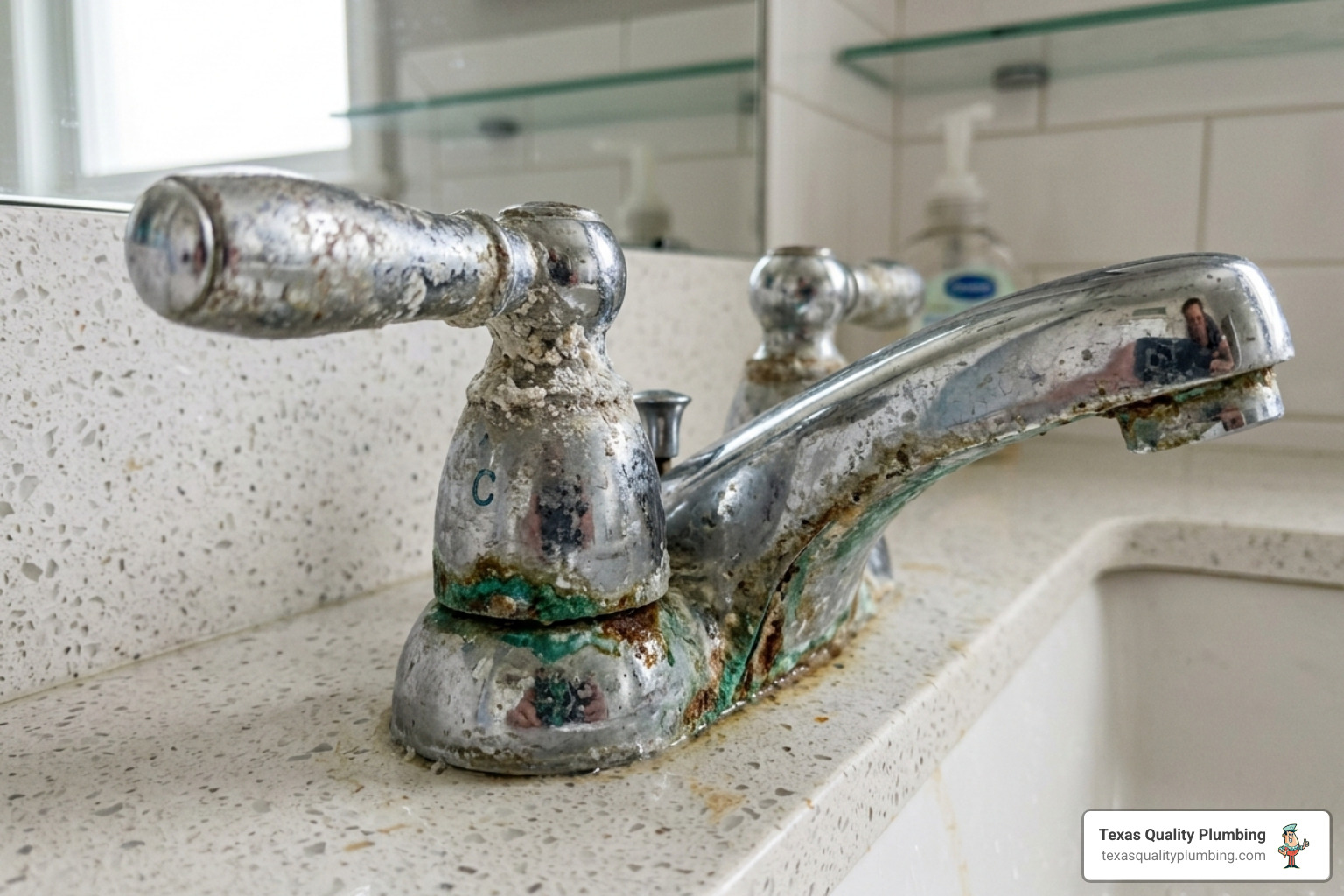
- Persistent Dripping: This is the most obvious sign. While it might seem like a minor nuisance, there are 4 Dangers Leaky Faucet owners should know about, including the potential for mold growth and significant water waste. A single faucet dripping once per second can waste over 3,000 gallons of water a year.
- Mineral Buildup and Corrosion: In many parts of the Greater Houston area, hard water is a reality. If you see white, crusty deposits (calcium) or green stains (oxidation) on your handles or spout, the internal components are likely suffering from the same buildup. This calcification can eventually seize the handle entirely.
- Low Water Pressure: If your sink used to have a powerful spray but now only offers a weak stream, you might have a clogged aerator or a failing internal valve. This is often caused by sediment breaking loose from your water heater or the main lines.
- Squeaky or Stiff Handles: When handles become hard to turn or make a screeching sound, it usually means the metal threads are worn down or the internal lubrication has dried up. Forcing these handles can lead to the stem snapping off inside the fixture.
- Irregular Water Flow: Does your faucet “spit” or “burp” water? This irregular flow often indicates air trapped in the lines or a failing cartridge that can no longer regulate pressure correctly. It can also be a sign of a failing diverter valve in kitchen sprayers.
- Leaks Under the Sink: Water pooling in your cabinet is a red flag. This often stems from worn-out O-rings or supply line connections. If you’re in the Bellaire area, you can Stop the Water Torture with Bellaire Leaky Faucet Repair services to prevent rot in your cabinetry and the growth of harmful bacteria.
Faucet and Fixture Repair: When to Fix vs Replace in Houston Homes
Houston’s unique environment plays a major role in the lifespan of your plumbing. From the humidity to the specific mineral content in our local water supply, our fixtures work hard. When we visit homes in areas like Porter or Cypress, we often find that “hard water” (water with high mineral content) is the primary culprit behind fixture failure. These minerals act like sandpaper on internal seals, causing them to fail prematurely and leading to constant leaks.
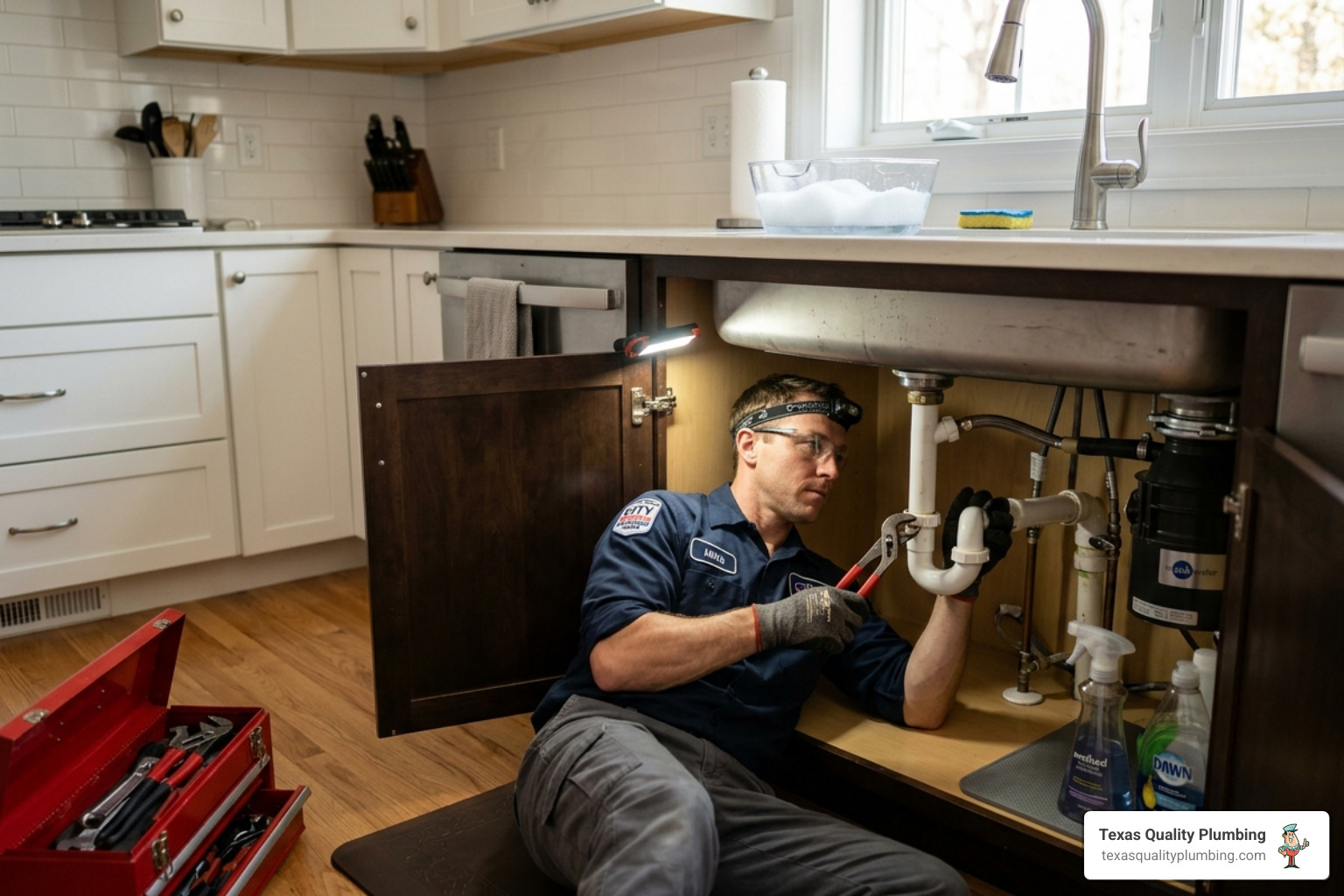
When considering faucet and fixture repair when to fix vs replace, we have to look at the structural integrity of the unit. If the main body of the faucet—the part made of brass or steel—is pitted or corroded, a repair is usually just a temporary band-aid. Corrosion inside the spout can even contaminate your water with metal flakes, making replacement a health necessity rather than just an aesthetic choice. Furthermore, the high humidity in Houston can cause the exterior finish of lower-quality fixtures to peel, exposing the base metal to further oxidation.
Furthermore, we always keep Houston building codes in mind. If you are doing a major remodel in West University Place or The Woodlands, modern codes may require certain efficiency standards or permit-backed inspections. For those looking for DIY-style maintenance, you can Stop the Drip with These Conroe Faucet Repair Tips, but for anything involving internal valve seats or structural leaks, professional intervention is key to preventing mold and water damage. Professional plumbers have the specialized tools to reseat valves without damaging the surrounding porcelain or stone.
If you are currently dealing with a puddle under your sink, don’t wait. You can Fix Your Leaky Faucet Today: Expert Faucet Repair Services are available to help you evaluate the best path forward. Our team can determine if a simple cartridge swap will suffice or if the internal damage is too extensive for a reliable repair.
The 50% Rule and Decision Factors for Replacement
As fixtures age, the “fix vs. replace” debate becomes a math problem. While we love to save a high-quality fixture whenever possible, there is a point where investing more money into an old unit is no longer a sound financial decision. This is especially true for fixtures that have been repaired multiple times in the past few years, as recurring issues often point to a systemic failure of the unit’s materials.
One major factor is parts availability. If you have a “big box store” faucet from ten years ago, finding a replacement cartridge might be impossible because those models change so frequently. However, name-brand fixtures like Moen, Delta, or Kohler often have “lifetime warranties” on parts for the original owner. In those cases, a repair is almost always the better move. We can help you identify the brand and model of your fixture to see if it qualifies for manufacturer support.
If you’re ready for a fresh start, especially in older homes, a Faucet Replacement in Bellaire TX for a Leak-Free Life can provide peace of mind and an instant aesthetic upgrade. Modern fixtures also offer improved ergonomics and finishes that are more resistant to the spotting caused by Houston’s hard water.
Faucet and fixture repair when to fix vs replace: The 50% Rule
The “50% Rule” is a standard guideline we use at Texas Quality Plumbing. It’s simple: if the cost of the repair (including labor and parts) exceeds 50% of the price of a brand-new, comparable fixture, you should replace it. This rule helps homeowners avoid the “sunk cost fallacy,” where they keep paying for repairs on a unit that is fundamentally at the end of its life.
Why? Because a new fixture comes with a fresh warranty, updated internal components, and a pristine finish. Repairing a 15-year-old faucet might stop the leak today, but it won’t fix the worn-out finish or the mineral buildup in the other handle. When you choose to replace, you’re investing in another 10 to 20 years of reliability. You can explore different types of Faucets to see what modern technology, such as touchless sensors or magnetic docking sprayers, has to offer.
Faucet and fixture repair when to fix vs replace: Evaluating Age and Efficiency
Age is the ultimate deciding factor. Most faucets are built to last between 10 and 20 years. If your fixture is approaching its 20th birthday, it is likely a “water guzzler.” Older fixtures were designed before modern conservation standards were enacted, meaning they use significantly more water than necessary for daily tasks.
Before the Energy Policy Act of 1992, faucets often used 3 to 5 gallons per minute (GPM). Modern, high-efficiency models are capped at 2.5 GPM or even 1.5 GPM for bathroom Sinks. By replacing an old fixture with WaterSense technology, you aren’t just stopping a leak; you’re permanently lowering your monthly utility bills. This is a proactive way to manage your home’s environmental impact while enjoying the benefits of modern design.
Troubleshooting Specific Fixtures: Faucets vs. Toilets
The decision-making process varies depending on which fixture is giving you trouble. A faucet is often a mechanical issue involving moving parts, whereas a toilet issue can be a structural or safety concern that impacts the sanitation of your home.
| Feature | Repair It If… | Replace It If… |
|---|---|---|
| Faucets | It’s a simple drip, a worn O-ring, or a dirty aerator. | The body is corroded, it’s over 20 years old, or parts are discontinued. |
| Toilets | It “runs” (flapper/fill valve issue) or the handle is loose. | The porcelain is cracked, it clogs constantly, or it was made before 1994. |
| Showerheads | Mineral buildup is blocking the spray holes. | The finish is peeling or you want better water pressure/efficiency. |
For residents in Baytown, we offer Baytown Faucet Repair Solutions That Actually Work to help diagnose these specific issues. We also look for “phantom flushing” in toilets, which is a sign of an internal leak that can waste hundreds of gallons of water a day without you ever seeing a puddle.
A Note on Toilets: While a running toilet is usually a simple fix involving a new flapper or fill valve, a cracked toilet is a ticking time bomb. Porcelain cracks cannot be reliably patched because the material is under constant water pressure. If you see a hairline crack in the tank or bowl, replace the toilet immediately to avoid a catastrophic flood that could damage your flooring and subfloor. Additionally, older toilets often have a smaller “throat” in the trapway, making them more prone to clogs compared to modern high-performance models.
Frequently Asked Questions about Faucet and Fixture Repair
How long do faucets typically last in Houston?
In the Greater Houston area, you can generally expect a high-quality faucet to last 15 to 20 years. However, if your home has extremely hard water (over 20 grains per gallon), that lifespan might be cut down to 8 to 10 years due to mineral damage to the internal seals and cartridges. Regular maintenance, such as cleaning the aerator and flushing the lines, can help extend this lifespan.
Can a running toilet always be repaired?
Most “running” issues are caused by the fill valve or the flapper, which are easily replaced. However, if the toilet is running because of a crack in the internal overflow tube or if the toilet is so old that it requires multiple flushes to clear the bowl, a modern high-efficiency replacement is a much better investment. Modern toilets use significantly less water per flush while providing superior clearing power.
When is a plumbing permit required for fixture work?
In Houston, simple “like-for-like” repairs—such as swapping a faucet or fixing a leak—typically do not require a permit. However, if you are moving plumbing lines, installing a new water heater, or doing a full bathroom remodel, a permit is usually required to ensure the work meets local safety codes. Permits protect you by ensuring that the work is inspected by a third party for compliance with the latest safety standards.
What are the benefits of touchless faucets?
Touchless faucets are becoming increasingly popular in Houston homes because they reduce the spread of germs and keep the fixture cleaner. Since you don’t have to touch the handles with messy hands, the finish stays pristine for longer. They also feature automatic shut-off timers, which are excellent for preventing accidental overflows if a child leaves the water running.
Conclusion
Deciding on faucet and fixture repair when to fix vs replace doesn’t have to be a headache. By looking at the age of your fixture, the frequency of repairs, and the potential for water savings, you can make a choice that protects your home and your wallet. Whether it’s a simple cartridge swap or a full upgrade to a modern, touchless faucet, the goal is always a leak-free, efficient home that serves your family’s needs.
At Texas Quality Plumbing, we are proud to serve our neighbors across Houston, from Pearland to The Woodlands and everywhere in between. Our licensed plumbers provide the expert “cost-to-benefit” analysis you need to make the right call. We offer quick, efficient service with guaranteed appointments to ensure your plumbing stays in top shape. Our VIP plan members also enjoy additional benefits, including waived dispatch fees and priority scheduling for all their plumbing needs.
Schedule your professional faucet and fixture consultation today! Let us help you stop the drips, start saving water, and ensure your home’s plumbing fixtures are operating at their absolute best. We are committed to providing the reliable workmanship and transparent communication that Houston homeowners have trusted for years.