

Leaky Faucet Repair in Braeswood Place, TX: What You Need to Know
Leaky faucet repair in Braeswood Place, TX is something most homeowners here will face at least once — and the sooner you act, the better. Whether it’s a slow drip from your kitchen faucet or a bathroom tap that won’t stop running, a leaky faucet wastes water, drives up your utility bill, and can cause real damage over time — especially in older Braeswood Place homes that were rebuilt after Tropical Storm Allison in 2001.
Here’s a quick look at what’s involved:
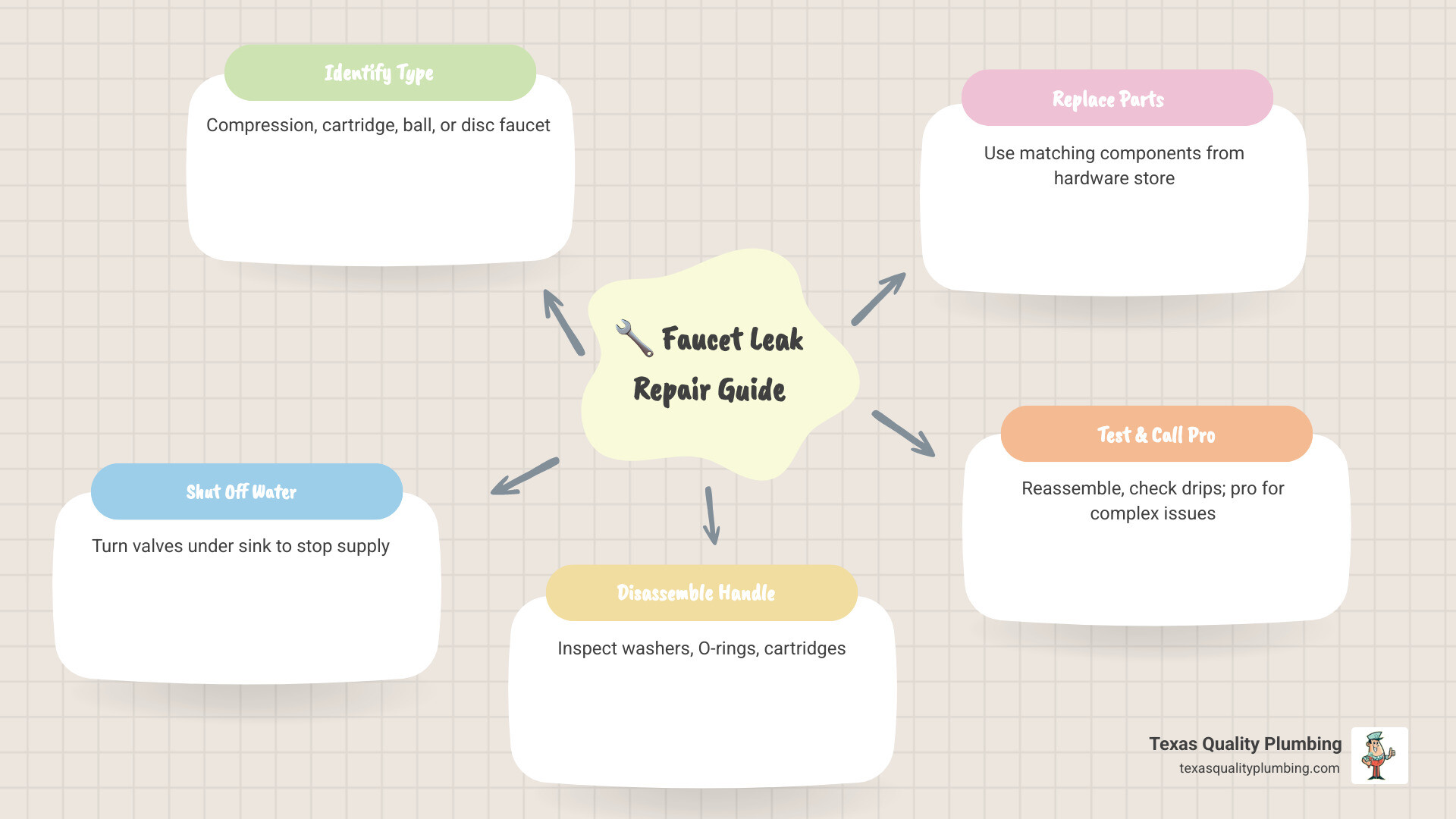
Quick Answer: How to Handle a Leaky Faucet in Braeswood Place
- Identify the faucet type — compression, cartridge, ball, or disc
- Shut off the water supply at the valves under the sink
- Disassemble the handle and inspect for worn washers, O-rings, or cartridges
- Replace the damaged part with a matching component from a hardware store
- Reassemble and test — turn the water back on slowly and check for drips
- Call a pro if the leak persists, pipes are corroded, or the fix is beyond a basic repair
This guide walks you through each of these steps in detail — from spotting the cause to fixing it yourself or knowing when to call Texas Quality Plumbing for help.
Identifying Common Causes of a Leaky Faucet in Braeswood Place, TX
In the beautiful neighborhood of Braeswood Place, our homes range from classic ranch styles to the newer Colonial and Tudor builds that emerged after the 2001 redevelopment. Regardless of the home’s age, faucets eventually succumb to wear and tear. Understanding why your faucet is dripping is the first step toward a successful leaky faucet repair in Braeswood Place, TX.
- Worn-Out Washers: This is the most frequent culprit in older compression-style faucets. Every time you turn the handle, the washer is pressed against the valve seat. Over time, this friction causes the rubber to tear or thin out, leading to leaks.
- Damaged O-Rings: If you notice water seeping out from around the handle rather than the spout, a damaged O-ring is likely to blame. These small rubber rings seal the handle assembly, but they can crack or loosen with frequent use.
- Corroded Valve Seats: The valve seat connects the faucet to the spout. If water is allowed to sit or if minerals build up, the seat can corrode. This creates an uneven surface that the washer cannot seal against properly.
- Mineral Buildup: Houston’s water can be hard on fixtures. Calcium and magnesium deposits can accumulate inside the faucet, interfering with the internal seals. This is one of the common plumbing problems Houston experts easily repair.
- High Water Pressure: If your faucets seem to leak only at night or if you hear “banging” in the walls, your water pressure might be too high. Excessive pressure puts constant stress on valves and seals, leading to premature failure. In these cases, professional plumbing leak detection & repair is essential to protect your entire system.
Essential Tools and Materials for DIY Faucet Repair
Before you dive into a repair, you need the right gear. There is nothing more frustrating than having your sink disassembled only to realize you’re missing a specific wrench.
To tackle most faucets in your bathroom or kitchen, gather the following:
- Adjustable Wrench and Basin Wrench: For loosening nuts in tight spaces under the sinks.
- Screwdrivers: Both Phillips and flat-head are usually required to remove handle caps and screws.
- Needle-Nose Pliers: Helpful for pulling out small clips or old O-rings.
- Hex Keys (Allen Wrenches): Many modern single-handle faucets use a tiny set screw to hold the handle in place.
- Replacement Parts: This might include a new cartridge, a box of assorted rubber washers, or O-rings.
- Plumber’s Grease: A silicone-based lubricant that helps new parts move smoothly and creates a better seal.
- White Vinegar: Perfect for soaking parts to remove mineral deposits.
If you are thinking about replacing the fixture entirely instead of repairing it, check out our short guide to choosing plumbing fixtures Houston for style and durability tips.
Step-by-Step Instructions for Fixing Common Faucet Types
Before you touch a tool, you must shut off the water. Look under the sink for the oval-shaped shut-off valves. Turn them clockwise until they stop. If the valves are stuck or corroded, do not force them; this is a sign you need plumbing services to replace the valves themselves. Once the water is off, open the faucet to drain any remaining water in the line.
Troubleshooting Compression Faucets
Compression faucets are the “old school” style with two separate handles for hot and cold.
- Remove the Handle: Pop off the decorative cap (usually marked ‘H’ or ‘C’) and unscrew the handle.
- Extract the Stem: Use your wrench to unscrew the packing nut and pull out the stem.
- Replace the Washer: At the bottom of the stem, you’ll find a rubber washer held by a brass screw. Replace both the washer and the screw.
- Check the Seat: If the leak continues after the fix, the valve seat might be pitted. You can use a seat dresser tool to smooth it out or replace the seat entirely. This is common in showers & tubs with older hardware.
Leaky Faucet Repair in Braeswood Place, TX for Cartridge Models
Cartridge faucets can be single or double-handled. They use a plastic or brass “cartridge” to control flow.
- Remove the Handle: Locate the set screw (often hidden under a plastic button) and loosen it to lift the handle off.
- Remove the Retaining Clip: You will see a small U-shaped clip holding the cartridge in place. Use pliers to pull it straight out.
- Pull the Cartridge: Sometimes these are stuck. You may need a “cartridge puller” tool to get it out without breaking the housing.
- Install New Cartridge: Make sure the new cartridge is an exact match. Apply a little plumber’s grease to the O-rings before sliding it in. This is a staple of Houston expert plumber services: plugging leaks efficiently.
Repairing Ball and Disc Faucets
These are common in kitchens and use a rotating ball or a pair of ceramic discs.
- Disassemble the Cap: Use an adjustable wrench to unscrew the outer cap and cam assembly.
- Inspect the Seals: In ball faucets, the leak is usually caused by the small rubber seals and springs located under the ball. Lift the ball out and use a screwdriver to pop the old springs and seals out.
- Replace the Kit: Most hardware stores sell a “faucet rebuild kit” that includes the ball, springs, and cam.
- Reassemble: Put the new springs and seals in first, then the ball, then the cam. Tighten the cap just enough to stop leaks without making the handle hard to move. You can view all services we offer if the internal assembly of your faucet is too complex for a DIY attempt.
If these steps seem daunting, we provide expert faucet repair services to get your kitchen or bathroom back in order quickly.
Why Braeswood Place Homeowners Shouldn’t Ignore Drips
It is easy to tune out a rhythmic “drip… drip… drip,” but ignoring it is a mistake. In Braeswood Place, where many homes have been meticulously renovated, a small leak can lead to big headaches.
- Water Damage and Mold: A leak doesn’t always stay in the sink. Water can travel down the faucet body and seep into the cabinetry. This leads to warped wood and dangerous mold growth. There are at least 4 dangers of a leaky faucet that can impact your health and home value.
- Rising Utility Bills: A faucet dripping at a rate of one drip per second can waste over 3,000 gallons of water a year. That is enough for 180 showers!
- Structural Integrity: Constant moisture in the bathroom or kitchen can eventually rot the subfloor. This is particularly concerning for the older foundations in the Ayrshire or Braes Heights sections of our community.
- Wasting a Precious Resource: Conservation is important for all of us in Greater Houston. Fixing a leak is the simplest way to go green at home.
Because of these risks, many of your neighbors rely on Houston’s top-rated leak repair specialists to ensure the job is done right the first time. It is one of the many reasons why Braeswood Place homeowners trust local faucet repair contractors who understand the specific needs of our neighborhood.
Professional Solutions for Complex Plumbing Issues
While we love a good DIY success story, some plumbing issues require more than a wrench and a YouTube video.
Professional plumbers bring specialized tools to the table, such as electronic leak detection. This technology allows us to find leaks hidden behind walls or under the slab without tearing up your home unnecessarily. If your faucet leak is actually caused by a pinhole leak in a pipe or a failing pressure regulator, a simple washer replacement won’t solve the problem.
When to seek expert leaky faucet repair in Braeswood Place, TX
You should put down the tools and call us if:
- The Screw is Stripped: If you can’t get the handle off because the screw is corroded or stripped, you risk breaking the entire fixture by forcing it.
- The Leak is Under the Sink: If you see water on the floor of the cabinet, the supply lines or the shut-off valves may be failing.
- You Have a “Mystery Leak”: If you hear water running but all your faucets are off, you may have a slab leak.
- Emergency Situations: If a pipe bursts while you are trying to fix the faucet, you need 24/7 emergency support.
We are proud to be the go-to for Braeswood Place plumbing, offering quick response times to prevent water damage from escalating.
Frequently Asked Questions about Faucet Leaks
How does the humid Houston climate affect my faucets?
The humidity in Houston can accelerate the corrosion of metal finishes and internal components. High humidity often leads to faster oxidation on chrome or brass fixtures. Additionally, the warm climate can encourage the growth of biofilm or “pink mold” around the base of faucets, which can eventually degrade the external seals. Regular cleaning and ensuring your bathroom is well-ventilated can help extend the life of your fixtures.
What unique challenges do post-Tropical Storm Allison homes face?
Braeswood Place saw nearly one-quarter of its 2,200 homes razed after Tropical Storm Allison in 2001. This means many homes have a mix of older neighborhood infrastructure connected to newer interior plumbing. These “hybrid” systems can sometimes experience pressure fluctuations. Furthermore, if your home was rebuilt during the early 2000s, those fixtures are now reaching the 20-year mark—which is the typical lifespan for many cartridges and valves.
Can high water pressure cause recurring leaks?
Absolutely. If you fix a leak only for it to return a month later, your home’s water pressure might be exceeding 80 psi. High pressure puts a constant “push” on your faucet’s internal seals. We recommend installing a pressure-reducing valve (PRV) if your home doesn’t already have one, as this protects your faucets, dishwasher, and water heater from premature failure.
Conclusion
A dripping faucet might seem like a minor annoyance, but in a community as vibrant as Braeswood Place, we take pride in maintaining our homes. Whether you tackle the repair yourself or decide to bring in the experts at Texas Quality Plumbing, addressing the issue promptly saves you money and protects your property.
If you’re tired of the “drip-drip-drip” and want a professional, long-lasting solution, we are here to help. From simple cartridge replacements to complete fixture upgrades, we provide the reliable Braeswood Place plumbing services you deserve. Give us a call today, and let’s get your home back to its best!