
The Real Difference Between Drain Cleaning Methods: Hydro Jetting vs Snaking
Drain cleaning methods hydro jetting vs snaking is one of the most common questions Houston homeowners face when a drain slows down or backs up completely. The short answer: snaking is a faster, gentler fix for simple clogs, while hydro jetting is a more thorough solution for stubborn, recurring, or deep-seated blockages.
Here’s a quick breakdown to help you decide:
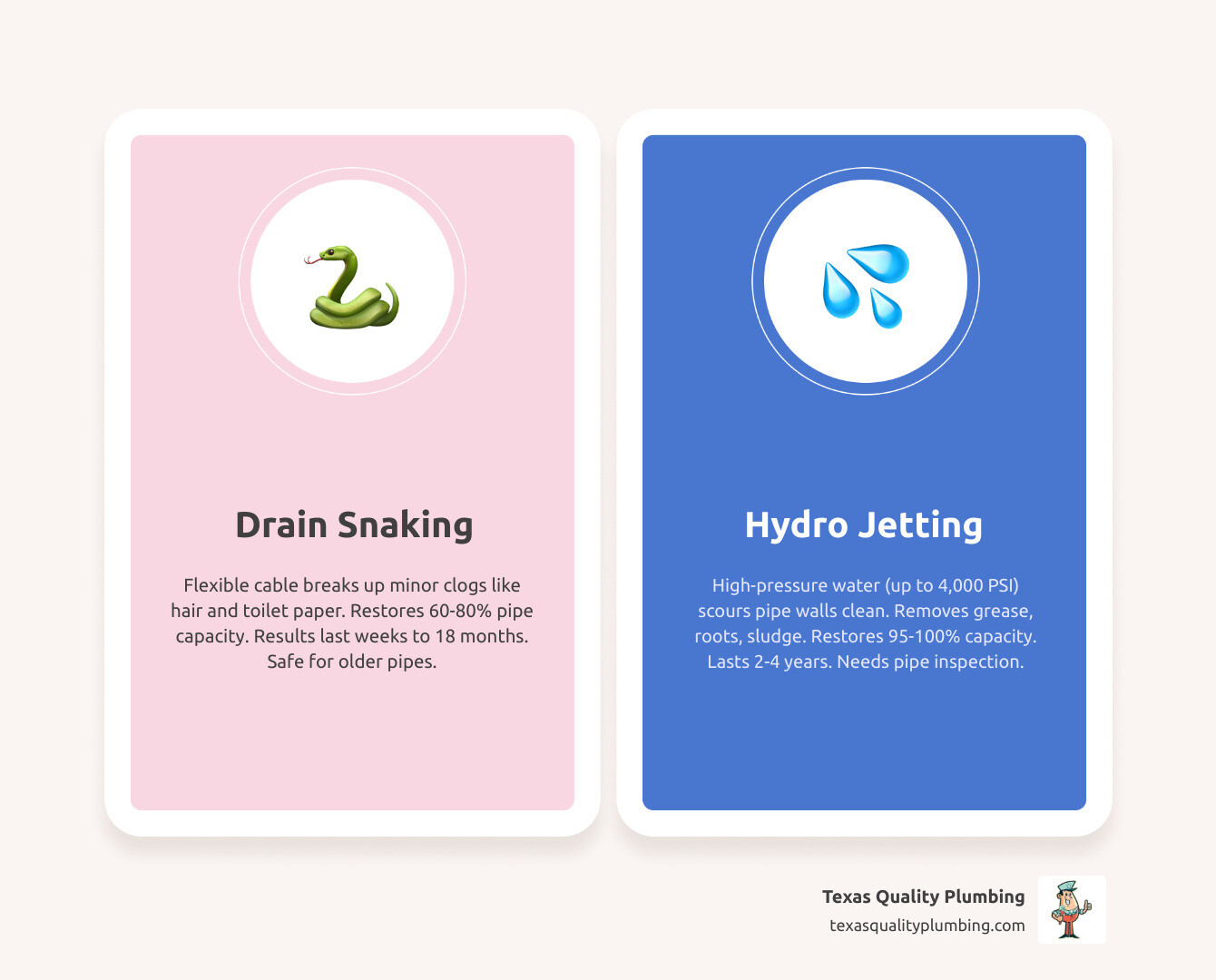
| Drain Snaking | Hydro Jetting | |
|---|---|---|
| Best for | Hair, toilet paper, minor clogs | Grease, roots, sludge, recurring clogs |
| How it works | Flexible cable breaks up or pulls out debris | High-pressure water (up to 4,000 PSI) scours pipe walls |
| Pipe safety | Safe for older, fragile pipes | Requires inspection first |
| Cleaning effectiveness | Restores 60-80% pipe capacity | Restores 95-100% pipe capacity |
| Results last | Weeks to 18 months | 2-4 years |
| Ideal pipe age | Any, including pre-1960 | Best for structurally sound pipes |
One day your kitchen sink drains perfectly. The next, water is pooling and nothing moves. Sound familiar? For Houston homeowners, clogged drains are a recurring frustration — and choosing the wrong cleaning method can mean the same problem comes back in weeks. Snaking punches a hole through a clog to restore flow. Hydro jetting scrubs the entire pipe wall clean, removing the buildup that causes clogs to keep coming back.
Knowing which method fits your situation can save you time, money, and the headache of a repeat service call.
Understanding Drain Snaking: The Traditional Mechanical Approach
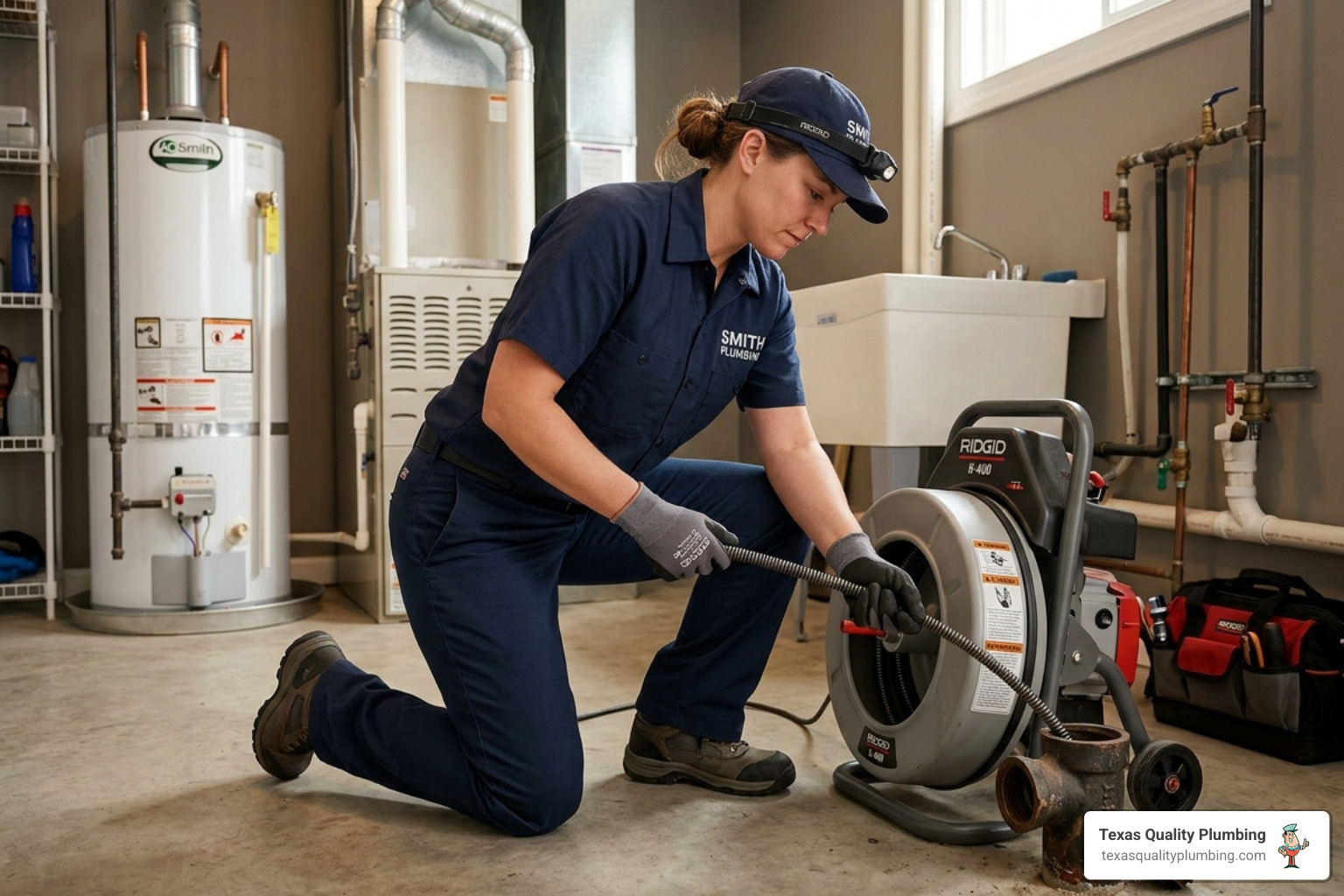
When it comes to Drain Cleaning, the drain snake (also known as a mechanical auger) has been the industry standard since the 1800s. It consists of a flexible metal cable that we feed into your pipes. At the end of this cable is a specialized tip—sometimes a coil or a blade—that rotates as it moves through the line.
The primary goal of snaking is to physically encounter an obstruction and either break it apart or hook onto it so it can be pulled back out. If you have a bathroom sink filled with hair or a toilet clogged with too much paper, a snake is often the perfect tool for the job. It is a targeted, mechanical solution designed to “punch a hole” through a blockage to get the water moving again.
However, as we explain in our Complete Drain Clearing Guide, snaking has its limitations. Because the cable only clears a path as wide as the tip, it often leaves behind residue on the pipe walls. Think of it like poking a hole through a snowdrift; you’ve made a path, but the rest of the snow is still there, waiting to cause another drift.
When to Choose Drain Cleaning Methods Hydro Jetting vs Snaking for Minor Clogs
For many localized issues, snaking is the most practical choice. We typically recommend it for:
- Fixture-specific clogs: If only one sink or tub is backed up, the problem is likely close to the surface.
- Fragile or older pipes: If your Houston home was built before 1960, you might have clay or thin cast-iron pipes. Snaking is a gentler mechanical process that is less likely to stress compromised joints.
- Simple organic matter: Hair, soap scum, and small food particles are easily snagged by an auger.
In these cases, treating Clogged Drains as a Professional Job ensures the snake is used correctly without scraping or puncturing the pipe walls, which can happen with inexperienced DIY attempts.
Exploring Hydro Jetting: High-Pressure Pipe Restoration
If snaking is like a localized “hook,” hydro jetting is like a total “power wash” for the inside of your plumbing. This method uses a specialized machine to blast water through your pipes at pressures up to 4,000 PSI. The hose features a nozzle with multiple jets: some face forward to bore through clogs, while others face backward to propel the hose forward and scour the entire circumference of the pipe walls.
There are many Reasons to Schedule Hydro Jetting, but the most significant is its ability to handle “un-snakable” problems. While a snake might just slide through soft grease or sludge, hydro jetting emulsifies these substances and flushes them completely out of the system. It is the gold standard for Hydro Jetting for Stubborn Clogs, such as heavy grease buildup in kitchen lines or invasive tree roots in a main sewer line.
One of the standout Advantages of Hydro Jetting is its versatility. By swapping out the nozzle heads, we can cut through tree roots, pulverize mineral scale, and even blast away dried concrete or construction debris.
Why Professional Drain Cleaning Methods Hydro Jetting vs Snaking Offer Long-Term Results
The reason we often suggest this method for Solving Recurring Drain Clogs is the level of cleanliness it achieves. While snaking restores about 60-80% of a pipe’s flow capacity, hydro jetting restores it to 95-100%. It returns the pipe to a “near-new” state.
Beyond just clearing the path, there are several Key Benefits of Hydro Jetting:
- Bacteria and Odor Removal: Hydro jetting removes the biofilm and organic “sludge” that causes foul sewer odors to waft into your home.
- Preventative Maintenance: By removing the sticky residue that catches hair and debris, Hydro Jetting for Drain Clogs prevents new clogs from forming for years, rather than just months.
- Efficiency: It uses about the same amount of water as two loads of laundry but provides a surgical-level clean that no mechanical tool can match.
Comparing Drain Cleaning Methods: Hydro Jetting vs Snaking
When deciding between drain cleaning methods hydro jetting vs snaking, it helps to look at the “Total Cost of Ownership.” Snaking is often cheaper per visit, but if you have to call us back every six months because a grease-lined pipe keeps catching debris, the costs add up. Hydro jetting is an investment that typically keeps a residential system clear for 2 to 4 years.
| Feature | Drain Snaking | Hydro Jetting |
|---|---|---|
| Mechanism | Mechanical Cable/Auger | Hydraulic High-Pressure Water |
| Primary Goal | Clearing a path | Scouring/Restoring the pipe |
| Tree Root Success | Temporary (cuts a hole) | High (removes the mass) |
| Grease & Sludge | Poor (often pushes through) | Excellent (washes away) |
| Longevity | 6 – 18 months | 2 – 4 years |
If you are dealing with a Sewer Line Cleaning Service for a main line stoppage, the choice becomes even more critical. A main line backup affects every fixture in the house. Learning How to Clear a Clogged Sewer Line effectively usually involves a combination of both: snaking to get the water moving, followed by hydro jetting to ensure the line stays clear for the long haul. You can see more about this comparison at Hydro Jetting vs Snaking for Drain Problem.
Choosing the Right Solution for Your Houston Property
In the Greater Houston area, our unique environment plays a role in your plumbing health. The heavy clay soil in areas like Katy and Sugar Land can shift, causing pipes to sag or joints to separate. Furthermore, many older neighborhoods in Bellaire TX Hydro Jetting or Friendswood TX Hydro Jetting have mature trees with thirsty roots that love to find their way into sewer pipes.
Before we perform any high-pressure service, we always start with a video camera inspection. This is non-negotiable for safety. If we find that your pipes are paper-thin from decades of corrosion or have significant joint offsets, we will recommend snaking or a repair instead of jetting. High-pressure water is a “gentle lion”—it’s highly effective but must be managed with expertise to avoid damaging fragile infrastructure.
We also see many cases in Spring TX Hydro Jetting where hard water is the culprit. Over time, minerals like calcium and magnesium build up on the pipe walls, narrowing the opening. This is a specific instance When Hard Water Requires Hydro Jetting, as a mechanical snake simply cannot scrape away these rock-hard mineral deposits.
Essential Steps for Houston Homeowners
To keep your plumbing in peak condition through May 2026 and beyond, we recommend these proactive steps:
- Schedule a Camera Inspection First: Don’t guess what’s in your pipes. A camera takes the mystery out of the blockage and ensures we use the safest tool for your home’s specific pipe material.
- Avoid Chemical Cleaners: These are often “toxic hazards” that sit in your pipes and generate heat, which can soften PVC or accelerate corrosion in cast iron. They rarely clear the whole clog and make the job more dangerous for our plumbers.
- Monitor Your Drains: If you hear gurgling sounds when you flush the toilet, or if multiple fixtures are draining slowly, you likely have a main line issue that requires a professional assessment.
- Mind the Grease: Especially during cooler months, grease solidifies faster in Houston pipes. Wipe your pans with a paper towel before washing them to prevent sludge buildup.
Frequently Asked Questions about Drain Cleaning Methods Hydro Jetting vs Snaking
Can hydro jetting damage older or fragile pipes?
Yes, it can if not performed correctly. Pipes installed before 1960, especially those made of clay or Orangeburg (tar paper), are at higher risk. However, for most modern PVC or structurally sound cast iron, hydro jetting is perfectly safe. This is why we insist on a professional inspection to check the structural integrity of your lines before we start the machine.
Is a camera inspection necessary before choosing a method?
Absolutely. A camera inspection is the only way to provide an accurate visual diagnostic. It tells us if we are dealing with a simple hair clog, a collapsed pipe, or a massive root intrusion. It prevents us from using high pressure on a pipe that might burst and helps us choose the right nozzle for the specific debris inside.
Why avoid chemical drain cleaners compared to professional methods?
Chemical cleaners are a temporary “band-aid” at best. They are highly corrosive and can thin your pipe walls over time. Furthermore, if they fail to clear the clog, they stay trapped in the pipe, creating a hazardous environment for any plumber who has to open that line later. Professional mechanical or hydraulic methods are eco-safe and far more effective.
Conclusion
Whether you are in Pearland, The Woodlands, or right here in the heart of Houston, a clogged drain doesn’t have to be a recurring nightmare. By understanding the differences between drain cleaning methods hydro jetting vs snaking, you can make the best decision for your home’s longevity and your family’s comfort.
At Texas Quality Plumbing, we specialize in provide quick, efficient Drain Cleaning Services in Houston. From simple snaking for a bathroom sink to advanced Drain Cleaning using hydro jetting for your main sewer line, our licensed team is ready to help. We offer guaranteed 24-hour appointments and waived fees for our VIP plan members, ensuring your home stays flowing smoothly.
Don’t wait for a slow drain to become a midnight emergency. If your pipes are “talking” to you with gurgles and smells, it’s time to call in the experts. Contact us today to schedule your camera inspection and find the permanent solution your Houston home deserves!