
The Quick-Fix Trap: Why Chemical Drain Cleaners Damage Your Pipes Over Time
Why chemical drain cleaners damage your pipes over time comes down to one core problem: they use corrosive chemicals that generate extreme heat and eat through whatever is in their path — including your pipes. Here is a quick breakdown:
- Heat damage – Chemical reactions inside pipes can reach 200°F or higher, softening PVC joints and warping plastic fittings
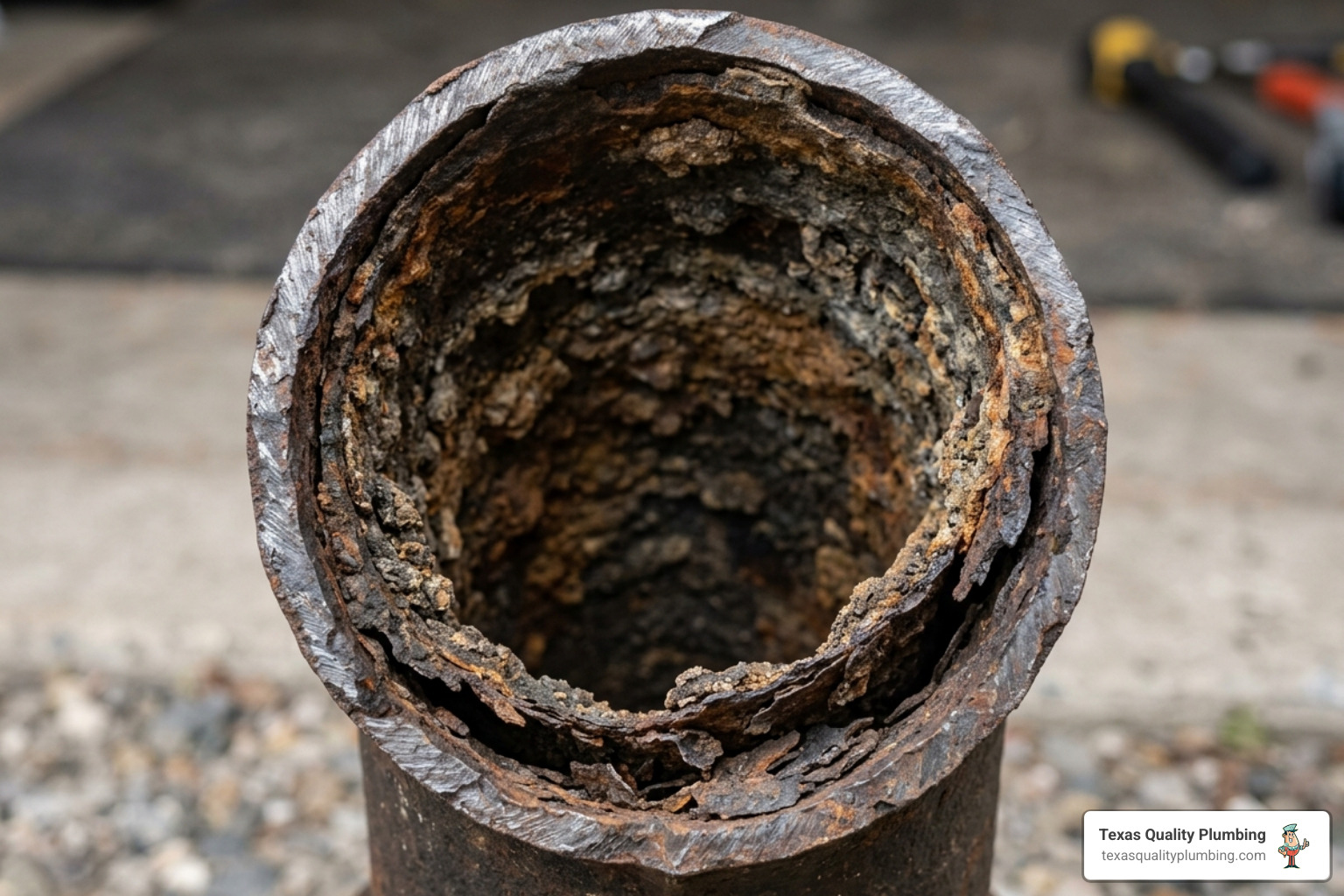
- Corrosion – Ingredients like sodium hydroxide and sulfuric acid corrode metal pipes, thinning pipe walls with every use
- Weakened joints – Repeated exposure loosens glued and threaded connections, leading to hidden leaks
- Partial clog removal – Chemicals burn a small hole through blockages rather than clearing the full pipe, so clogs return quickly
- Cumulative damage – Each application compounds the damage, turning a minor clog into a major repair
When a drain slows down in your Houston home, it is easy to grab a bottle of store-bought drain cleaner and hope for the best. It promises a fast fix, costs just a few dollars, and seems to work — at least for a day or two. But what is happening inside your pipes during and after that chemical reaction is a different story. According to Consumer Reports, chemical drain cleaners rank among the most dangerous household products available, and the damage they cause often stays hidden behind walls and under floors until a small problem becomes a very expensive one. In Houston’s older neighborhoods especially, where many homes still have pre-1980 plumbing, that risk is even higher.
Why chemical drain cleaners damage your pipes over time
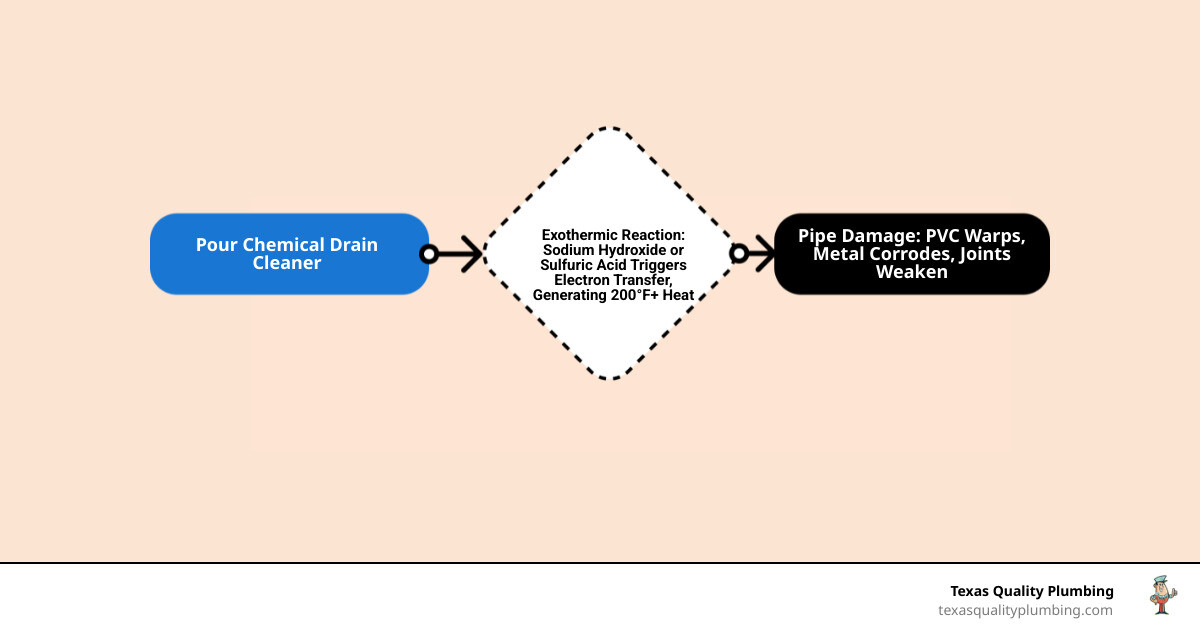
To understand the danger, we have to look at the science of the “fizz.” Most commercial drain cleaners rely on caustic ingredients like sodium hydroxide (lye) or powerful acids like sulfuric acid. These substances are designed to trigger an “electron transfer” reaction. Essentially, they are trying to “eat” the organic matter in your drain—hair, grease, and food scraps—by breaking down their molecular bonds.
The problem is that these chemicals don’t know the difference between a clump of hair and the pipe itself. While they are busy chewing through a clog, they are also gnawing on your plumbing. This is a primary reason why Drain Cleaning Houston Necessity is a topic we discuss so often with our neighbors in places like Cypress and Pasadena.
The Three Types of Chemical Cleaners
| Type | Active Ingredients | How It Works | Risk Level |
|---|---|---|---|
| Caustic | Sodium Hydroxide (Lye) | Dissolves grease by turning it into a soap-like substance | High (Heat & Corrosion) |
| Acidic | Sulfuric or Muriatic Acid | Hydrolizes proteins (hair/food); often for “pro” use | Extreme (Dissolves Metal) |
| Oxidizing | Bleach, Nitrates, Peroxides | Releases oxygen to break down organic matter | High (Heat & Warping) |
Why chemical drain cleaners damage your pipes over time through heat
One of the most overlooked dangers is the exothermic reaction. This is a fancy way of saying the chemical process generates massive amounts of heat. In a confined space like a 2-inch drain pipe, temperatures can easily soar past 200°F.
For modern homes in The Woodlands or Pearland that use PVC (plastic) piping, this heat is a disaster. It can lead to:
- PVC Warping: The plastic softens and loses its shape, leading to “bellied” pipes where water pools.
- Joint Softening: The glue and primer holding your pipes together can melt or weaken, causing leaks behind your walls.
- Thermal Shock: In some cases, the sudden spike in temperature can cause porcelain toilet bowls or sinks to crack.
- Melted Plastic: Thin-walled plastic pipes, common in some older drainage setups, can actually develop holes or completely collapse.
Vulnerable Pipe Materials in Houston Homes
Depending on when your home was built, your pipes might be more or less susceptible to chemical attack. In our experience serving the Greater Houston area, we see a wide variety of materials, each with its own “kryptonite.”
- Galvanized Steel: Common in homes built before the 1980s. These pipes are already prone to rusting. Chemical cleaners strip away the internal zinc coating, accelerating corrosion and destroying the threads that hold the pipes together.
- Cast Iron: Often found in older Houston neighborhoods like River Oaks or Memorial. Chemicals strip the protective coating inside, leading to rust that catches debris and creates even worse clogs.
- Copper: While durable, copper can develop “pinhole leaks” when acidic cleaners pool in the bends of the pipe.
- PEX: While highly resistant to many things, PEX can still be affected by the extreme heat generated during a chemical reaction.
If you are dealing with a recurring issue, it is likely a sign of Solving Recurring Drain Clogs rather than just a simple hairball.
The impact on older Houston plumbing systems
Houston’s unique environment makes things even trickier. Our city is built on expansive clay soil, which shifts and moves with the weather. This movement already puts stress on your plumbing joints. When you add corrosive chemicals that weaken those joints further, you are inviting a foundation leak.
Furthermore, Houston’s hard water contains minerals that can react with drain chemicals. This creates a crusty residue that traps more hair and grease, making your pipes thinner and more likely to clog again. For homes built before 1980, the pipe walls are often already thinned by decades of use. Pouring acid down these lines is like using a blowtorch to light a candle—it’s total overkill that ends in structural failure.
The Illusion of Success: Why Clogs Return
Have you ever used a drain cleaner, felt proud that the water was finally moving, only to have it back up again three days later? We call this the “Illusion of Success.”
Chemical cleaners are heavy. When they hit a clog, they don’t usually dissolve the whole thing. Instead, they sit on top of the blockage and slowly burn a tiny, narrow channel through the middle. Gravity pulls the chemical through that small hole, and some water follows. You think the job is done, but 90% of the clog—the Fats, Oils, and Grease (FOG)—is still stuck to the pipe walls.
This remaining debris acts like a magnet, catching every new bit of soap scum or hair that comes down the line. Because the chemicals often just “relocate” the grease further down the pipe, you might end up with a much more difficult (and expensive) blockage in your main sewer line. This is why a Clogged Drains Professional Job is always the safer bet.
The danger of chemical residue and splash-back
If the chemical cleaner doesn’t clear the clog, you now have a pipe full of “toxic soup.” This creates several hazards:
- Plumber Safety: When you finally call us to help, that caustic liquid is still in the pipe. If we use a snake or remove a pipe, that liquid can splash onto our skin or eyes, causing severe chemical burns.
- Fixture Staining: Caustic chemicals can permanently etch the porcelain of your sinks or the enamel of your bathtub, leaving ugly, dull stains.
- Toxic Fumes: The reaction between the cleaner and whatever is in your drain can release noxious gases. If you’ve accidentally mixed two different cleaners (like a bleach-based one and an acid-based one), you could even create deadly chlorine or mustard gas.
- Respiratory Irritation: Even without mixing, the fumes can irritate your lungs, throat, and eyes, especially in small, poorly ventilated bathrooms.
Safer Alternatives for Clearing Stubborn Clogs
Before you reach for the bottle, try these safer, mechanical methods. They might take an extra five minutes, but they won’t melt your house.
- The Plunger: It’s a classic for a reason. For sinks, use a flat-bottomed plunger to create a vacuum and dislodge the clog.
- The Hand Snake: A simple $20 plastic or metal drain snake can pull out hair clogs in seconds without a single drop of acid.
- Baking Soda and Vinegar: It’s not just for science fair volcanoes! Pour 1/2 cup of baking soda followed by 1/2 cup of vinegar down the drain. Let it fizz for 30 minutes, then flush with hot (not boiling) water. It’s great for Effective Drain Cleaning Tips and general maintenance.
- Enzymatic Cleaners: These use “good bacteria” to eat organic waste. They take longer (sometimes 24 hours), but they are 100% safe for your pipes and septic systems.
Why chemical drain cleaners damage your pipes over time compared to hydro jetting
When a clog is deep or involves years of grease buildup, DIY methods might not cut it. This is where professional technology shines. Unlike chemicals that just poke a hole in the mess, hydro jetting uses high-pressure water (up to 4,000 PSI) to scour the entire diameter of the pipe.
There are many Advantages of Hydro Jetting, but the biggest one is that it restores your pipes to “like-new” condition without using a single drop of corrosive chemicals. It’s the gold standard for Hydro Jetting for Drain Clogs, ensuring that the blockage doesn’t just come back next week.
Frequently Asked Questions about Drain Damage
What are the warning signs that chemicals have damaged my pipes?
If you’ve been a frequent user of store-bought cleaners, keep an eye out for:
- Low Water Pressure: This can happen if the pipe walls have collapsed or if corrosion is narrowing the passage.
- Discolored Water: Rusty or brown water can indicate that the internal coating of your metal pipes has been stripped away.
- Gurgling Sounds: This often means the pipe has warped or “bellied,” trapping air and water.
- Persistent Odors: If the chemical didn’t clear the clog but did damage the pipe, rotting organic matter can get trapped in the new cracks and crevices.
- Visible Leaks: Check under your sinks for damp spots or “fuzzy” white corrosion on the outside of joints.
Is it safe to use chemical cleaners in a toilet or dishwasher?
Short answer: No. Toilets are made of porcelain, which can crack due to the heat of the chemical reaction. Furthermore, the chemical can sit in the “trap” of the toilet and eat away at the wax seal that keeps the toilet attached to the floor, leading to a nasty (and smelly) leak. For dishwashers, the caustic chemicals can ruin rubber gaskets, plastic pumps, and even corrode the electronic sensors, often voiding your appliance warranty in the process.
Can I mix different brands of drain cleaners?
NEVER. Mixing different types of drain cleaners is one of the most dangerous things you can do in your home. According to poison control centers, household chemicals account for 11% of calls involving children under six. Mixing bleach with acids or ammonia can create toxic gases that cause immediate respiratory failure. If you tried one cleaner and it didn’t work, do not try a different brand. Call a professional immediately and let them know exactly what you already poured down the drain.
Conclusion: Protecting Your Houston Home
At Texas Quality Plumbing, we’ve seen the “Corrosive Truth” firsthand. We’ve replaced entire sections of piping in homes from Kingwood to Sugar Land simply because a homeowner tried to save a few dollars with a bottle of liquid “fix-it.”
Your plumbing is the circulatory system of your home. You wouldn’t drink acid to clear a clogged artery, so don’t put it in your pipes! We provide reliable, expert drain cleaning services in Porter, Texas, and throughout the Greater Houston area. Whether you need a simple snaking or a full camera inspection to find the root of the problem, our team is here with 24-hour appointments and professional care.
Keep your pipes healthy, your family safe, and your foundation dry. If your drains are acting up, put down the bottle and Schedule Professional Drain Cleaning with us today. We’ll get things flowing the right way—without the damage.