
Why Houston Homeowners Shouldn’t Ignore the Signs Your Drains Need Professional Cleaning
The signs your drains need professional cleaning are easier to spot than most people think — and catching them early can save you from a messy, expensive plumbing emergency.
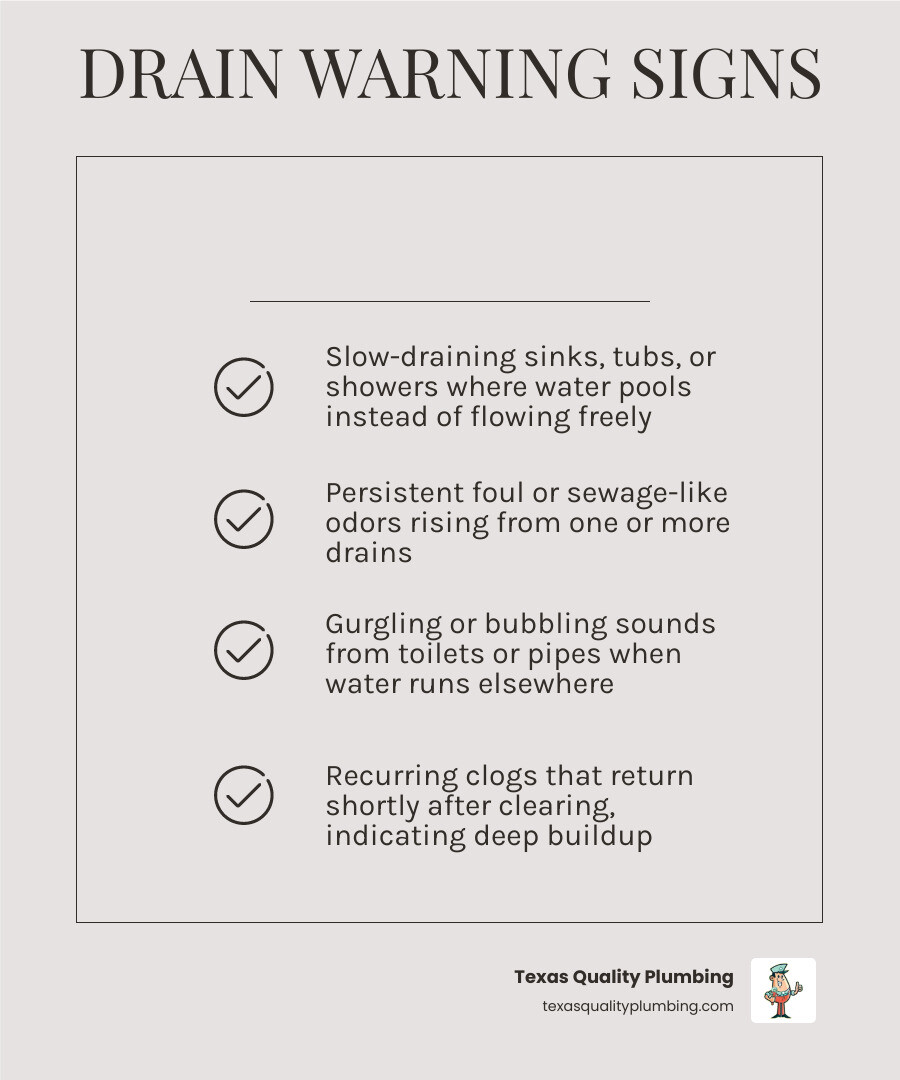
Here are the most common warning signs to watch for:
- Slow-draining sinks, tubs, or showers — water pools instead of flowing freely
- Persistent foul or sewage-like odors coming from one or more drains
- Gurgling or bubbling sounds from toilets or pipes when water runs elsewhere
- Recurring clogs that come back shortly after you clear them
- Water backing up into a tub, sink, or floor drain
- Drain flies or “moth flies” appearing near bathroom or kitchen drains
- Multiple slow drains at once — a strong sign of a main sewer line issue
- Soggy yard patches or unusually lush grass over your sewer line
Most serious drain problems don’t happen overnight. They build quietly — behind walls, under floors, and deep inside pipes — while homeowners assume the occasional slow sink is no big deal. By the time a full backup hits, what started as a minor buildup has often become a much bigger job.
In Houston, this problem gets compounded. The city’s expansive clay soil shifts with moisture, putting underground pipes under constant stress. Add in mature Live Oak roots hunting for water and the region’s heavy seasonal rainfall, and your drainage system faces challenges that most other cities simply don’t.
The good news? Your plumbing almost always gives you warning signs before things get truly bad. Knowing what to look for puts you ahead of the problem.
Common Visual and Olfactory Signs Your Drains Need Professional Cleaning
When it comes to your home’s plumbing, your eyes and nose are often your first line of defense. We frequently see homeowners who have grown used to a sink that takes a few extra minutes to clear or a bathroom that smells slightly “off.” However, these are clear signs your drains need professional cleaning before they escalate into a total system failure.
Slow drainage is the most common visual cue. If you are standing in ankle-deep water during your morning shower or if your kitchen sink keeps a pool of soapy water long after you’ve finished the dishes, you have a partial blockage. This occurs when the interior diameter of your pipe narrows due to the accumulation of debris. According to industry data, clogged drains are one of the top three reasons homeowners request professional assistance, and in a multi-billion dollar industry, it’s clear that these issues are widespread.
Standing water is a more urgent version of this sign. When water stops moving entirely, it creates a stagnant pool that becomes a breeding ground for bacteria and mold. This not only looks unpleasant but can lead to staining around your fixtures and, eventually, structural damage if the water overflows or leaks into the surrounding cabinetry.
Persistent Foul Odors and Drain Flies
If your nose picks up a scent of rotting eggs or general decay, don’t just reach for the air freshener. These smells are often caused by organic materials like food particles, grease, and hair that have become trapped in the “sludge” inside your pipes. As these materials decompose, they release gases, including hydrogen sulfide, which can be a health hazard at high concentrations.
One of the most unique signs your drains need professional cleaning is the sudden appearance of “drain flies” or moth flies. These tiny, furry insects aren’t just a pest control issue; they are a biological indicator. They breed in the thick organic film (biofilm) that coats the inside of dirty P-traps and sewer lines. If you see these flies hovering around your sink or shower, it means there is enough decaying matter in your pipes to support an entire colony. Simply killing the flies won’t work; you have to remove their food source—the sludge—through professional cleaning.
Slow Draining Sinks and Tubs
In the bathroom, the primary culprits are hair and soap scum. These two combine to create a “nest” that catches every other small particle that goes down the drain. In the kitchen, grease is the enemy. Even if you don’t pour liquid fat down the sink, small amounts from plates and pans add up over time, cooling and hardening on the pipe walls.
This buildup is often referred to as biofilm. It’s a sticky, living layer of bacteria that makes the pipe walls “grabby,” catching more debris and accelerating the clog. While it might be tempting to use Tips for Effective Drain Cleaning like a plunger, these often only punch a small hole through the center of the mess rather than clearing the pipe walls.
Auditory Red Flags: Why Your Pipes Are Gurgling
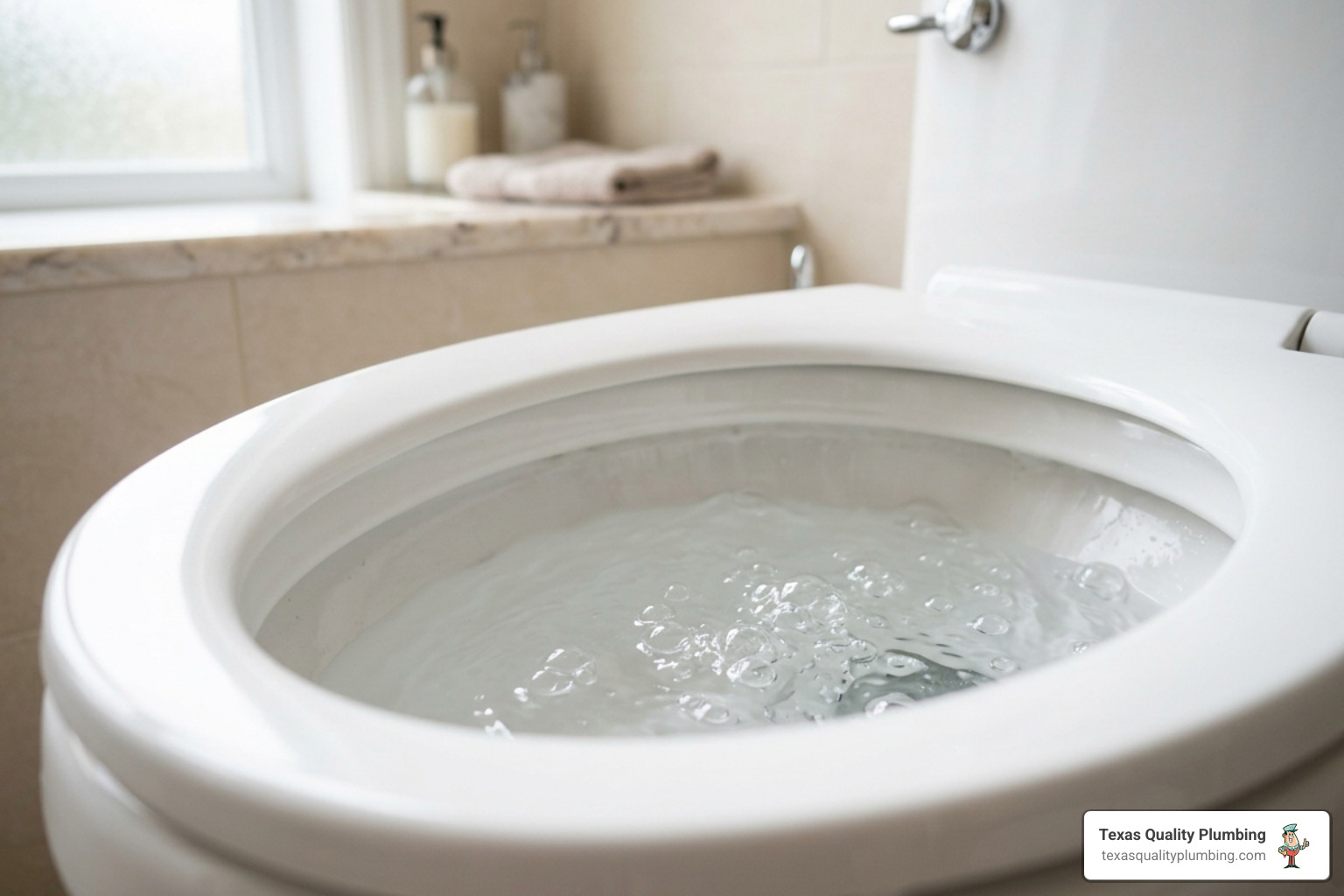
Have you ever heard your pipes “talking” back to you? Unusual sounds are often the plumbing system’s way of “struggling to breathe.” When a drain is partially blocked, air becomes trapped in the pockets of water. As the water tries to push past the obstruction, the air is forced out, resulting in a gurgling or glugging sound.
Why Recurring Clogs are Signs Your Drains Need Professional Cleaning
If you find yourself reaching for the plunger every other week for the same sink, you aren’t actually fixing the problem. Recurring clogs are a major red flag that the obstruction is deep-seated. It might be a thick layer of pipe scale (mineral deposits from Houston’s water) or a large mass of grease that has solidified.
When a clog returns quickly, it usually means the pipe has narrowed significantly. A DIY snake might clear enough space for water to flow for a few days, but the remaining rough edges of the blockage will immediately start catching new debris. This is why Clogged Drains Professional Job is a common sentiment among experts; you need tools that can restore the pipe to its original diameter.
Bubbling Toilets and Air Pockets
One of the most specific auditory signs is a bubbling or “burping” toilet. If you notice your toilet bubbles when you run the bathroom sink or when the washing machine is draining, you likely have a main line blockage or a venting issue.
Plumbing systems rely on roof vents to maintain proper air pressure. If these vents are blocked or if a clog is creating a partial vacuum downstream, air will be pulled or pushed through the nearest water seal—which is often your toilet. This is a complex pressure imbalance that requires a Clogged Toilet Houston Ultimate Guide approach to diagnose correctly. Ignoring it can lead to Solving Recurring Drain Clogs becoming a full-time hobby you never wanted.
Distinguishing Local Clogs from Main Sewer Line Failures
It is vital for homeowners to know if they are dealing with a simple fix or a systemic disaster. A localized clog affects only one fixture. For example, if your kitchen sink is slow but your bathroom works fine, the problem is likely in the kitchen’s immediate piping.
However, if multiple fixtures are acting up at the same time, the issue is likely in the main sewer line. This is the “trunk” of your plumbing tree that carries all waste out of your home.
| Symptom | Localized Fixture Clog | Main Sewer Line Failure |
|---|---|---|
| Number of Drains Affected | Only one (e.g., just the tub) | Multiple fixtures (e.g., tub and toilet) |
| Reaction to Other Fixtures | No reaction | Flushing toilet causes tub to gurgle |
| Backups | Stays within the fixture | Water appears in floor drains or lowest tubs |
| Odors | Localized to one drain | Widespread sewage smell |
If you see these systemic signs, you need Sewer Line Cleaning Services immediately to prevent a biohazardous backup into your living space.
Systemic Backups as Signs Your Drains Need Professional Cleaning
In homes across Katy, TX and Jersey Village, TX, we often see main line issues manifest during high-volume water usage. If your washing machine begins its drain cycle and you suddenly see suds backing up into your shower stall, that is a classic sign of a main line obstruction. The water has nowhere to go, so it takes the path of least resistance—the lowest open drain in the house.
External Indicators of Subterranean Issues
Sometimes the biggest signs your drains need professional cleaning aren’t even inside the house. In areas like Sugar Land, TX and The Woodlands, TX, where mature trees are common, root intrusion is a constant threat.
- Lush, Green Patches: If one strip of your lawn is suddenly much greener and faster-growing than the rest, your sewer line might be leaking. The sewage acts as a fertilizer for the grass.
- Soggy Spots: Unexplained wet patches in the yard during dry weather suggest a cracked or collapsed pipe underground.
- Houston Clay Soil: Our local soil expands and contracts significantly. This movement can snap older clay or cast iron pipes, allowing dirt to enter and create massive blockages.
The Dangers of DIY and Chemical Cleaners
When faced with a clog, many homeowners head straight to the store for a bottle of liquid drain cleaner. As professionals, we strongly discourage this. These chemicals are extremely corrosive and work by creating a high-heat chemical reaction.
While they might melt a small hole through a clog, they also:
- Warp Plastic Pipes: The heat generated can soften and deform PVC pipes.
- Eat Through PVC Glue: These chemicals can dissolve the cement holding your pipe joints together, leading to hidden leaks behind your walls.
- Corrode Metal Pipes: In older homes in River Oaks or Bellaire, chemical cleaners can accelerate the rusting of cast iron or galvanized steel.
Furthermore, if the chemical doesn’t clear the clog, you are left with a sink full of toxic, caustic water that makes it dangerous for a plumber to eventually clear the line. Instead of chemicals, consider Hydro Jetting vs Snaking for Drain Problem to find a safer, more effective solution.
Structural and Health Risks of Neglect
Ignoring slow drains is a gamble with your home’s health. Stagnant water fosters the growth of mold and mildew, which can impact indoor air quality and trigger respiratory issues. Even worse, a sewage backup is classified as a Category 3 biohazard by the EPA, containing pathogens that can cause serious illness.
On a structural level, persistent leaks from clogged pipes can rot floor joists and even lead to foundation cracks if water saturates the soil beneath your home. In the long run, the Spring TX Drain Cleaning or Pasadena TX Drain Cleaning service you schedule today is an investment in protecting your property value.
Professional Solutions: Camera Inspections and Hydro-Jetting
Modern plumbing has moved far beyond the simple hand snake. Today, we use advanced technology to ensure we aren’t just guessing what’s wrong.
CCTV Camera Inspections: We can feed a high-definition waterproof camera into your lines to see exactly what is causing the trouble. Whether it’s a toy flushed by a toddler, a mass of tree roots, or a collapsed section of pipe, the camera doesn’t lie. This is especially helpful for homeowners using our Sewer Camera Inspection Cypress Guide to understand their system’s health.
Hydro-Jetting: This is the “gold standard” for cleaning pipes. It involves using specialized nozzles to blast water at pressures between 1,500 and 4,000 PSI. It doesn’t just poke a hole in a clog; it “scrubs” the pipe walls clean, removing years of grease, scale, and even stubborn tree roots. For those dealing with Hydro Jetting for Stubborn Clogs, this is the most effective way to restore full flow.
Advanced Methods as Signs Your Drains Need Professional Cleaning
Choosing professional methods over DIY attempts ensures your pipes stay intact. While a DIY snake can actually scrape and damage the interior of older pipes, hydro-jetting is safe for most materials when performed by a licensed professional. It follows NASSCO standards to ensure the longevity of your plumbing. The Benefits of Hydro Jetting Explained include not just a clear drain today, but a system that stays clear for much longer.
Frequently Asked Questions about Drain Cleaning
How often should a Houston home undergo professional drain maintenance?
For most residential homes, we recommend a professional cleaning every 18 to 24 months. However, if you live in an older neighborhood with many large trees (like Kingwood or Memorial), or if you have a large family that puts heavy demand on the system, an annual inspection is a wise preventative move. Think of it like an oil change for your house.
Why does my toilet gurgle when I run the shower?
This is a sign of a partial blockage in the main drain line or a venting issue. The air that should be moving freely through the pipes is being trapped and forced out through the toilet’s P-trap. It’s a clear indicator that the system is under stress and needs professional attention before a full backup occurs.
Are chemical drain cleaners safe for older cast iron pipes?
No. In fact, they are particularly dangerous for older pipes. Cast iron eventually develops thin spots due to age-related corrosion. The caustic chemicals in store-bought cleaners can eat through these weakened areas, turning a simple clog into a major pipe replacement project.
Conclusion
At Texas Quality Plumbing, we know that a functioning drainage system is the backbone of a comfortable home. From the tree-lined streets of The Woodlands to the bustling neighborhoods of Pearland and Cypress, we have spent years helping our neighbors identify the signs your drains need professional cleaning.
Don’t wait until you’re standing in a flooded bathroom to take action. Whether you’re in Humble, Tomball, or Richmond, our team of licensed professionals is ready to provide quick, efficient service. With our guaranteed 24-hour appointments and a track record of exceptional customer reviews, we make it easy to get your home’s flow back to normal.
If you’ve noticed a “gurgle,” a slow sink, or a mysterious odor, give us a call today. Let’s handle it now, so you don’t have to worry about it later.